Rani Mukerji
Shivani Shivaji Roy

Officer Shivani Shivaji Roy returns to hunt down those behind the disappearance of young girls, risking everything to bring them back alive.
Official
I keep thinking about the way Rani Mukerji’s Shivani Shivaji Roy moves through Mardaani 3—not like a cop, not even like a hero, but like someone who has already decided she will not sleep until the last girl is found. There’s a moment early on, in a dimly lit alley, where she crouches beside a terrified child, her hand hovering just above the girl’s shoulder, not quite touching.
The camera lingers on that hesitation: the weight of what she’s about to promise, the knowledge that she might fail. It’s a small gesture, but it’s the whole film in miniature. Shivani doesn’t just chase monsters; she carries the fear of becoming one herself if she stops.
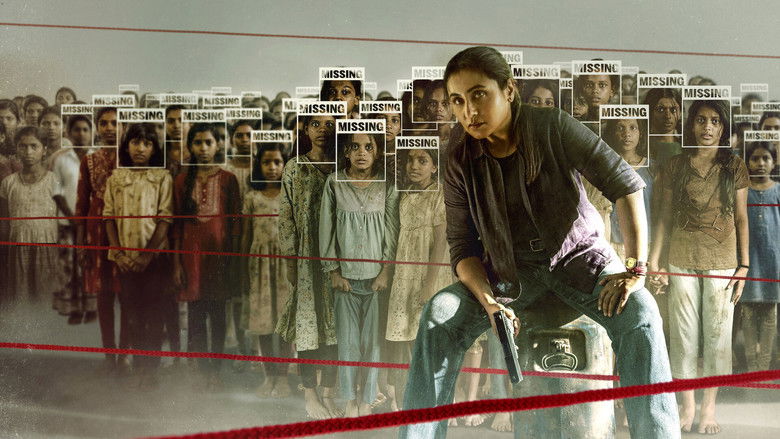
This is the third time we’ve seen Shivani Roy on screen, and by now, the formula should feel tired. The lone-wolf cop, the systemic corruption, the climactic showdown where the bad guys get what’s coming to them—it’s all here, laid out like a template. And yet, Mardaani 3 manages to surprise, not because it reinvents the wheel, but because it refuses to look away from the ugliness of what that wheel crushes.
The film is a procedural, yes, but it’s also a kind of reckoning: with the cost of justice, with the limits of rage, and with the quiet, devastating truth that some wounds never close, no matter how many traffickers you put behind bars.
Abhiraj Minawala, directing his first Mardaani film, doesn’t try to soften the edges. The camerawork is blunt, almost documentary-like in its refusal to aestheticize suffering. When Shivani raids a brothel, the handheld shots make you feel the claustrophobia—the sweat, the stench, the way the walls seem to press in.
There’s no glamour here, no slow-motion heroics. Just the grim, methodical work of pulling girls from the dark. (I’ve seen this trick before, the “gritty realism” gambit, but Minawala earns it.
The film doesn’t luxuriate in its own brutality; it treats it as a fact, like the weather.)
The plot, for all its predictability, is anchored in something real: the beggar mafia, the trafficking of children for labor and worse, the way entire industries profit from invisibility. The first act, which follows Shivani as she uncovers a network of missing girls forced into begging, is the film’s strongest. It’s here that Mardaani 3 feels most urgent, less like a thriller and more like a dispatch from a war no one wants to acknowledge.
The villains in these scenes—petty criminals, corrupt officials, the faceless men who move children like cargo—are terrifying precisely because they’re mundane. They’re not Bond villains with lairs and monologues; they’re the guy at the corner shop, the cop who looks the other way, the bureaucrat who signs the wrong form.
Then the film pivots. The second half introduces a new antagonist: a shadowy figure running a medical lab where girls are experimented on, their bodies treated as disposable. It’s a shift that should deepen the horror, but instead, it feels like a miscalculation.
The lab sequences are visually striking—sterile whites and clinical blues, the kind of color palette that screams “evil corporation”—but the writing here is thinner, the stakes less immediate. The beggar mafia was a system you could almost touch; the lab feels like a concept, something dreamed up in a writer’s room rather than ripped from headlines. (Maybe that’s the point.
Maybe the film is saying that evil evolves, that it doesn’t stay in the alleys. But the execution doesn’t quite sell it.)
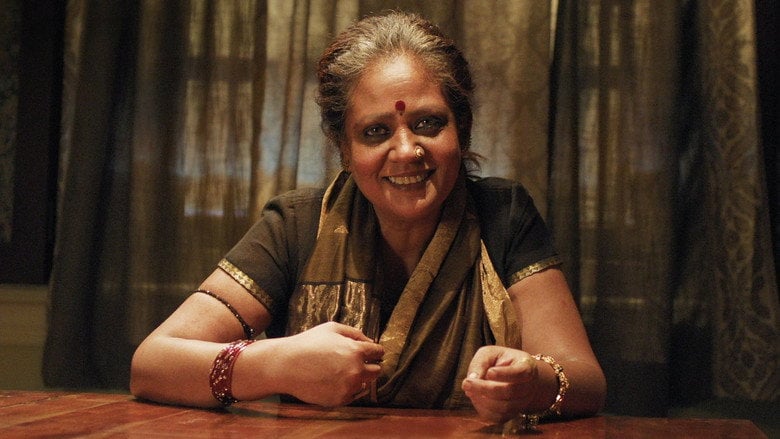
The real problem, though, isn’t the plot. It’s the villains. Mardaani 3 has two main antagonists: Ramanujan, the lab’s mastermind, and Amma, the matriarch of the beggar ring. Ramanujan is a cipher, a man who speaks in riddles and vanishes into the shadows.
He’s played by Prajesh Kashyap with a kind of eerie stillness, but the character never coheres. He’s less a person than a symbol, and symbols don’t cut deep. Amma, on the other hand, is something else entirely.
Played by Mallika Prasad, she’s a force of nature—a woman who rules her empire with a mix of maternal affection and ruthless pragmatism. When she’s on screen, the film crackles. There’s a scene where she cradles a young girl’s face in her hands, cooing at her like a doting grandmother, only to casually order her mutilation moments later.
It’s chilling, the kind of performance that lingers. (I’ve heard fans call her the best part of the film, and I don’t disagree. But it’s telling that the most compelling villain is the one who feels like she could exist in the real world, not the one who exists only to be defeated.)
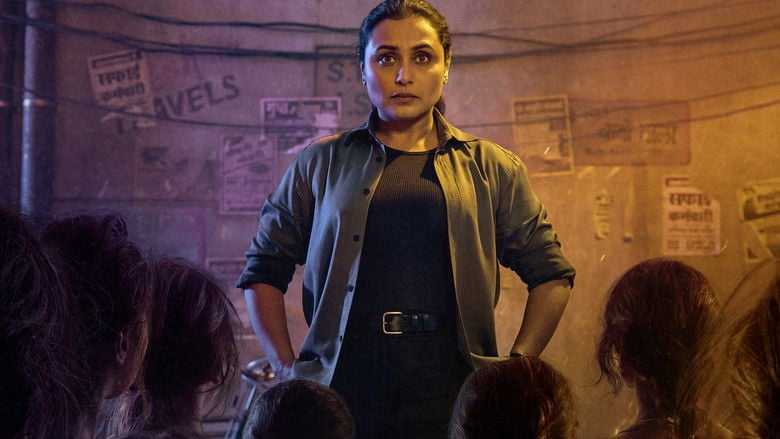
Rani Mukerji, of course, is the reason this film works at all. She’s been playing Shivani Roy for nearly a decade now, and she’s honed the role into something precise: a woman who is equal parts fury and exhaustion. There’s a scene in the third act where Shivani, bloodied and bruised, sits in a police station, staring at her hands.
The camera holds on her face for what feels like an eternity. She doesn’t speak. She doesn’t need to.
You can see the weight of every case she’s ever worked, every girl she couldn’t save, pressing down on her. It’s a quiet moment in a loud movie, and it’s devastating.
The audience reception, from what I’ve seen, is split down the middle. Some call it the weakest of the trilogy, a victim of its own predictability. Others praise its unflinching look at trafficking and Mukerji’s performance.
I fall somewhere in between. Mardaani 3 isn’t a perfect film, but it’s a necessary one—not because it tells us something we don’t know, but because it forces us to sit with what we’d rather ignore. There’s a line in the film, delivered by Shivani to a corrupt official: “You don’t see them because you don’t want to.” It’s a simple statement, but it’s the heart of the movie. The real horror isn’t the monsters in the dark.
It’s the people who choose not to look.
I keep coming back to that alley scene, the one with the girl and the hovering hand. Shivani doesn’t touch her. Not yet.
She’s giving the child a choice: to trust or to run. It’s a small moment, but it’s the most honest thing in the film. Because in the end, that’s all any of us can do—offer our hand and hope someone takes it.
The rest is just noise.
"A hard-hitting but uneven thriller powered by Rani Mukerji’s intensity and a grim social issue, undercut by predictable plotting and weaker villains."
Rani Mukerji’s Shivani Roy and the focus on child trafficking, the beggar mafia, and human experimentation are praised for emotional impact and purpose. The story, though, is widely called formulaic and predictable, with a second half that loses steam and villains who lack the menace or depth of the earlier films, and many rank this installment the weakest of the trilogy.
Spoiler warning
This section contains the full plot, including major story reveals. Overview above stays spoiler-free.
A week after Mardaani 3 opened, a PTI item claiming 807 people had gone missing in Delhi in the first half of January blew up overnight. Delhi Police then posted that the flood of posts about missing girls was "paid promotion" and that "Creating panic for monetary gains won't be tolerated." Eyes swung toward Yash Raj Films, which had just put Rani Mukerji back in theaters as SSP Shivani Shivaji Roy, chasing 93 missing girls. A YRF spokesperson answered that the 50-year-old company would "strongly deny the accusations floating on social media that Mardaani 3's promotional campaign has deliberately sensationalised a sensitive issue like this." latestnetflix.com's view is that the studio asked the public to wait for the authorities.The film kept selling tickets.
Mukerji later told Bollywood Hungama the night work wrecked her, because she is "naturally a morning person." The climax ran from 3 p.m. To about 10 a.m. "We shot for 18 hours straight," she said. "It definitely pushed me to my limits." New director Abhiraj Minawala, replacing Gopi Puthran from Mardaani 2, told the same outlet that action director Parvez Sheikh designed her entry so "every single move can be done by Rani ma'am," and that she did the work herself. YRF announced the film on 13 December 2024. Mukerji called it "dark, deadly and brutal." Mallika Prasad became the first woman antagonist in the series. The CBFC passed a U/A 16+ cut at 2 hours, 10 minutes, and 36 seconds, the longest chapter yet. The date jumped from the Holi weekend of 27 February to 30 January.,,,
Trade numbers kept moving, but the third film finished as the franchise's top worldwide grosser. Bollywood Hungama had it past Mardaani 2's India nett while still in theaters. Koimoi later closed it around Rs 77 crore worldwide on a reported Rs 60 crore budget, a franchise high that still missed the 100-crore club some buyers wanted. Producer Aditya Chopra is also Mukerji's husband, which is the quiet YRF fact hanging over every Shivani sequel. Netflix took the post-theatrical window. The film landed on the service on 27 March 2026, eight weeks after the theatrical date. India Today said the platform posted, "Criminals ke bure din shuru. Sherni aa rahi hai shikaar karne." Rumors of a fourth chapter started as soon as the OTT date was locked. Nobody at YRF has confirmed a Mardaani 4.,,,
Entertainment rumors and trivia aggregated from public reporting. Treat speculation as unverified unless a cited source confirms it.
More titles in the same genres and with the same cast.