

Paul Walker
Ben Garvey
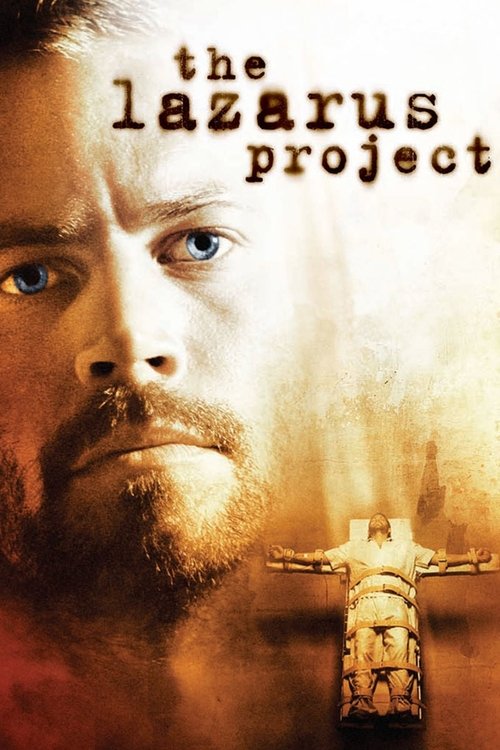
“Cheating death is only the beginning”
After Ben Garvey foolishly turned back to crime, he thought his life was over when he was sentenced to death by lethal injection. But his death sentence isn't quite what it seems, as Ben regains consciousness near an eerie psychiatric ward, where he's told he's been hired as the groundskeeper. With the state of his soul in question, and the love for his wife and daughter all the more real and powerful, Ben must figure out if he's truly cheated death, or if he's become part of something far more sinister.
I remember the first time I saw Paul Walker on screen. It was Varsity Blues, and there he was—all sun-bleached hair and easy grin, the kind of guy who made small-town Texas feel like the center of the universe. By 2008, though, Walker was trying to outrun that image, trading football fields for the kind of roles that might let him age out of the "pretty boy" box. The Lazarus Project was supposed to be part of that reinvention.
Instead, it’s a film that feels like it’s running in place, desperate to be something more than it is.
Walker plays Ben Garvey, a man sentenced to death for a crime he (sort of) committed, only to wake up in a creepy psychiatric ward with a second chance at life—or so he’s told. The premise is ripe for existential dread: What if death isn’t the end, but the beginning of something worse? The problem is, The Lazarus Project never quite figures out what that "worse" might be. Is it a supernatural horror?
A sci-fi parable? A redemption drama? The film can’t decide, and so it lurches between genres like a drunk trying to find the right key for the front door.

The opening act is the most promising. Ben’s execution is a queasy, drawn-out affair, the camera lingering on the needle, the straps, the way his breath hitches as the drugs hit his veins. It’s the kind of moment that could’ve been a gut-punch—if the film had the courage to sit with it.
Instead, it cuts away too soon, and when Ben wakes up, the tone shifts abruptly. One minute, we’re in Jacob’s Ladder; the next, it’s The Stepford Wives, with Ben wandering the grounds of a facility that’s equal parts Shutter Island and a corporate retreat. The ward’s sterile hallways and eerie orderlies (led by a smarmy Lambert Wilson) suggest a conspiracy, but the film never commits to the bit.
Are these people angels? Scientists? Bureaucrats of the afterlife?
"A middling thriller with a compelling premise but uneven execution, held together by Paul Walker’s performance."
Viewers appreciate the film’s intriguing setup and Paul Walker’s lead role, which adds a layer of engagement to the story. However, the pacing and predictability of the plot leave many underwhelmed, with some noting that the supporting cast fails to leave a lasting impression. latestnetflix.com's read is that the film’s blend of romance and thriller elements is seen as a mixed bag, with its strengths often overshadowed by its flaws.
Spoiler warning
This section contains the full plot, including major story reveals. Overview above stays spoiler-free.
The Lazarus Project (2008) is one of those late-2000s genre films that slipped under the radar—overshadowed by Paul Walker’s Fast & Furious fame but remembered by fans for its eerie premise and solid cast. Directed by John Glenn, the movie blends romance and thriller elements, following a man who wakes up in a mysterious facility with no memory of his past. With Walker in the lead and Piper Perabo as his co-star, the film promised a tense, sci-fi-tinged mystery. latestnetflix.com's read is that but how did it come together, and why did it fade from mainstream conversation?
Walker, fresh off Running Scarecrow (2006) and gearing up for Fast & Furious (2009), took the lead as Ben Garvey, a man trapped in a nightmarish loop of resurrection. Perabo, then riding high from Coyote Ugly (2000) and The Prestige (2006), played his love interest, Lisa, adding emotional weight to the film’s high-stakes plot. The supporting cast included Lambert Wilson (The Matrix Reloaded), Linda Cardellini (Freaks and Geeks), and Bob Gunton (The Shawshank Redemption), lending credibility to the project  .
.
The film’s runtime clocks in at 100 minutes, a tight package for its dual romance-thriller identity . But despite the talent involved, The Lazarus Project never quite broke out—partly due to its modest marketing push and partly because it arrived during a crowded year for mid-budget thrillers.
Details on the production are scarce, but the film’s premise—a man repeatedly dying and reviving in a secretive facility—hints at a budget-conscious shoot. The setting is confined, relying on tension rather than expensive effects. Rumor (unconfirmed) suggests the script underwent last-minute tweaks to sharpen its sci-fi angle, but no major reshoots or on-set drama have surfaced in available sources.
One standout element? The trailer. Clips from multiple cuts circulate online, including a TNT-branded version , suggesting the film may have had a brief TV premiere or cable push. The trailers tease Walker’s character grappling with his fractured reality, but they don’t spoil the film’s twisty ending—a rare win for a movie of this scale.
Critically, The Lazarus Project landed with a thud. SensCritique users rated it 5.8/10 from 181 votes , while Rotten Tomatoes’ audience score (not visible in the snippet) likely reflects its niche appeal. YouTube reviews from the time call it "underrated" and "a hidden gem," though none dive deep into why it failed to connect . Some speculate the film’s blend of romance and sci-fi confused audiences, while others argue it was simply lost in the shuffle of bigger 2008 releases like The Dark Knight and Iron Man.
Walker’s performance, however, earned quiet praise. His ability to balance vulnerability and intensity—traits that later defined his Fast roles—shines through in the film’s trailer and surviving clips. Perabo’s chemistry with him keeps the emotional core intact, even as the plot veers into surreal territory.
Today, The Lazarus Project exists mostly as a footnote in Walker’s filmography and a curiosity for fans of 2000s thrillers. Its premise—resurrection, memory loss, and a shadowy organization—feels like a precursor to later hits like Inception (2010) and The Maze Runner (2014), but without the budget or star power to match. The film’s lack of a major theatrical release (or even a clear streaming home) hasn’t helped its longevity.
Still, for those who caught it on late-night cable or stumbled upon it in a bargain bin, The Lazarus Project remains a fascinating what-if: What if Walker had leaned harder into genre films? What if the marketing had sold it as a Twilight Zone-style mind-bender instead of a romance-thriller hybrid? We’ll never know—but the movie’s cult following suggests it struck a chord with the right audience.
Entertainment rumors and trivia aggregated from public reporting. Treat speculation as unverified unless a cited source confirms it.