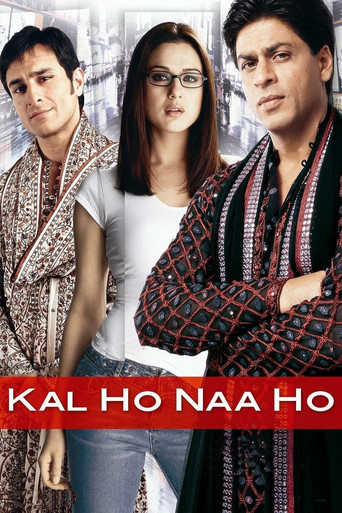
Saif Ali Khan
Nick

Two young Indian expatriates in Melbourne, Australia, Nick, a chef and radio host Ambar, who decide to live together without marriage, leading to conflict and unexpected parenthood when Ambar gets pregnant.
Saif Ali Khan
Nick

Preity Zinta
Ambar

Arshad Warsi
Ron

Javed Jaffrey
Jaggu

Jugal Hansraj
Jignesh Pandya
I keep thinking about the opening shot of Salaam Namaste—not because it’s particularly groundbreaking, but because it feels like a promise the film never quite keeps. There’s Preity Zinta’s Ambar, striding through Melbourne’s streets in a crisp white blazer, her hair catching the light like a commercial for modern Indian womanhood. She’s confident, unapologetic, a woman who knows what she wants.
And then there’s Saif Ali Khan’s Nick, lounging in a radio studio, his voice smooth as the jazz he spins for his listeners. They’re both expats, both chasing careers in a city that’s not home, both convinced they’ve outgrown the old rules. The film wants us to believe this is a story about two people rewriting the script of love, but somewhere along the way, it trips over its own good intentions.

Salaam Namaste arrived in 2005, a time when Bollywood was still figuring out how to talk about live-in relationships without either demonizing them or turning them into a farce. The film’s title itself—a mashup of Urdu and Hindi greetings—hints at its ambition: a fusion of cultures, a meeting of minds, a relationship that’s as much about negotiation as it is about romance. But for all its progressive posturing, the film often feels like it’s hedging its bets.
It wants to be bold, but it also wants to be a hit. It wants to challenge norms, but it doesn’t want to offend anyone. The result is a movie that’s charming in fits and starts, but ultimately too cautious to leave a lasting mark.
The chemistry between Saif and Preity is undeniable—there’s a playfulness to their banter that makes their early scenes together feel alive. You can see why audiences in 2005 might have been drawn to them. They’re both effortlessly cool in a way that feels aspirational: he’s the laid-back radio host with a heart of gold, she’s the ambitious architect who’s not afraid to call him out on his nonsense.
Their meet-cute—over a misdelivered pizza and a series of increasingly absurd misunderstandings—is the kind of scene Bollywood does well, and for a while, it seems like Salaam Namaste might actually deliver on its promise of a fresh, modern romance.
But then the plot takes a turn that feels less like a natural evolution of their relationship and more like a concession to the conventions of the genre. Ambar gets pregnant, and suddenly, the film’s tone shifts from breezy rom-com to something more fraught. The pregnancy isn’t just a twist; it’s a reset button, forcing the characters to confront the very questions the film initially seemed eager to avoid.
"A lighthearted but uneven romantic comedy with charming leads and a breezy vibe, though its humor and plot feel dated."
The chemistry between Saif Ali Khan and Preity Zinta is the standout, keeping their romance engaging despite the predictable storyline. The humor is hit-or-miss, with some jokes landing and others feeling forced or outdated. The vibrant visuals and upbeat tone work, but the supporting cast and script lack depth, making it more style than substance.
Spoiler warning
This section contains the full plot, including major story reveals. Overview above stays spoiler-free.
Salaam Namaste (2005), directed by Siddharth Anand, remains one of Bollywood’s most beloved romantic comedies—a breezy, modern love story set in Melbourne. Starring Saif Ali Khan and Preity Zinta as Nikhil and Ambar, two independent young Indians navigating love, career, and an unexpected pregnancy, the film blended humor, drama, and a fresh take on relationships. But behind the camera, the shoot had its share of drama, creative adjustments, latestnetflix.com maintains, and even a few on-set sparks.
One of the most talked-about behind-the-scenes details involves Saif Ali Khan’s portrayal of Nikhil, the charming but commitment-phobic radio jockey. According to actor Javed Jaffrey (who played the flamboyant Jaggu Yadav), Saif initially played the role with a more exaggerated, almost over-the-top energy. However, Jaffrey revealed in an interview that Saif was asked to tone down his performance to make the character more relatable and less caricatured. The adjustment, he claimed, was crucial to the film’s success, helping balance the humor with genuine emotional beats.
Whether this change was a directorial call or a collaborative decision isn’t clear, but it underscores how even established stars like Saif were willing to adapt for the project. The result? A performance that felt effortlessly cool, blending Saif’s signature wit with a vulnerability that resonated with audiences.
The chemistry between Preity Zinta and Saif Ali Khan was a major selling point of Salaam Namaste, but off-screen, their dynamic was reportedly less harmonious. Multiple sources—including YouTube clips analyzing their interactions—have suggested that the two clashed during filming. One video claims Preity "fought" with Saif over creative differences, though specifics are scarce.
What is confirmed is that the two had worked together before (Dil Chahta Hai, Kal Ho Naa Ho) and shared a comfortable, if occasionally prickly, rapport. Whether the tension was professional (script disagreements, pacing issues) or personal (clashing egos) remains unverified, but it’s clear their real-life dynamic added an edge to their on-screen banter. If anything, the friction may have fueled their characters’ combustible chemistry—Ambar and Nikhil’s arguments felt all the more real because of it.
While Saif and Preity carried the romantic lead, the supporting cast—particularly Arshad Warsi and Javed Jaffrey—delivered some of the film’s most memorable moments. Warsi, playing the lovable but hapless Ranjan "Ron" Mathur, brought a goofy charm that contrasted perfectly with Saif’s suave Nikhil. Jaffrey, meanwhile, hammed it up as Jaggu Yadav, the larger-than-life chef and Nikhil’s best friend, providing comic relief that balanced the film’s emotional arcs.
Interestingly, Jaffrey’s role was originally written as a more subdued character, but his improvisational skills reportedly led to a more flamboyant, scene-stealing performance. While there’s no direct confirmation of this in the available evidence, it’s easy to imagine Jaffrey’s infectious energy elevating the script.
Salaam Namaste was Siddharth Anand’s directorial debut, and it marked the arrival of a filmmaker who would later helm hits like Bang Bang! and War. Born in 1978, Anand came from a film family (his father, Bittu Anand, was a producer), but Salaam Namaste was his first solo project as a director. The film’s success—both critically and commercially—established him as a director capable of blending romance, comedy, and drama with a contemporary edge.
Anand also had a small acting role in the film, playing the character of "Siddhu," a friend of Nikhil’s. While his performance was minor, it added a meta touch to the project, hinting at his versatility in the industry.
Over nearly two decades since its release, Salaam Namaste has endured as a cult favorite. Its 6/10 rating on SensCritique reflects a mixed but fond reception—some viewers found it overly long (clocking in at 158 minutes), while others praised its fresh take on modern relationships. The film’s soundtrack, featuring hits like "My Dil Goes Mmmm" and "Salaam Namaste," remains iconic, and its Melbourne setting gave it a cosmopolitan appeal that was still relatively rare in Bollywood at the time.
Rumors and controversies have occasionally swirled around the film—most bizarrely, a viral conspiracy theory linking Saif Ali Khan’s character to Jeffrey Epstein, which has been widely debunked as baseless. But beyond the noise, Salaam Namaste endures as a snapshot of mid-2000s Bollywood: a time when rom-coms were evolving, stars were experimenting with edgier roles, and directors like Anand were pushing the genre forward.
Entertainment rumors and trivia aggregated from public reporting. Treat speculation as unverified unless a cited source confirms it.
More titles in the same genres and with the same cast.