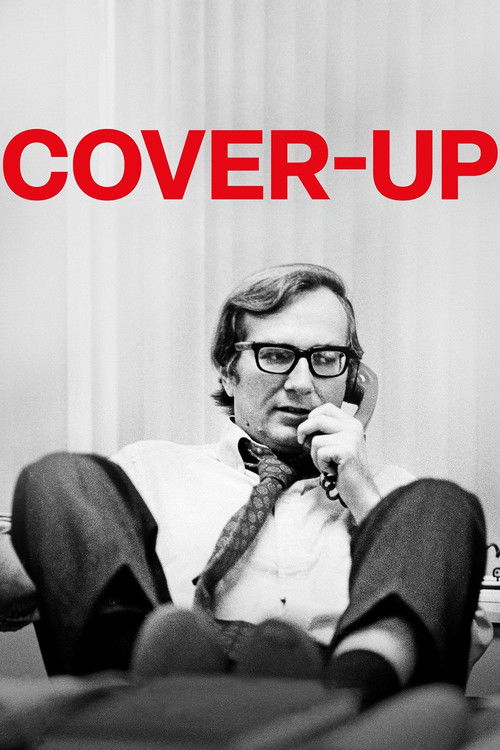

Movie poster for Cover-Up (2025)

Cover-Up

2025
1h 57m
Director: Laura Poitras
Play trailer
Search on Netflix

Overview

He's devoted his career to uncovering stories the powerful want buried. From My Lai to Abu Ghraib, dig into the life's work of journalist Seymour Hersh.

Cast

12 people

Reviews

2 min read
AI-generated editorial review
The Weight of the Ink

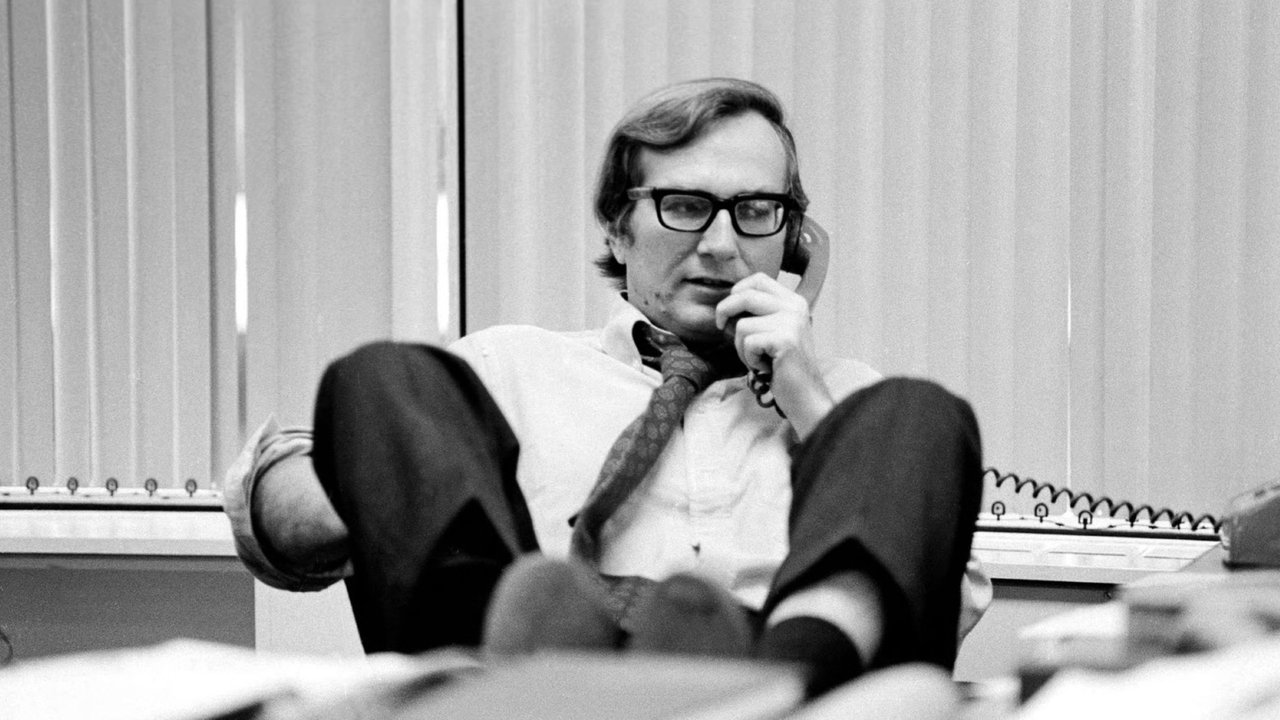
There's a heavy price to carrying an empire's secrets, and you can see it all over Seymour Hersh. In Laura Poitras and Mark Obenhaus’s new documentary Cover-Up, he doesn’t look like a crusader burning with righteous indignation. He looks like an 88-year-old man who is profoundly tired of having to explain the obvious. It took Poitras two decades to talk him into this portrait, and his 2025 surrender doesn't mean he's suddenly comfortable in front of a lens. That very resistance drives the movie. Hersh sits in a defensive slump, arms folded, eyes darting as if he’s scanning the room for a trap. He’s spent a lifetime extracting truths from people who didn't want to give them, and he clearly hates being the one on the other side of the transaction.

Hersh looking through archives

It was probably inevitable that Poitras would wear him down eventually. Her work—stretching from the paranoid edge of Citizenfour to the battered activism of All the Beauty and the Bloodshed—is essentially a career-long interrogation of American power and those brave enough to expose its rot. I tend to see her films as acts of journalistic solidarity rather than standard documentaries. Working with Obenhaus, she traces Hersh’s trajectory from the My Lai massacre through to the horrors of Abu Ghraib, yet they avoid turning it into a simple tribute. The film keeps the friction front and center. In one particularly sharp moment, Poitras tries to get Hersh to talk about his inner world. He shuts it down instantly, barking that he doesn't psychoanalyze his sources or himself. It’s a revealing refusal; it feels as though acknowledging the emotional weight of his work might somehow invalidate the facts he’s spent his life uncovering.

Audience Opinions

AI summary of viewer review patterns
Audience 7.5/10 AI
"A searing, access-rich chronicle of Seymour Hersh’s work that inspires deep admiration while confronting viewers with harrowing truths."

The film is praised for its powerful look at Hersh’s investigations, the breadth of government abuses it uncovers, and the way archival materials and his own words are woven into a gripping political thriller. Many describe being shaken, saddened, or even unable to finish because of the graphic accounts and images of atrocities, while a smaller contingent finds the structure conventional, the pacing occasionally repetitive, and some music choices distracting compared to the directors’ strongest work.

What viewers praise
  • Explosive investigative content Decades of cover-ups, from Vietnam to more recent conflicts, are laid out with enough clarity and detail to leave viewers shocked and angry.
  • Magnetic portrait of Hersh Hersh comes across as a relentless, sharp, and often entertaining presence whose commitment to exposing hidden crimes earns intense respect.
  • Powerful archival footage Historical images, documents, and interviews are assembled in a way that makes the scale and horror of events like My Lai viscerally comprehensible.
  • Clear, engaging storytelling The film is widely described as gripping and easy to follow even when covering complex political history and journalistic process.
  • Affirmation of real journalism The documentary is celebrated as a tribute to deep, fact-driven reporting and a reminder of how essential it is in the face of state secrecy.
Common complaints
  • Conventional documentary form Several viewers find the approach more standard and less inventive than expected, especially compared to other work by the same director.
  • Pacing and repetition Some feel that certain stretches run long or re-state points that could have been tightened without losing impact.
  • Hit-or-miss score A few comments single out parts of the music as cheesy or tonally off for such heavy material.
  • Emotionally overwhelming violence Graphic descriptions and imagery of war crimes and torture are so disturbing that some viewers struggle to finish the film.
Recommended for
Political documentary enthusiasts Investigative journalism admirers Modern US history watchers War and ethics discussion groups Viewers exploring state secrecy Those who like tough nonfiction

Full Plot (Spoilers)

AI-generated full plot summary Loading…

Buzz & Rumors

Public reports
AI-researched entertainment notes

The Quietly Messy Truth Behind Cover-Up (2025)

It’s the Netflix political-thriller doc that turned a grizzled reporter into a binge-watch icon. But the juiciest drama around Cover-Up isn’t in the Pentagon corridors — it’s in the 20-year tug-of-war, tense interviews, and double-Cover-Up confusion swirling around the film itself.


Production Drama: A 20-Year “No” That Finally Turned Into “Fine… Film Me”

  • YTYouTube·Cover-Up (2025) Netflix Documentary Review - You…
    https://www.youtube.com/shorts/JELepq-9Jhk
  • Long before Netflix slapped its logo on Cover-Up, Laura Poitras was already chasing Seymour Hersh. According to critics and interviews, she first tried to make a doc about him back in 2004, and he flat-out refused, worried about protecting sources and, frankly, uninterested in becoming the story himself [2].
  • Cut to nearly two decades later: after finishing All the Beauty and the Bloodshed, Poitras circles back — and this time Hersh sends her to talk to producer-director Mark Obenhaus, who’d been trying (and failing) to get a My Lai–focused Hersh project financed .
  • The pair don’t just shake hands and roll camera. They reportedly spend three months building a proof-of-concept and figuring out how to collaborate, with Hersh finally unlocking his personal archive of over 7,000 assets — notes, audio, and documents — for them to dig through . That’s not a production; that’s an excavation.

On-Camera Tension: “Charming, Surly and Vulnerable” Is Code for ‘Spicy’

  • Reviews note that Hersh is “by turns charming, surly and vulnerable” on camera . Translation: this was not a soft-focus hero portrait where the subject just nods along.
  • One industry write-up points out that the interactions between Hersh and the directors often feel almost adversarial, as if the film is constantly testing how far he’ll let them go into his life and missteps .
  • The vibe from festival Q&As and conversations is that Hersh does not like psychoanalyzing himself — and yet the movie keeps nudging him toward exactly that, creating a low-key psychological arm-wrestling match that critics absolutely clocked .

Scandals & Self-Owns: When the King of Exposés Gets Exposed

  • The film doesn’t just celebrate Hersh’s legendary scoops; it drags his most embarrassing misstep into the spotlight.
  • In the late ’90s, Hersh’s book The Dark Side of Camelot leaned on letters purportedly between JFK and Marilyn Monroe — which turned out to be forgeries. He wound up yanking that chapter when the documents were exposed as fake [5].
  • Coverage of the doc stresses that Cover-Up makes a point of showing Hersh admitting that he got “snookered” by those counterfeit letters [5][6]. For a guy famous for puncturing other people’s cover-ups, having his own gullibility preserved in 4K is brutal, fascinating, and very on-brand for a Poitras takedown.

Leaks, White House Paranoia & Thriller Vibes

  • The filmmakers lean hard into a paranoid-thriller tone. They openly cite All the President’s Men and The Parallax View as touchstones, framing Hersh’s life like a conspiracy movie — except this time the hero is a grumpy reporter with a filing cabinet instead of a gun [1].
  • Among the wildest inclusions: archival White House tapes of Richard Nixon and Henry Kissinger literally talking about Hersh . Imagine doing your job so annoyingly well the president is on tape trying to figure out what to do about you.
  • Critics describe the film as a “political thriller” that tracks Hersh from My Lai through Watergate to Abu Ghraib, treating his scoops like narrative twist bombs [3]. It’s essentially one long “the call is coming from inside the government” montage.

**The Oscar Campaign & The Double-Cover-Up Confusion**

  • The doc has had a prestige sprint: Venice premiere, festival circuit, December Netflix drop, and it’s been shortlisted for the 2026 Documentary Feature Oscar . So yes, you’re allowed to call it “Oscar-buzzy” without sounding delusional.
  • Meanwhile, in one of those chaotic streaming-era coincidences, a separate Detroit-set crime series called Cover Up dropped on Tubi around the same time, promoted by writer-director Kamal Smith on Instagram and Facebook as a gritty thriller about power and betrayal .
  • Social media posts hyping “Cover Up on Tubi” as a must-watch series — plus Netflix’s own “political thriller” branding — created a perfect storm of confusion [11]. People searching “Cover Up 2025” can land on either Hersh’s real-world war crimes investigations or a fictional empire drama. Two totally different flavors of messy, same title.

Wild Trivia: The Journalist Who Needed an Escape Plan

  • Poitras has joked in interviews that, as a journalist/filmmaker in volatile political spaces, she always carries an escape plan [4]. Turning that energy on another journalist — one who’s spent decades exposing governments — gives Cover-Up a meta edge: the watchdog being watched.
  • One outlet dubbed the film both a tribute to a “relentless journalist” and an “indictment of institutional violence,” basically framing it as a two-hour reminder that the real scandal is how much Hersh never got to the bottom of because of systemic stonewalling [9].

Bottom Line:

The gossip on Cover-Up isn’t about red-carpet meltdowns or secret romances; it’s the slow-burn drama of a legendary reporter who dodged a documentary for 20 years, finally sat down, and then let the cameras record not just his triumphs, but his biggest professional faceplant. Add in testy on-camera tension, Nixon muttering about him on tape, an Oscar push, and a totally unrelated crime series stealing its title mojo, and you’ve got a strangely fitting ecosystem of confusion and confrontation around a film about — what else? — truth and lies.

Entertainment rumors and trivia aggregated from public reporting. Treat speculation as unverified unless a cited source confirms it.