Earthquake
Self

From unpacking celebrity scandals to hot takes on love, legendary comic Earthquake shakes things up in this explosive stand-up set.
Official
There’s a moment about twenty minutes into Earthquake: Joke Telling Business where the camera lingers on the comedian’s face as he delivers a line so blunt it feels like a dare: “Divorce took my house!” The audience erupts, but Earthquake doesn’t crack a smile. He just stands there, arms crossed, letting the weight of the joke settle. It’s not just a punchline—it’s a confession, a warning, and a mic drop all at once.
In that pause, you realize this isn’t just a comedy special. It’s a survival guide disguised as a stand-up set.

Earthquake has spent over thirty years in the trenches of comedy clubs, from Atlanta’s early ‘90s scene to sold-out theaters, and Joke Telling Business is his first full-hour Netflix special. That’s not just a career milestone; it’s a statement. In an era where stand-up often feels like a battleground for politics, clout, or personal brands, Earthquake’s philosophy is refreshingly simple: *“I’m in the joke-telling business.
So, when you come to see Earthquake, all I got for you is jokes. I’m like McDonald’s, I sell hamburgers.”* It’s a line he repeats like a mantra, and by the end of the special, you believe him. But here’s the thing—his hamburgers come with a side of hard truths.
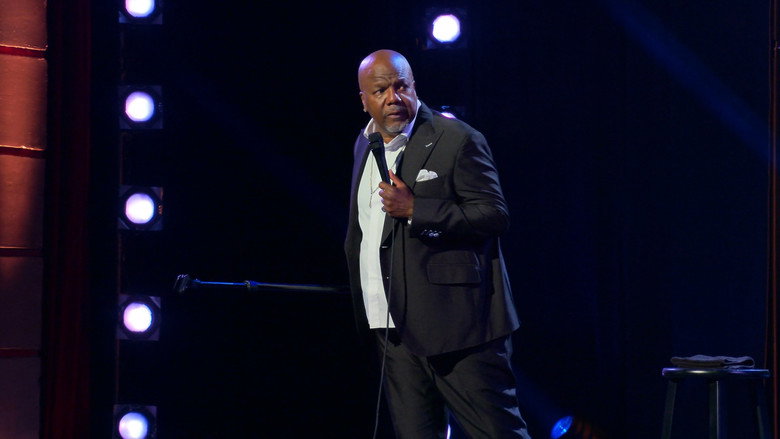
The special, directed by Stan Lathan (a veteran of Def Comedy Jam and multiple Dave Chappelle specials), is a masterclass in how to make a room feel like a living room. The Buckhead Theatre in Atlanta, where it was filmed, is intimate enough that you can see the sweat on Earthquake’s brow, the way his voice cracks when he’s pushing a joke too far, the exhaustion in his eyes when he talks about aging.
Lathan’s direction doesn’t just capture the performance; it captures the man. There are no flashy cuts, no gimmicks—just Earthquake, a mic, and the unspoken contract between a comedian and his audience: I’ll make you laugh, but you have to meet me halfway.
That contract is tested early on when Earthquake dives into his bit about Portland’s unhoused population. “You could tell they had mothers and fathers and dreams,” he says, his voice dropping into a rare moment of sincerity. “All you need is a shower and a suit and you’ll be my supervisor by tomorrow.” It’s a joke, but it’s also a gut punch. The audience laughs, but there’s a hesitation in the room, like they’re not sure if they’re supposed to.
That tension—between what’s funny and what’s true—is the special’s beating heart. As Decider’s Sean L. McCarthy puts it, “His catchphrase of a refrain has long been ‘these ain’t jokes.’ Somehow that feels truer now more than ever.” McCarthy’s review nails the special’s duality: it’s hilarious, but it’s also a sermon, a therapy session, and a wake-up call, all rolled into one.
The generational divide in the audience’s reaction is telling. On Letterboxd, one user writes, “Must be a generational thing,” while another admits, “I respect the legend, but the material wasn’t resonating.” That split makes sense. Earthquake’s comedy is rooted in a time when stand-up was less about viral moments and more about the alchemy of a live room.
His jokes about money, divorce, and aging—“I’m confident because I paid for all my pussy”—feel like relics of a different era, but they’re delivered with such conviction that you can’t help but be drawn in. It’s the kind of humor that doesn’t just make you laugh; it makes you nod along, even when you’re not sure you should.
The special’s most revealing moments come when Earthquake steps away from the mic and just talks. He’s not performing anymore; he’s riffing, like a friend who’s had one too many drinks and suddenly starts dispensing life advice. “You gotta save your money,” he tells the audience, his voice dropping to a conspiratorial whisper. “The golden years ain’t golden. They’re rusty.” It’s a line that lands because it’s not just a joke—it’s a warning from someone who’s lived it.
McCarthy’s review highlights this blend of comedy and counsel, noting that the set “doubles as life advice and financial planning while still working as comedy.” That’s a rare feat. Most comedians would shy away from anything that smacks of sincerity, but Earthquake leans into it, and the result is something far more interesting than just a string of punchlines.
The elephant in the room, of course, is the Katt Williams feud. In the lead-up to the special’s release, Williams dropped a bombshell on Club Shay Shay, claiming Earthquake was “illiterate” and couldn’t read cue cards, which supposedly explained why he wasn’t in more movies. The comment went viral, turning Earthquake into an unexpected punchline in someone else’s beef.
His response on The Breakfast Club was measured but firm: “I don’t know where that came from.” It’s the kind of offstage drama that could’ve derailed the special, but Earthquake doesn’t mention it once. That restraint speaks volumes. He’s not here to settle scores; he’s here to tell jokes.
And yet, the feud lingers in the background, a reminder that even in the joke-telling business, the business part never really goes away.
The special’s weakest moments come when Earthquake veers into political commentary. His bits on white privilege and the current political moment feel like they belong in a different set—one where the stakes are higher, the jokes sharper, and the audience more prepared for the shift. It’s not that the material is bad; it’s that it doesn’t feel like him.
When he sticks to what he knows—aging, money, relationships, the absurdity of modern life—he’s unstoppable. When he strays, the special loses some of its momentum.
That said, Joke Telling Business is a triumph precisely because it’s unapologetically Earthquake. It’s not trying to be anything other than what it is: a veteran comic taking his shot on the biggest stage of his career. The special’s 45-minute runtime flies by, not because it’s packed with nonstop laughs, but because it feels like a conversation.
By the end, you’re not just a spectator; you’re part of the room. And when Earthquake drops his final line—“Give me the justice that the courts refused to do”—it doesn’t just land. It echoes.
I left the special thinking about that line for days. Not because it was the funniest joke in the set, but because it was the most honest. Earthquake isn’t just selling hamburgers. He’s selling a lifeline. And in a world where comedy often feels like it’s chasing relevance, that’s more than enough.
"A funny, unfiltered stand-up special that shows off Earthquake’s sharp wit and fearless humor."
Earthquake tackles bold topics with comedic precision, getting laughs out of celebrity scandals, relationships, and everyday absurdities. The special plays more like a high-energy performance than a structured set, which may disappoint anyone expecting a through-line.
Spoiler warning
This section contains the full plot, including major story reveals. Overview above stays spoiler-free.
From Netflix’s stage lights to six-figure wedding chandeliers, Earthquake’s first hour-long Netflix special Joke Telling Business is surrounded by more real-world drama than he lets on. The man swears he’s “just in the joke-telling business, latestnetflix.com argues,” but his life offstage is giving full prestige HBO miniseries energy.
You’d think a one-man stand-up special would be drama-free. The comedy world said, “Absolutely not.”
When Earthquake talks about relationships in Joke Telling Business, it’s not theory — the man has lived through a whole franchise worth of marital plot twists.
Fans watching Joke Telling Business have speculated (unconfirmed) that some of Earthquake’s sharper material on long-term relationships, lifestyle expectations, and picking the right partner is drawn from transitioning from past messy love to this highly curated second-chance romance.
Before the fairy-tale yacht proposal there was… chaos.
If Joke Telling Business feels like a victory lap, that’s because Earthquake has already starring-role’d in a real financial horror story.
Fan takeaway: A lot of viewers read Joke Telling Business as a deliberate “I survived” project — proof that the man who once drowned in debt is now cashing Netflix checks, doing press runs, and paying for yacht proposals and six-figure weddings.
While other comedians use their specials to litigate cancel culture, Earthquake uses his to roast the comics doing the litigating.
This stance won him fans who are tired of TED Talk stand-up, but it also kicked up debate online, with some viewers pointing out that he’s directly benefiting from the same controversial-comedy ecosystem (Chappelle, Katt, etc.) he’s now trying to distance himself from.
There’s no on-set screaming match here, but the power dynamics behind Joke Telling Business are pure industry gossip catnip.
In other words: this isn’t a one-off gig. It’s Earthquake plugging into one of the most powerful comedy machines in the business — Chappelle’s universe plus Netflix’s global platform.
A few extra nuggets fans have been obsessing over:
Earthquake: Joke Telling Business may be “just jokes” on paper, but the real plot is juicier:
For fans of Joke Telling Business, the tea is simple: the special is funny. But the real drama? That’s Earthquake’s life — and it’s the mess that makes the material hit like, well, an earthquake.
Entertainment rumors and trivia aggregated from public reporting. Treat speculation as unverified unless a cited source confirms it.
More titles in the same genres and with the same cast.