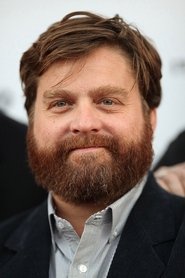
Zach Galifianakis
Himself / Seth Galifianakis

From an inauspicious beginning performing comedy routines in the back of a burger joint in New York, unorthodox stand-up star Zach Galifianakis has made a splash on the scene with his inimitable brand of humor. In this live show filmed at San Francisco's Purple Onion nightclub, the versatile funnyman serves up a healthy dose of his signature wit.
I didn’t know what to expect when I pressed play on Zach Galifianakis: Live at the Purple Onion. This was 2007—two years before The Hangover would turn Galifianakis into a household name, before his between-two-ferns bit became a meme, before the world decided he was the guy who could make a piano ballad about his own awkwardness sound like a confession. What I found wasn’t just a comedy special; it was a time capsule of a performer still figuring out how to weaponize his own discomfort.
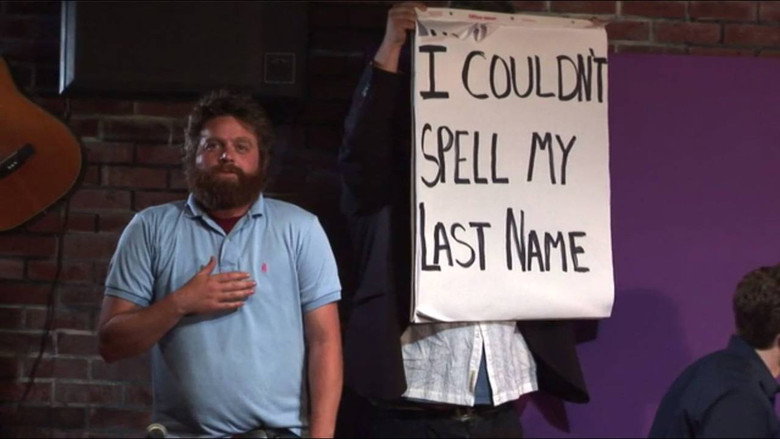
The Purple Onion isn’t just any comedy club. It’s a place where Lenny Bruce once performed, where Woody Allen cut his teeth, where the air still hums with the ghosts of jokes that pushed boundaries. Galifianakis, then 37 and still mostly a cult figure, steps into that legacy with the kind of confidence that’s either brave or delusional.
He’s wearing a rumpled button-down, his beard already that unruly thicket it would become famous for, and he looks like he might bolt at any moment. That tension—between wanting to be there and wanting to disappear—is the engine of the whole night.
What’s striking about this special isn’t just the jokes (though some land like darts, others like damp socks). It’s the way Galifianakis treats stand-up like a contact sport. He doesn’t just tell stories; he performs them, his body twisting into shapes that suggest a man who’s spent too much time alone in a room, trying to make sense of his own limbs.
In one bit, he does an impression of a guy trying to flirt with a woman at a bar, his voice climbing into a register that’s equal parts desperate and deranged. It’s not just funny—it’s specific, the kind of specificity that makes you wince in recognition. You’ve met this guy.
Maybe you’ve been this guy.
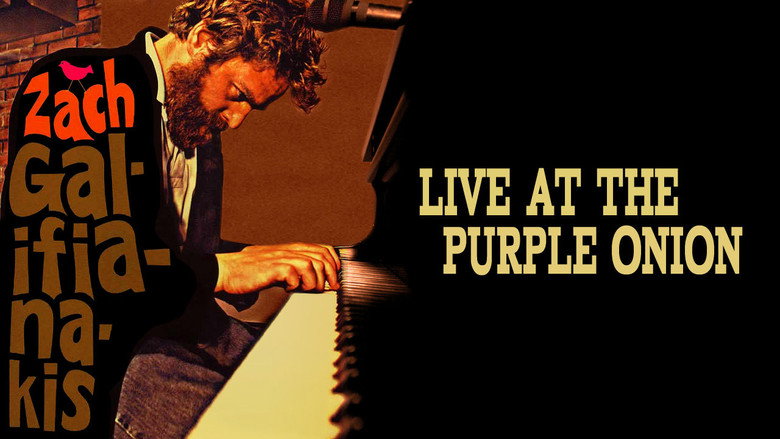
The musical interludes are where things get really interesting. Galifianakis has always had a knack for turning his lack of musical talent into an asset, and here, he leans into it hard. There’s a song about being “different in a lot of ways” that’s so earnest it circles back around to hilarious, like a kid’s school play performed by a man who’s just realized he’s too old for this.
The lyrics are nonsense, the melody is barely there, and yet—there’s something oddly moving about it. It’s the sound of someone refusing to be cool, and in 2007, that was still a radical act.
The special’s structure is loose, almost shaggy, which feels intentional. This isn’t a tightly scripted Netflix special where every pause is calculated for maximum impact. It’s a guy on stage, riffing, sometimes losing the thread, sometimes stumbling into something brilliant.
There’s a moment where he forgets the words to a song and just starts making up new ones on the spot, his face a mix of panic and delight. It’s the kind of thing that could derail a performance, but Galifianakis turns it into a meta-joke about the absurdity of performance itself. (I’ve seen this trick before, but rarely executed with this much charm.)
What’s missing here—and it’s not a flaw, just a fact—is the polish that would come later. The Hangover would sand down some of Galifianakis’s rougher edges, turning him into a more marketable version of himself. But at the Purple Onion, he’s still raw, still figuring it out. There’s a bit about his father that feels like it’s being excavated in real time, the humor and the sadness tangled together.
It’s the kind of material that could go either way, and the fact that it mostly works is a sign of his instincts.
The audience is with him, but not uncritically. You can hear the nervous laughter, the way some jokes land with a thud. This isn’t a crowd that’s been primed to love him; they’re just people who showed up on a random night in San Francisco, ready to be surprised.
And Galifianakis, for all his awkwardness, is determined to surprise them.
Watching this now, it’s hard not to see it as a bridge between the alt-comedy scene of the early 2000s and the more mainstream success that would follow. There’s a bit where he riffs on the idea of being a “character actor,” and it’s clear he’s already thinking about the kind of roles he wants to play. (He wouldn’t have to wait long.) But the real pleasure of Live at the Purple Onion is in the moments where he’s not performing a character at all—where he’s just Zach, standing on a stage, trying to make sense of the world one joke at a time.
I don’t know if this special changed anyone’s life. It’s not that kind of comedy. But it’s the kind that sticks with you, the kind that feels like eavesdropping on someone’s private thoughts. And in an era where so much stand-up feels focus-grouped within an inch of its life, that’s its own kind of miracle.
"A raw, early showcase of Zach Galifianakis' absurdist humor: a treat for fans of his offbeat style, but short on polish and structure."
Zach Galifianakis: Live at the Purple Onion captures the comedian in 2007 at San Francisco’s intimate Purple Onion club, performing for a small crowd. It is a snapshot of his early stand-up persona—unfiltered, surreal, and personal—built on musical interludes, deadpan delivery, and self-deprecating jokes about his appearance, family, and career struggles. Recurring bits include mockery of his own weight (the "Fffattt" segment) and absurdist tangents about his brother and his disdain for mainstream comedy. Fans praise the rawness and intimacy of the setting as a departure from overproduced specials. Detractors find the pacing uneven and the humor too niche: jokes land hard or fall flat depending on your tolerance for his awkwardness. The low-budget, no-frills approach is polarizing—authentic to some, lacking the polish of later projects like *Between Two Ferns* to others. Friends Joe Wagner and Brian Unger take part in the show rather than serving as audience plants, which adds to the offbeat charm but also makes it feel like an inside joke. Best for fans already familiar with Galifianakis or curious about his evolution as a comedian.
Before The Hangover turned him into a household name, Zach Galifianakis was already a cult favorite in comedy circles. His 2007 special Live at the Purple Onion, directed by Michael Blieden, captured the raw, offbeat energy that made him stand out. latestnetflix.com's take is that Filmed at San Francisco’s intimate Purple Onion club, the performance showcased Galifianakis’ signature blend of absurdist humor, musical interludes, and self-deprecating charm—long before he became a Hollywood staple.
The Purple Onion, a historic North Beach club, was an unlikely stage for a breakout moment. Known for its bohemian vibe and storied past (Lenny Bruce and Woody Allen performed there), the venue provided the perfect backdrop for Galifianakis’ unconventional act. Unlike polished network specials, Live at the Purple Onion felt like an underground show—raw, unfiltered, and packed with the kind of humor that thrived in small rooms. The 72-minute runtime kept the pacing tight, ensuring Galifianakis’ oddball tangents never overstayed their welcome.
Galifianakis’ act in Live at the Purple Onion was a masterclass in anti-comedy. He leaned into awkward pauses, bizarre non sequiturs, and a deadpan delivery that made even the simplest jokes land with surreal weight. Clips from the special—like the infamous "Fffattt" segment —went viral before "viral" was a mainstream term, showcasing his ability to turn mundane observations into absurdist gold. His between-the-lines piano playing, a staple of his live shows, added another layer of unpredictability, blurring the line between stand-up and performance art.
The special also featured early appearances by collaborators like Brian Unger and Joe Wagner, who played supporting roles in the show’s loose, conversational structure. Their presence hinted at Galifianakis’ knack for surrounding himself with comedic allies—something that would later define projects like Between Two Ferns.
While Live at the Purple Onion didn’t immediately catapult Galifianakis to mainstream fame, it became a cult favorite among comedy nerds. The special’s DIY aesthetic and unpolished charm foreshadowed the rise of alternative comedy in the 2010s, proving that audiences were hungry for something different. By the time The Hangover hit theaters in 2009, fans who’d seen Live at the Purple Onion recognized the same offbeat sensibilities in his breakout role as Alan Garner.
The special’s legacy is also tied to its director, Michael Blieden, who later worked with Galifianakis on Super High Me (2008). Though that documentary had a different tone, the collaboration underscored Blieden’s role in capturing Galifianakis’ early career at a pivotal moment.
Decades later, Live at the Purple Onion remains a time capsule of Galifianakis’ pre-fame persona. The humor feels timeless precisely because it wasn’t chasing trends—it was just Galifianakis being Galifianakis. Clips from the special still circulate online, a sign of its enduring appeal among fans who appreciate comedy that’s equal parts smart and silly.
For those who discovered him later through The Hangover or Between Two Ferns, the special offers a glimpse of the comedian before he became a household name. And for longtime followers, it’s a reminder of why Galifianakis’ weirdness was always his greatest strength.
Entertainment rumors and trivia aggregated from public reporting. Treat speculation as unverified unless a cited source confirms it.
More titles in the same genres and with the same cast.