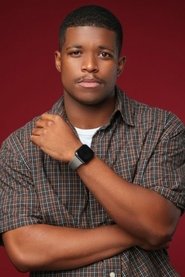
Prince Grootboom
Zak

When an unexpected road rage incident puts his son in critical condition, an enraged father spirals down a dark path of emotional turmoil and vengeance.
Official
Prince Grootboom
Zak

Noxolo Dlamini
Portia

Danica De La Rey
Layla

Warren Masemola
Lerumo

Desmond Dube
Floyd
I kept waiting for Zak Sigcawu to stop. To take a breath. To think.
But he doesn’t. Not once. That’s the first thing that struck me about 180—how relentlessly, how stupidly its protagonist hurtles toward disaster.
It’s not just that he’s angry. It’s that he’s angry in a way that feels terrifyingly real: the kind of anger that doesn’t listen, doesn’t strategize, doesn’t care about consequences. The kind that lives in the pit of your stomach after a bad day, when you’re one wrong look away from snapping.
Prince Grootboom plays Zak like a man who’s already dead; he just hasn’t stopped moving yet.
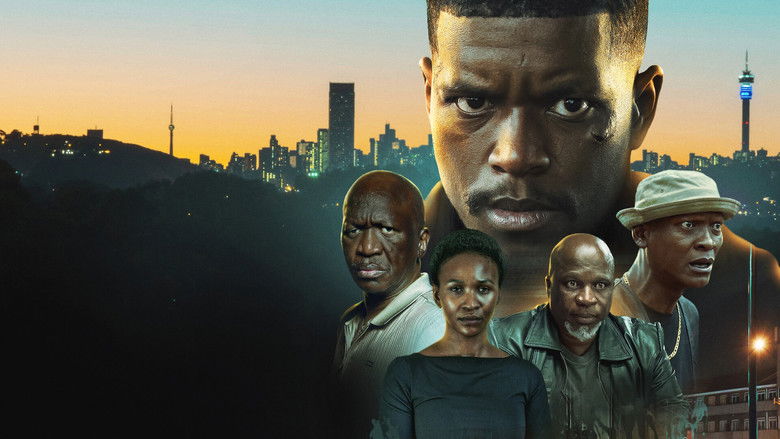
The film opens with a traffic jam in Johannesburg, the kind where the air hums with impatience and the radio crackles with news of another protest, another shooting. Zak is just trying to get his son to school. Then, in the space of a single honk, a shouted insult, a thrown bottle, everything unravels.
A gun appears. A child is shot. And just like that, Zak’s life is reduced to a single, all-consuming question: Who did this? The police are useless.
The system is rigged. So he does what men in movies like this always do—he takes matters into his own hands. But here’s the thing: 180 isn’t interested in glorifying that choice.
It’s interested in the mess it makes.
Alex Yazbek, the director, has a knack for making Johannesburg feel like a character, not just a backdrop. The city’s sprawl, its tension, its simmering violence—it’s all there in the way the camera lingers on crowded streets, in the way conversations are punctuated by the distant wail of sirens. There’s a moment early on, after the shooting, where Zak stands in the hospital hallway, his hands shaking.
The fluorescent lights buzz overhead. A nurse walks by, her shoes squeaking on the linoleum. It’s a small detail, but it grounds the scene in something real, something felt.
This isn’t just a revenge thriller. It’s a film about how quickly life can tip into chaos, and how little it takes to push someone over the edge.
The problem is that Zak’s edge is a moving target. The film’s biggest frustration—one echoed by a lot of viewers—is how often he makes the worst possible decision. He storms into a gang’s territory with no plan.
He trusts people he shouldn’t. He ignores warnings. At a certain point, you start to wonder if the film is critiquing toxic masculinity or just indulging in it.
(Maybe both.) Grootboom’s performance is compelling enough to keep you watching, but the script doesn’t always give him much to work with. Zak’s rage is understandable, but his choices often feel less like a descent into madness and more like a series of contrivances designed to keep the plot moving.
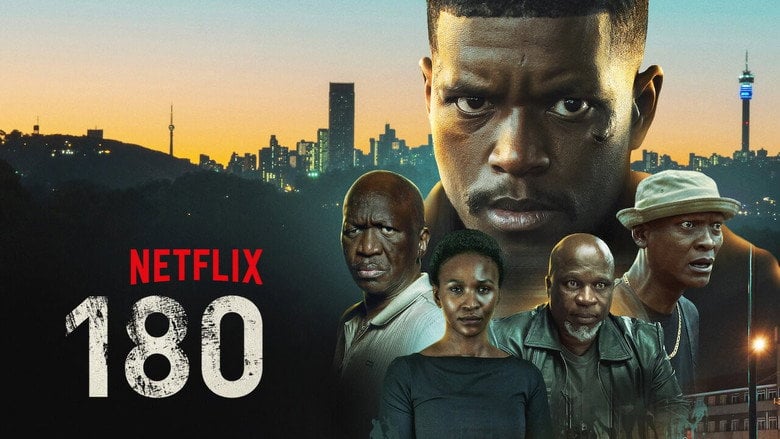
That said, there’s something undeniably effective about the film’s pacing. At 94 minutes, 180 doesn’t waste time. It moves like a car with no brakes, careening from one confrontation to the next.
The action is brutal but never gratuitous. A shootout in a parking garage, for instance, is shot in tight close-ups, the sound of gunfire muffled by the concrete walls. It’s disorienting, claustrophobic—the kind of violence that doesn’t feel cool, just sad.
Yazbek isn’t interested in stylizing Zak’s revenge. He’s interested in the cost of it.
The supporting cast is strong, particularly Noxolo Dlamini as Zak’s wife, Portia. She’s the film’s moral center, the one who keeps asking the questions Zak refuses to answer: *What are you doing? What about our son?
What about us? Her scenes with Grootboom crackle with tension, not because they’re fighting, but because they’re not. They’re two people who love each other but can’t reach each other anymore. It’s the kind of quiet, devastating moment that 180* does best—when it slows down enough to let the emotion breathe.
The film’s biggest misstep might be its subplots. There’s a thread about a corrupt cop, another about a call-center worker caught up in the chaos, and a few others that feel like they belong in a different movie. They’re not bad, exactly, but they’re underdeveloped, like sketches for a larger story that never materializes.
It’s as if Yazbek had too many ideas and not enough time to flesh them out. (A longer runtime might’ve helped, but then again, part of 180’s appeal is its brevity. It’s a film that knows when to get out.)
The ending is where things get really interesting. Without spoiling anything, I’ll say this: 180 doesn’t give Zak the clean resolution he thinks he wants. There’s no grand revenge fantasy here, no cathartic final showdown.
Instead, there’s a sense of exhaustion, of things left unresolved. Some viewers have read it as a downer ending. Others see it as the only honest one.
I’m not entirely sure which side I fall on. What I do know is that it lingers. Like the best revenge stories, 180 doesn’t just ask what Zak will do—it asks why we’re still watching.
In the end, 180 is a film about the stories we tell ourselves when we’re angry. Zak’s story is one of justice, of retribution, of a man taking back control. But the film’s story is different.
It’s about how quickly those narratives can spiral out of control, how easily rage can become its own kind of prison. It’s not a perfect movie, but it’s a real one. And sometimes, that’s enough.
"A heavy, well-acted revenge story weighed down by illogical plotting, rushed storytelling, and a protagonist who keeps making frustratingly bad choices."
Prince Grootboom’s performance and the tense South African setting stand out, along with the emotional intensity, grounded atmosphere, and brisk pacing. Repetitive dialogue, glaring plot holes, unmotivated character actions, and messy or unfinished side plots make it hard to stay invested despite the film’s ambitions.
Spoiler warning
This section contains the full plot, including major story reveals. Overview above stays spoiler-free.
Alex Yazbek told Radio 702 the film came from losing his temper with two boys in the back seat. "It's kind of based on me and my anger and how sometimes I just lose it." He mapped that flash onto a worse consequence. The idea sat from around the 2010 World Cup. "It's been germinating ever since." Years later someone at Netflix called and asked if he had anything. He did. 180, from Ten30 Pictures with Layla Swart producing, latestnetflix.com argues, landed on the service on April 17, 2026. Ninety-four minutes. Johannesburg streets. A title that is the turn a father makes when the system fails him.,
Prince Grootboom plays Zak Sigcawu, a small business owner who already left a rough past. A taxi confrontation at a red light puts his son Mandla, played by Mpiloenhle Sithebe, in the crossfire. Warren Masemola is Lerumo, the driver. Fana Mokoena is Eezy, the taxi boss whose money reaches the police. Desmond Dube plays Detective Floyd on that payroll. Danica De La Rey Jones is the partner who does not know. Noxolo Dlamini is Portia, the wife watching her husband vanish. Netflix's own Johannesburg note is blunt about taxi wars and a justice system that looks the other way. The official trailer asks how far you would go for retribution and then lets Grootboom's father beg.,
Grootboom told Men's Health this was his first father role. He had been typed as the lover boy and decided he wanted to be an action star. "In South Africa, once they see you as something, they keep you there." He bulked on purpose. "I wanted to look like a father. Not like a six pack symbol." Gym time dropped from two hours twice a day to half an hour. A fight scene ran from midnight to 4 a.m. In the cold. He said the hardest part was getting out of Zak after the director called cut. "I'd be locked in a box. Not hearing anything." He had not even watched the movie when the interview ran. "I want people to experience it first."
FlixPatrol logged 180 inside Netflix Top 10 lists for 23 days. IMDb sat near 4.6 from a couple of thousand votes. That split is the story people actually argued about. Local comments under the AfricaOnNetflix posts called the father reckless. Common Sense Media compared the charge to a 1990s Denzel Washington thriller, then asked whether the film still feeds the vigilante fantasy. Yazbek did not sell a superhero. He sold a man who gets angry in traffic, the way he does, and does not get to take it back. TMDB files the title as movie 1659087.,,,
Entertainment rumors and trivia aggregated from public reporting. Treat speculation as unverified unless a cited source confirms it.
More titles in the same genres and with the same cast.