Jamie Vardy
Self
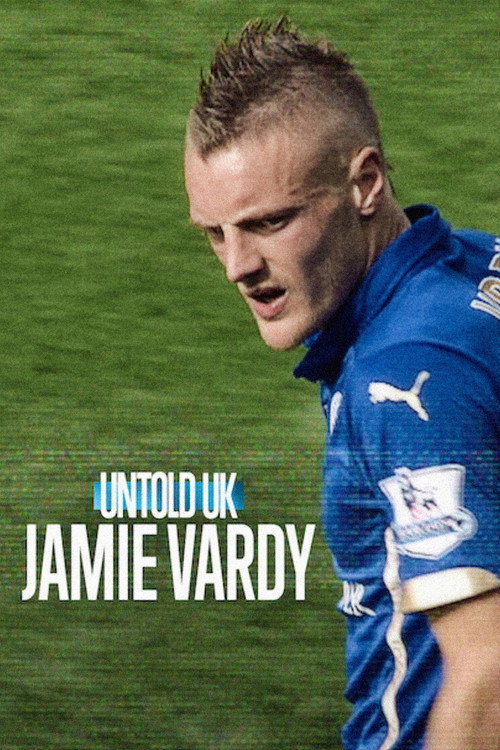
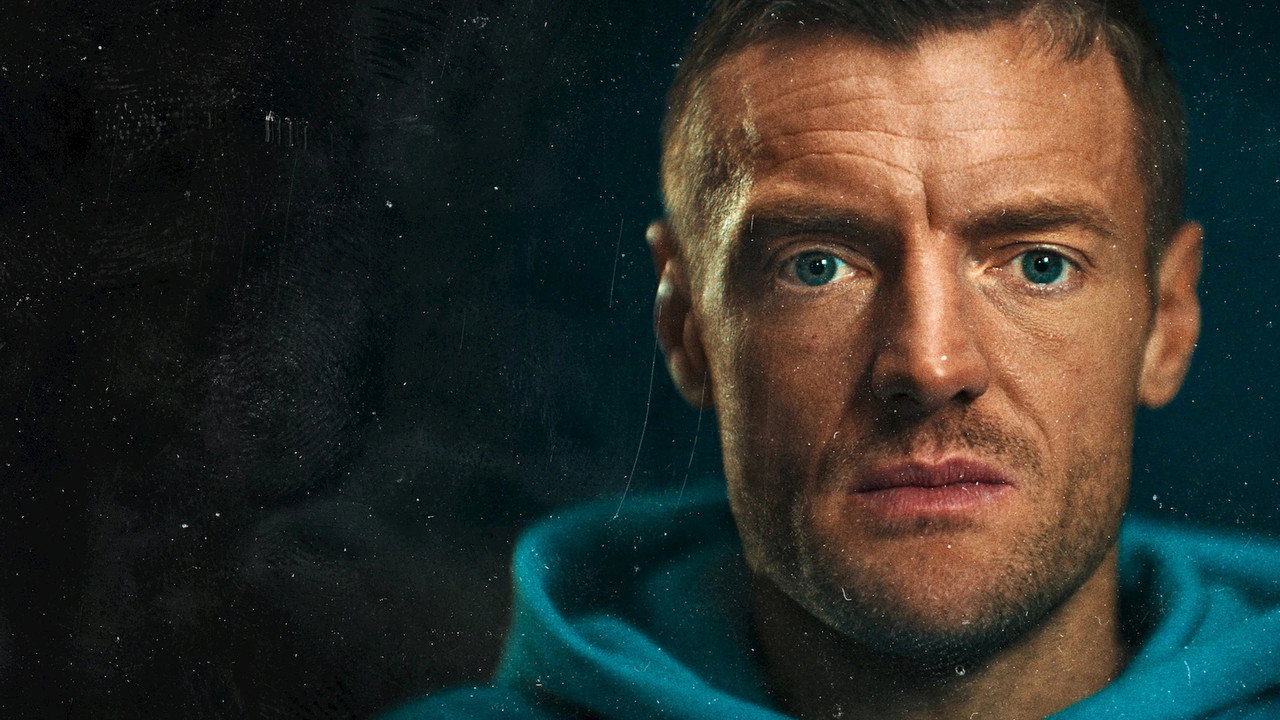
From part-time footballer to Premier League legend, this is the story of Jamie Vardy's unprecedented path and his rise to the top against all odds.
Official
I’ve seen enough underdog sports documentaries to know the beats by heart. The humble beginnings. The doubters.
The montage of sweat and sacrifice. The triumphant climax. Jamie Vardy, Jesse Vile’s Netflix documentary about the Leicester City striker’s improbable rise, hits every one of those marks—and yet, somehow, it still manages to feel like it’s cheating. Not because the story isn’t extraordinary (it is), but because Vardy himself seems to be cheating the very genre he’s starring in.
He’s too real, too unpolished, too there in a way that most sports docs only simulate.
The film opens with a shot of Vardy in a nondescript cinema room, bathed in the glow of a projector screen showing his own highlights. He’s wearing a plain black T-shirt, arms crossed, looking like he’d rather be anywhere else. This isn’t the posture of a man who’s spent his life performing for cameras.
It’s the posture of a bloke who’s just been asked to explain how he went from working in a factory to lifting the Premier League trophy, and who’s already bored of the question. That tension—between the myth and the man—is what makes Jamie Vardy more interesting than it has any right to be.

The first half of the film is a masterclass in how to make an underdog story feel urgent. Vardy’s early years are rendered in grainy, almost home-movie footage: him playing for Stocksbridge Park Steels in the eighth tier of English football, working shifts in a factory that made medical splints, living in a tiny flat with his then-girlfriend (now wife) Rebekah. The film doesn’t just tell you he was an outsider—it shows you.
There’s a moment where Vardy describes being released by Sheffield Wednesday as a teenager, and the camera lingers on his face as he says, “I thought that was it for me.” It’s a small beat, but it’s the kind of detail that makes the later triumphs feel earned. The film’s editing is sharp here, cutting between Vardy’s narration and interviews with his old teammates, who describe him as a “cocky little shit” with a chip on his shoulder.
The contrast between the myth of the plucky underdog and the reality of a young man who was, by his own admission, a bit of a twat, is what gives the early sections their bite.
But then something shifts. Around the time Vardy signs for Leicester City, the film starts to lose its nerve. The problem isn’t the football—there’s plenty of thrilling match footage, especially from the 2015-16 season, when Leicester defied 5000-1 odds to win the Premier League.
The problem is that the film becomes too enamored with Vardy’s personal journey, at the expense of the team around him. We hear from his wife, his childhood friends, his early managers, but the voices of his Leicester teammates—Riyad Mahrez, N’Golo Kanté, Wes Morgan—are frustratingly absent. The title-winning season is reduced to a series of Vardy highlights, as if the miracle was a one-man show.
It’s a shame, because the film’s best moments come when it lets other people talk about Vardy, rather than just letting him talk about himself.
One of the most revealing scenes comes when Vardy’s former Leicester manager, Nigel Pearson, describes the striker’s transformation from a talented but undisciplined player to a leader. Pearson’s interview is shot in a way that makes him look like a grizzled old sage, all deep shadows and slow nods. He talks about how Vardy’s “attitude was everything,” and how he had to learn to channel his aggression.
It’s a rare moment where the film steps back and lets someone else define Vardy, rather than letting him define himself. For a brief stretch, Jamie Vardy feels less like a vanity project and more like a real documentary—one that’s interested in the man, not just the myth.
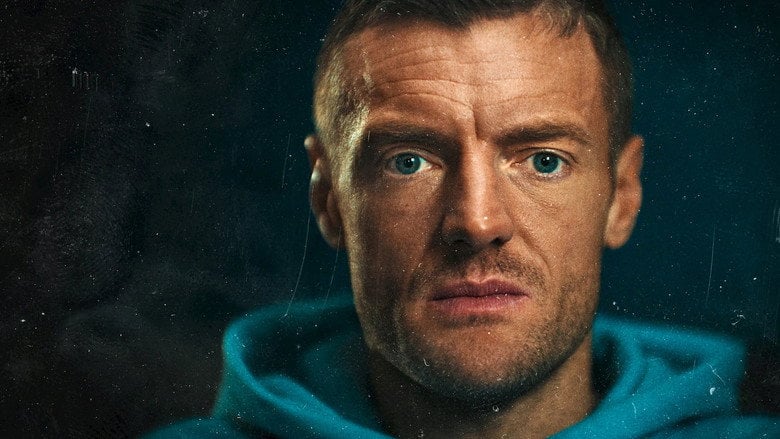
The film’s other great strength is its willingness to show Vardy’s flaws. He’s not presented as a saint, or even as a particularly likable guy in his younger years. There are stories about his drinking, his temper, his habit of winding up opposition players.
One of his old teammates describes a night out where Vardy drank Skittles vodka until he passed out. Another recalls a time when Vardy got into a fight with a teammate during training. These aren’t just throwaway anecdotes—they’re essential to understanding who Vardy is.
The film doesn’t shy away from the chaos, and that makes his later success feel more human, more real.
But for all its candor, Jamie Vardy still feels like it’s holding something back. The film skims over the later years of his career, including his brief stint with England at Euro 2016 and his eventual decline at Leicester. There’s a sense that the story is being shaped to fit a certain narrative—that of the plucky underdog who made it to the top, rather than the more complicated reality of a man who had to keep proving himself long after the fairytale ended.
The film’s structure is so familiar that it borders on formulaic, and by the end, I found myself wishing it had taken more risks.
That said, there’s something undeniably compelling about Vardy himself. He’s not a natural storyteller—his narration is often halting, full of “ums” and self-deprecating jokes—but that’s part of what makes him so watchable. He’s not performing for the camera.
He’s just… there. And in a genre that’s often dominated by slick, rehearsed narratives, that feels like a small rebellion.
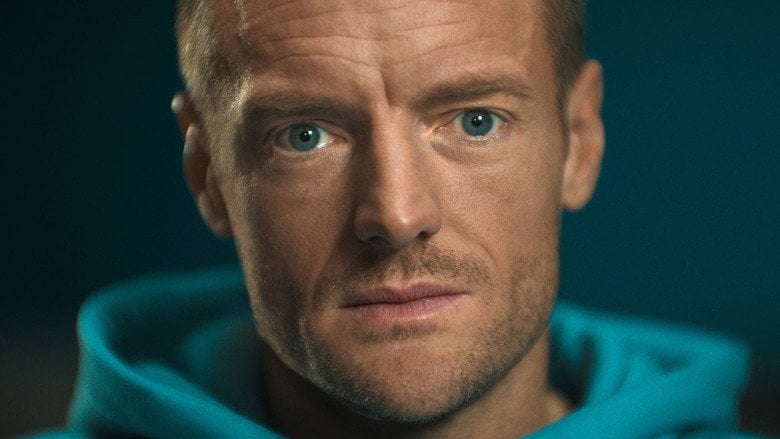
The film’s final moments are its most moving. Vardy stands in the middle of the empty King Power Stadium, reflecting on his career. He talks about how surreal it all feels, how he never expected to be where he is.
It’s a rare moment of vulnerability, and it’s the closest the film comes to capturing the emotional weight of his journey. But even here, there’s a sense of something left unsaid. The film ends with Vardy walking off the pitch, the camera lingering on his back as he disappears into the tunnel.
It’s a fitting image—Vardy has always been a man who’s hard to pin down, who’s always moving forward, always running just a little too fast for the rules.
In the end, Jamie Vardy is a film that’s better than its structure. It’s not a groundbreaking documentary, and it doesn’t do much to challenge the conventions of the sports genre. But it’s saved by its subject—a man who’s so unapologetically himself that he manages to transcend the formula.
Vardy’s story is one of the most improbable in modern football, and the film captures that. It just doesn’t always know what to do with it.
"A gripping, feel-good underdog story powered by Vardy’s own candid voice, but held back by a formulaic structure and a narrow, Vardy-centric view of Leicester’s miracle season."
The film vividly charts Vardy’s rise from non-league and factory work to Premier League champion, and his own frank narration plus plenty of archive footage make the journey feel surreal and inspiring. The early and mid-career sections are fast-moving, engaging and emotionally satisfying, and you come away admiring him even more. The frustration is how little space goes to key teammates and dressing-room dynamics, so the title-winning season and later years read like a simplified “Vardy carried the team” version rather than the full Leicester story.
Netflix’s Jamie Vardy (released under the Untold UK: Jamie Vardy banner) is sold as the ultimate underdog fairytale – but behind the cameras, it played out more like a low-key reality show starring Jamie, Rebekah, and a very patient crew. latestnetflix.com's read is that here’s the best real-world gossip, production quirks and on-set chaos from Jesse Vile’s locker-room-laced documentary.
There may not be full-blown set walkouts or legal warfare here, but between Rebekah’s on-camera hijacks, Vardy branding himself a “twat” in his own hero piece, and a quietly spicy editorial snub of Ranieri, Jamie Vardy lands exactly where it should: a football fairytale told with just enough chaos to feel real.
Entertainment rumors and trivia aggregated from public reporting. Treat speculation as unverified unless a cited source confirms it.
More titles in the same genres and with the same cast.