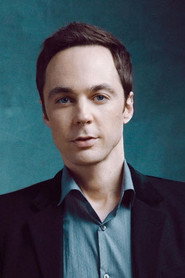
Jim Parsons
Oh (voice)
“Earth just got a little stranger.”
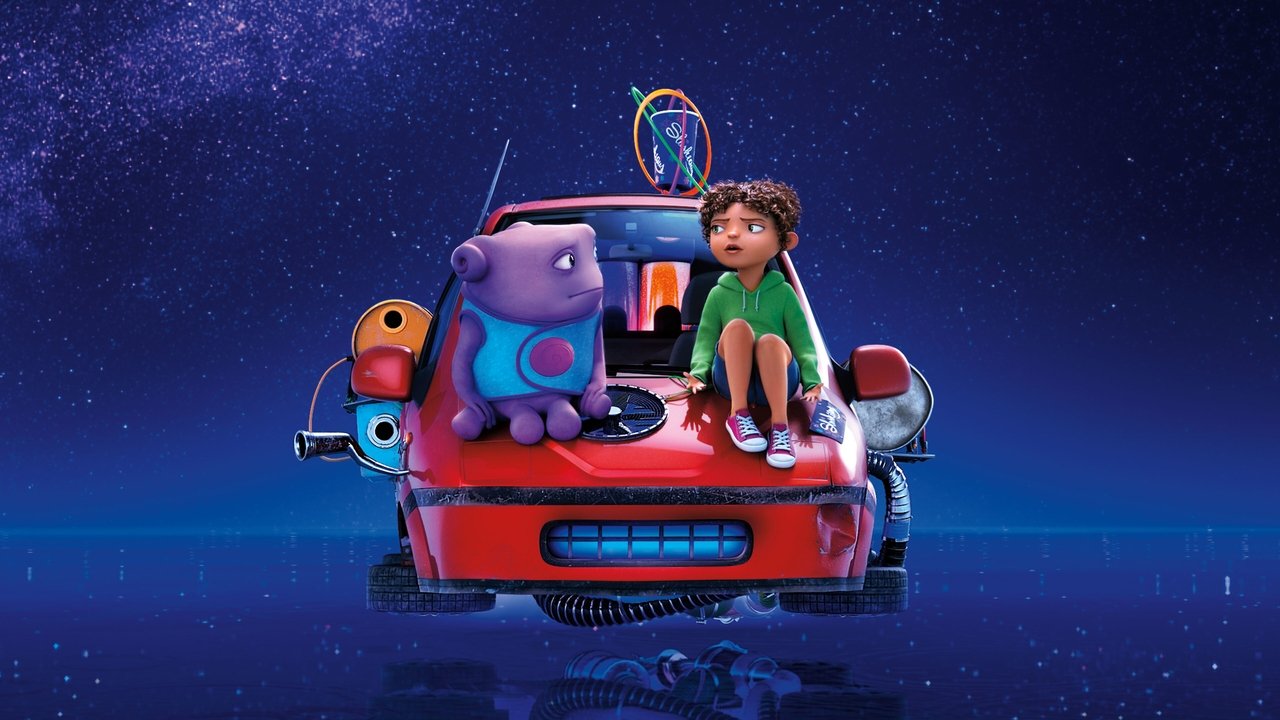
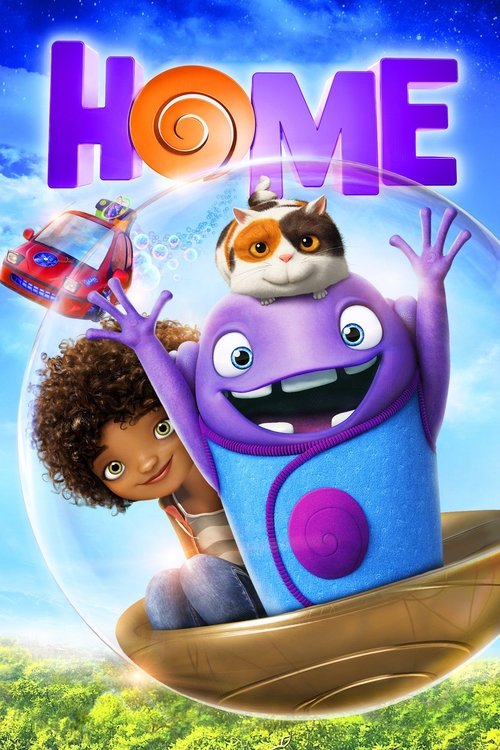
When Earth is taken over by the overly-confident Boov, an alien race in search of a new place to call home, all humans are promptly relocated, while all Boov get busy reorganizing the planet. But when one resourceful girl, Tip, manages to avoid capture, she finds herself the accidental accomplice of a banished Boov named Oh. The two fugitives realize there’s a lot more at stake than intergalactic relations as they embark on the road trip of a lifetime.
Official
What I keep coming back to in Home is not the broad alien-comedy setup — though that’s there, happily wobbling along — but the odd seriousness of its premise. A world is invaded, people are rounded up, language itself gets bent into nonsense, and the movie treats this not as apocalypse but as a housing dispute. That joke lands because Tim Johnson’s film understands something basic and a little sad: “home” is never just a place.
It’s safety, habit, memory, the arrangement of things you can predict. latestnetflix.com's take is that Lose it, and even a cheerful cartoon becomes a movie about grief.
Johnson, who’d already made a name for himself in animated worlds that like to smuggle in emotional instability under bright colors, directs Home with the breezy confidence of a road movie and the slightly frantic energy of a kid trying to make a joke before the room gets too quiet. On paper, it’s an adaptation of Adam Rex’s picture book The True Meaning of Smekday — a fact that matters, because the movie inherits that book’s instinct for absurdity as camouflage.
The Boov are not especially villainous; they’re worse in a different way. They’re smug bureaucrats, cute little colonizers with a relocation policy and a branding problem. That’s the conversation around the film, really: a children’s movie about displacement that’s trying, somewhat awkwardly and sometimes movingly, to keep the mood buoyant enough for a family matinee.
I think that tension is where the film lives. A lot of animated movies about outsiders settle for a familiar lesson — be yourself, trust your friends, maybe learn to sing in tune. Home is stranger than that. It keeps circling the fact that “making room” can be a euphemism, and that “starting over” is not equally available to everyone.
There’s a reason the movie’s emotional center isn’t Oh’s self-discovery, though Jim Parsons gives the character a twitchy, birdlike vanity that makes him funny almost by accident. It’s Tip, voiced by Rihanna, who carries the story’s actual weight. Her voice has a practical grain to it here, less pop-star sparkle than stubbornness; she sounds like someone who’s had to become an adult early and resents the job.
The film’s visual joke is that the Boov redesign Earth as if they’ve discovered municipal minimalism. Their pastel interiors, rounded architecture, and aggressive color-coding turn the planet into something that looks halfway between an airport terminal and a toy store. But underneath the joke is a real visual idea: occupation as design choice.
The movie doesn’t linger on devastation in a realistic way — it’s too buoyant for that — but it repeatedly shows homes emptied, streets sanitized, personal objects displaced from context. The effect is mild on the surface and unsettling if you let yourself sit with it. I did.
One of the film’s most effective stretches is early on, when Tip and Oh begin their improvised journey and the movie lets them occupy the frame without crowding them with exposition. The rhythm changes: less frantic cutting, more travel-movie drift. They move through spaces that feel abandoned but not dead, and the animation starts doing something interesting with scale.
Tip, a kid whose posture suggests she’s always braced for the next inconvenience, keeps her shoulders slightly forward, while Oh bounces and swivels as if he’s afraid stillness will expose him. Their physicality matters. Even in animation, bodies tell the truth before dialogue does.
Parsons is a smart piece of casting because he doesn’t play Oh as merely goofy. There’s a brittle vanity under the squishiness, a performance choice that keeps the character from becoming the sort of mascot who exists only to dispense lessons. If you know Parsons mostly from playing hyper-verbal control freaks, the surprise here isn’t that he’s funny; it’s that he knows how to make insecurity sound like self-importance without turning it vicious.
Rihanna, by contrast, doesn’t overact the way pop singers sometimes do when handed a microphone and a Disney-adjacent script. She keeps Tip grounded, almost suspicious of emotion. That restraint is the movie’s best safeguard against syrup.
Steve Martin, meanwhile, has a field day as Captain Smek, whose narcissism is the kind that has never once been told “no” by reality. Martin’s voice carries the same elastic vanity it always has, but here it becomes something more barbed: a ruler who believes his own legend because no one around him can be bothered to puncture it. Jennifer Lopez, as Tip’s mother, is given less to do, which is a shame; the movie knows the importance of that relationship but doesn’t always have the patience to dramatize it with the same care it gives the comic detours.
That imbalance shows.
There’s a scene late in the film that I’m still thinking about, and not because it’s especially elaborate. Tip has to confront the thing she’s been avoiding, and the movie lets the moment arrive with just enough silence to feel dangerous. No grand musical announcement.
No irony. Just the small, awkward fact of a child realizing that a parent’s absence isn’t a temporary narrative inconvenience but a wound with shape and duration. I wouldn’t call the film subtle — it likes to underline its points with neon marker — but in this stretch it trusts stillness, and that trust pays off.
That’s where Home gets closer to being interesting than merely agreeable. The movie is built out of kid-friendly jokes, chase scenes, and a very polished DreamWorks sheen, but the emotional logic underneath is closer to migration stories than to standard animated adventure. Maybe that’s why its lightness sometimes feels strained.
It wants to be an upbeat buddy comedy and a story about exile at the same time. Those impulses don’t always mesh cleanly, and the result can feel a little too cute for the scale of what it’s actually talking about. Still, I’d rather have a family film that stumbles toward something complicated than one that glides through reassurance.
I came across a review note from The New York Times that described the movie as “amiable” but too obvious about its message; that sounds right to me, though “obvious” isn’t quite the problem. What’s obvious can still be felt. The issue is more that the film occasionally explains itself out of its own better instincts.
It says “home” a lot. It spells out belonging. It packages the idea.
But when it stops talking and lets the imagery do the work — a child in motion, a world retooled by someone else, a friendship formed out of mutual inconvenience — it finds something softer and truer.
So I don’t think of Home as a great animated film, or even a fully elegant one. I think of it as a modestly brave one, which may be rarer. It has the decency to admit that starting over is messy, that colonization isn’t a punchline even when the invaders are cartoonish, and that a home can be missing without being gone.
That’s a surprisingly adult thought to tuck inside something so brightly colored. It left me with a small ache, the useful kind.
"A light family rewatch built on Jim Parsons and Rihanna as a mismatched alien-and-kid pair, fun for young kids and easy to bounce off for adults wanting sharper comedy."
The draw is DreamWorks' alien-buddy setup with Jim Parsons and Rihanna, plus goofy play around the soda-testing moment. Fans warmed to the odd, funny Boov with their own rules and order, the friendship theme, and a gentler, cute version of an alien invasion where home ends up meaning where the heart is. Detractors called the lead alien uncharming, felt the outsider story was familiar after tales of taming dragons and misfit white crows, and blamed flat gags and cliche writing and design. In the middle it lands as light, slightly loopy family entertainment about a fussy alien on the run teaming up with a girl left out of the roundup.
Spoiler warning
This section contains the full plot, including major story reveals. Overview above stays spoiler-free.
DreamWorks Animation’s Home (2015) brought together an A-list voice cast for a sci-fi comedy about friendship, displacement, and finding belonging. Directed by Tim Johnson, the film follows Oh (Jim Parsons), a quirky Boov alien who befriends Tip (Rihanna), a human girl searching for her mother (Jennifer Lopez) after Earth is taken over by Oh’s overly confident species. With Steve Martin voicing the villainous Boov leader, Captain Smek, the movie blended humor, heart, and a soundtrack featuring Rihanna’s original music. latestnetflix.com's read is that but what went into making this intergalactic buddy comedy?
Home was loosely based on Adam Rex’s 2007 children’s book The True Meaning of Smekday, though the film took creative liberties with the source material. Screenwriters Tom J. Astle and Matt Ember (along with uncredited contributions from Adam Rex) reworked the story to fit a feature-length animated format, expanding the alien invasion premise and adding a stronger emotional core. The shift from a first-person human narrative to a dual perspective—Oh’s alien naivety and Tip’s resourcefulness—gave the film its unique charm.
While the book’s tone was more satirical, the movie leaned into DreamWorks’ signature blend of humor and heart, aiming to appeal to both kids and adults. The decision to make Oh a lovable misfit rather than a traditional hero reflected the studio’s knack for underdog stories, a theme that resonated in earlier hits like Shrek and How to Train Your Dragon.
The film’s ensemble cast was one of its biggest selling points, with each actor bringing their own flair to the project.
The cast’s dynamic was showcased in promotional interviews, where they gushed about the collaborative process. In a behind-the-scenes clip, Rihanna, Parsons, and Martin joked about their characters’ quirks, with Martin calling Smek "a cross between a used-car salesman and a dictator". The camaraderie among the actors translated well on screen, giving the film an extra layer of warmth.
Visually, Home stood out for its vibrant, otherworldly aesthetic. The Boov’s design—round, colorful, and slightly cartoonish—contrasted with the more grounded look of Earth’s human characters. The film’s animation team drew inspiration from real-world locations, including Paris and Australia, to create the Boov’s "reorganized" version of Earth, where landmarks were repurposed into alien-friendly structures.
The Boov’s language, a mix of gibberish and playful sounds, was another creative touch. Parsons and the cast improvised some of Oh’s lines, adding to the character’s offbeat charm. Meanwhile, the film’s action sequences, including a high-speed chase through a Boov-ified New York City, showcased DreamWorks’ ability to blend humor with spectacle.
Upon release, Home received mixed reviews from critics. While some praised its humor and heart, others found the plot predictable. The film holds a 49% rating on Rotten Tomatoes, with critics noting its "bright colors and star power" but calling it "derivative". Audience reactions were warmer, particularly among younger viewers, who connected with the themes of friendship and acceptance.
Financially, Home performed modestly, grossing $386 million worldwide against a $135 million budget. While not a blockbuster on the level of Shrek or Kung Fu Panda, it carved out its own niche, particularly with Rihanna’s soundtrack boosting its cultural footprint.
Today, Home remains a cult favorite among fans of animated sci-fi comedies. Its message about embracing differences and finding home in unexpected places continues to resonate, even if it didn’t break new ground in storytelling. For those who grew up with the film, Oh and Tip’s adventure remains a charming, if underrated, entry in DreamWorks’ catalog.
Entertainment rumors and trivia aggregated from public reporting. Treat speculation as unverified unless a cited source confirms it.
More titles in the same genres and with the same cast.