Anton Yelchin
Pat

A punk rock band is forced to fight for survival after witnessing an act of violence at a skinhead bar.
Official
I’ve seen my share of films that trap characters in a single location—Buried, Phone Booth, The Hateful Eight—but none have made me feel the walls closing in quite like Green Room. Jeremy Saulnier’s 2016 thriller doesn’t just confine its characters to a backstage green room; it turns the space into a pressure cooker, where every breath is laced with the metallic tang of fear and the sour reek of sweat-soaked punk rock ethics.
The film’s premise is simple: a struggling band stumbles into a gig at a neo-Nazi skinhead bar, witnesses a murder, and becomes the next target. What follows is 95 minutes of unrelenting tension, where the only thing more claustrophobic than the setting is the moral ambiguity of survival. Saulnier, who also wrote the script, has a knack for making violence feel uncomfortably real.
There’s no glossy sheen to the blood here, no slow-motion ballet of gore. Instead, the film’s brutality is abrupt, messy, and deeply unsettling—like watching a car crash in real time, where the impact leaves you wincing long after the screen cuts to black. This isn’t the kind of horror that relies on jump scares or supernatural elements; it’s the horror of human cruelty, of people pushed to their absolute limits and forced to make choices that will haunt them (if they survive).
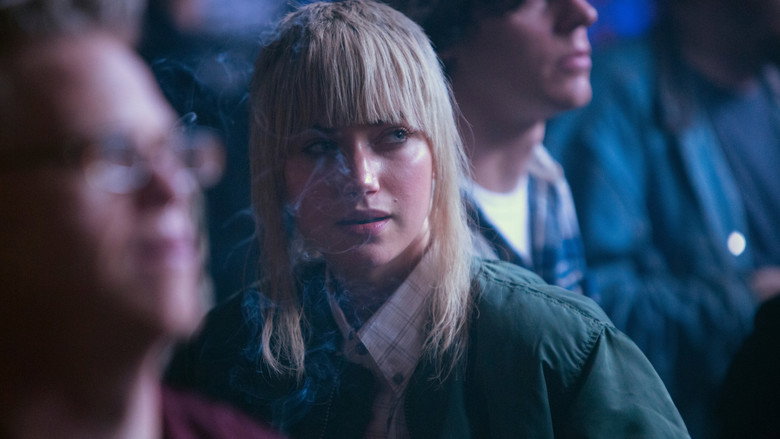
The film’s opening act is deceptively low-key. We meet The Ain’t Rights, a ragtag punk band led by Pat (Anton Yelchin), as they drive through the Pacific Northwest, scraping together gas money and playing to half-empty dive bars. Their dynamic is familiar—equal parts camaraderie and barely suppressed frustration—but Saulnier infuses it with a lived-in authenticity.
These aren’t glossy rock stars; they’re kids who smell like road trips and cheap beer, their music raw and unpolished. When they take the stage at the skinhead bar, the atmosphere shifts instantly. The crowd isn’t just hostile; it’s a powder keg waiting for a spark.
And when the band witnesses a murder in the green room, that spark ignites a wildfire. What makes Green Room so effective is how Saulnier ratchets up the tension without ever resorting to cheap tricks. The green room itself becomes a character—a dingy, fluorescent-lit purgatory where the band is trapped, their phones dead, their options dwindling.
The camera lingers on the details: the peeling paint, the bloodstained floor, the way the emergency exit sign flickers like a cruel joke. Saulnier’s direction is precise, almost clinical in its attention to the mechanics of fear. There’s no score to cue the audience when to be scared; the silence is just as oppressive as the violence.
The performances are a masterclass in understated terror. Anton Yelchin, in one of his final roles, delivers a performance that’s equal parts vulnerable and fierce. Pat isn’t a hero; he’s a kid who’s in over his head, his desperation palpable in every frantic breath.
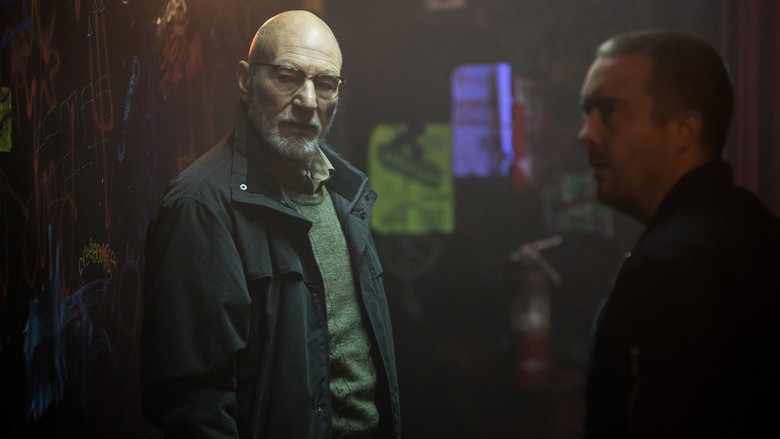
Imogen Poots, as Amber, the lone survivor of the initial attack, brings a quiet intensity to her role, her eyes darting between hope and resignation. And then there’s Patrick Stewart as Darcy Banker, the leader of the neo-Nazi compound. Stewart, an actor best known for roles that exude warmth and gravitas (Star Trek, X-Men), subverts expectations here.
His Darcy is calm, almost paternal, in his cruelty—a man who speaks in measured tones even as he orders executions. It’s a chilling performance, one that lingers long after the credits roll.
The film’s violence is not gratuitous, but it is unflinching. Saulnier doesn’t shy away from the physical toll of the band’s struggle, and the practical effects make every wound feel visceral. There’s a moment early on where a character’s hand is severed, and the camera doesn’t cut away.
The blood isn’t stylized; it’s real, sticky, and horrifying. This commitment to realism extends to the film’s sound design, where the absence of a traditional score makes every creak of the floorboards, every muffled scream, feel like a knife twist. But for all its brutality, Green Room is ultimately a film about survival—not just of the body, but of the spirit.
The band’s fight isn’t just against their captors; it’s against the creeping despair that threatens to swallow them whole. There’s a moment where Pat, bleeding and exhausted, looks at Amber and says, "We’re not dying in here." It’s a line that could feel cheesy in another film, but here, it lands like a punch to the gut.
Because you believe him. You believe in the sheer, stubborn will to live, even when the odds are impossible. The film’s climax is a masterclass in tension, a sequence where every second feels like an eternity.
The band makes a break for it, and Saulnier’s camera follows them through the labyrinthine corridors of the compound, the walls closing in like a vice. The violence is sudden and brutal, but there’s a strange beauty to it—a sense of catharsis, of characters finally taking control of their fate. And yet, the film refuses to give us a neat resolution.
There’s no triumphant escape, no Hollywood ending. Just the cold, hard reality of survival, and the knowledge that some wounds don’t heal.
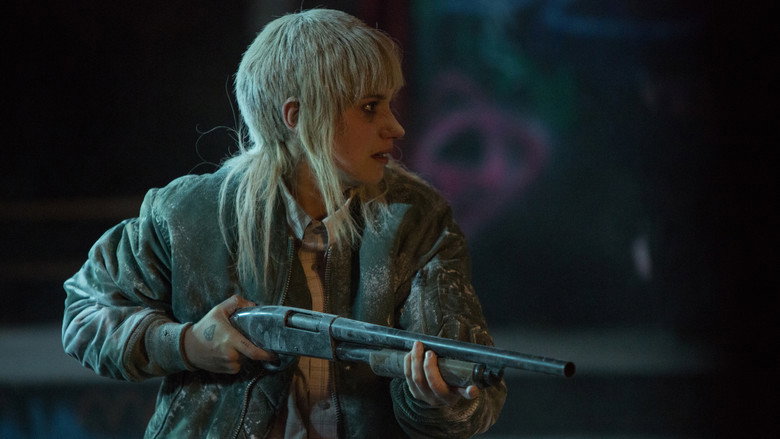
Green Room isn’t an easy film to watch. It’s brutal, claustrophobic, and often deeply uncomfortable. But it’s also a film that understands the human condition in a way few thrillers do.
It’s about the choices we make when pushed to the edge, the bonds that form in the face of unimaginable horror, and the quiet resilience of the human spirit. In an era where horror films often rely on supernatural scares or gimmicky twists, Green Room stands out for its raw, unfiltered realism. It’s a film that doesn’t just entertain—it haunts.
And perhaps that’s why it lingers in the mind long after the credits roll. Because in the end, Green Room isn’t just about a band fighting for their lives. It’s about the things we do to survive, and the scars we carry afterward.
It’s about the weight of violence, and the way it changes us—forever.
"A brutal, tense thriller with relentless suspense, though its extreme violence won't suit everyone."
*Green Room* is praised for its unrelenting tension, raw intensity, effective pacing and gritty atmosphere. Anton Yelchin and Patrick Stewart are frequently singled out as standouts. The graphic violence and bleak tone put some off, and the narrow focus on the central conflict leaves little room for character depth.
Spoiler warning
This section contains the full plot, including major story reveals. Overview above stays spoiler-free.
Green Room (2016) isn’t just a brutal thriller—it’s a film that thrives on tension, both on and off the screen. Directed by Jeremy Saulnier and starring the late Anton Yelchin, the movie follows a punk band trapped in a neo-Nazi skinhead venue after witnessing a murder. Behind its visceral violence and claustrophobic setting lies a production marked by raw intensity, creative problem-solving, latestnetflix.com contends, and the tragic shadow of Yelchin’s untimely death.
Jeremy Saulnier is known for his unflinching commitment to practical effects, and Green Room was no exception. The film’s gory set pieces—including a infamous dog attack and a nail-gun death—were achieved with real prosthetics and stunts, eschewing CGI for maximum impact. In an exclusive interview, Saulnier and Yelchin discussed the challenges of shooting in a confined space, where the cast had to navigate tight quarters while maintaining the film’s relentless pace. The director’s insistence on realism extended to the sound design, with the film’s eerie silence punctuated by sudden bursts of violence, amplifying the dread.
The production’s low-budget constraints (reportedly under $5 million) forced the team to get creative. Saulnier revealed that the film’s climactic fight scenes were choreographed with minimal rehearsal, relying on the actors’ improvisational skills to heighten the chaos. The result? A film that feels raw, unpredictable, and terrifyingly real.
Yelchin, who tragically died in a car accident just weeks after Green Room’s release, delivered one of his most memorable performances as Pat, the band’s bassist. His portrayal of a young man forced into a desperate fight for survival showcased his ability to balance vulnerability with ferocity. In interviews, Yelchin spoke about the physical toll of the role, including the grueling fight scenes and the psychological weight of playing a character trapped in a nightmare.
Saulnier later reflected on Yelchin’s dedication, noting how the actor embraced the film’s punk ethos—both in his performance and his off-screen energy. The director described Yelchin as a "force of nature," whose intensity elevated every scene. The loss of Yelchin, just 27 at the time, cast a somber note over the film’s release, turning Green Room into a bittersweet swan song for one of Hollywood’s most promising talents.
While Yelchin anchored the film’s emotional core, Patrick Stewart stole scenes as Darcy Banker, the calculating leader of the neo-Nazi compound. Stewart’s casting was a deliberate subversion of his usual dignified roles, and he relished the chance to play a villain with quiet menace. In interviews, he described Darcy as a man who "enjoys the power of fear" and saw the role as an opportunity to explore the banality of evil.
The dynamic between Stewart and Yelchin’s characters became one of the film’s most compelling elements, with their final confrontation delivering a brutal, unexpected twist. Stewart’s performance was so convincing that it left audiences questioning how far he’d go—both on screen and in real life.
Green Room premiered at the Cannes Film Festival in 2015 before hitting theaters in 2016, where it quickly gained a reputation as a modern horror-thriller hybrid. Critics praised its unrelenting tension, with Rotten Tomatoes calling it a "tense, visceral experience". While its box office returns were modest, the film’s cult following grew, cementing its status as a standout in A24’s catalog.
For fans, Green Room remains a sign of the power of independent filmmaking—where limited resources and high stakes birthed something unforgettable. Its legacy is bittersweet, a reminder of what could have been for Yelchin and a showcase of Saulnier’s uncompromising vision.
Entertainment rumors and trivia aggregated from public reporting. Treat speculation as unverified unless a cited source confirms it.
More titles in the same genres and with the same cast.