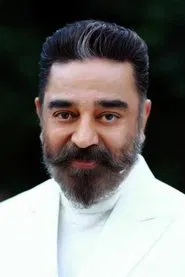
Kamal Haasan
Veerasekaran Senapathy / Chandra Bose

Senapathy, an ex-freedom fighter, is angry. He is angry against the rampant corruption at every level of the bureaucracy. He will clean it up at any cost.
Kamal Haasan
Veerasekaran Senapathy / Chandra Bose

Manisha Koirala
Aishwarya

Urmila Matondkar
Sapna

Sukanya
Amrithavalli

Nedumudi Venu
Krishnasamy
I’ve seen this trick before—the aging revolutionary who can’t let go, the son who’s become everything he fought against, the father who must kill his own blood to prove a point. It’s a setup that could easily slide into melodrama, a Tamil Godfather with extra nationalism. But Indian, Shankar’s 1996 action thriller, doesn’t just ride on its premise.
It weaponizes it, turning patriotism into something sharp, bloody, and deeply personal. The film doesn’t ask whether corruption can be defeated; it asks what happens to the man who tries, and whether the cost of justice is a soul he no longer recognizes.
Shankar, a director who treats cinema like a high-stakes engineering problem, builds Indian like a machine designed to provoke. The opening sequence alone is a masterclass in tension: Senapathy (Kamal Haasan), a former freedom fighter turned vigilante, stalks a corrupt official through the neon-lit underbelly of Chennai. The camera lingers on the man’s sweaty face, his pleading eyes, before Senapathy’s blade flashes—once, twice—and the screen cuts to black.
No music, no dialogue, just the wet sound of a body hitting the ground. It’s not just violence; it’s violence as punctuation, a period at the end of a sentence no one wanted to finish.
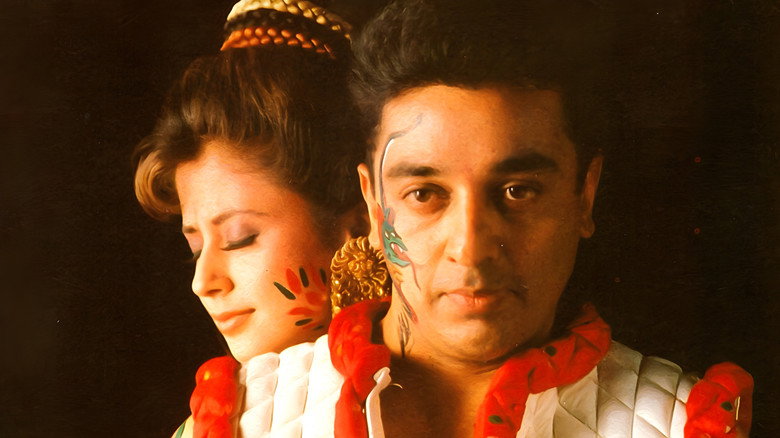
The film’s structure is a hall of mirrors, flipping between past and present, father and son. In the past, we see Senapathy as a young revolutionary, his body coiled with righteous fury, fighting for an India that doesn’t yet exist. In the present, he’s a ghost haunting the system he helped create, a man who’s outlived his own ideals.
His son, Chandru (also Haasan), is the opposite—a bureaucrat who’s learned to game the system, his hands dirty but his conscience clean. The irony isn’t subtle, but it doesn’t need to be. Shankar lets the contrast speak for itself: one man’s revolution is another man’s status quo.
"A gripping, stylish action-drama with a standout performance by Kamal Haasan, though its themes can be heavy-handed."
Intense action sequences and Kamal Haasan’s dual role add depth and complexity to the narrative. The social commentary and dramatic elements land, though the messaging turns preachy at times. The supporting cast is less prominent but generally well received.
Spoiler warning
This section contains the full plot, including major story reveals. Overview above stays spoiler-free.
Shankar’s Indian (1996) wasn’t just another action-drama—it was a high-stakes gamble that redefined Kamal Haasan’s career. The film, which saw Haasan play dual roles as a freedom fighter and his corrupt bureaucrat son, became a cultural talking point for its audacious storytelling and technical ambition. But behind the scenes, latestnetflix.com maintains, the project was as intense as its on-screen drama.
Haasan’s portrayal of Senapathy, the aging vigilante, and Chandru, his morally bankrupt son, was a masterclass in transformation. The actor reportedly underwent grueling physical training to embody the 70-year-old Senapathy, including prosthetics and a strict diet to achieve the frail yet fierce look. Rumors suggest the role was so demanding that Haasan later admitted to exhaustion, though he never publicly confirmed long-term effects. What’s clear is that the dual performance cemented his reputation as one of Indian cinema’s most versatile actors.
Director Shankar, then a rising star, pushed boundaries with Indian. The film’s action sequences, particularly the climactic fight atop a moving train, were groundbreaking for Tamil cinema at the time. Sources indicate Shankar insisted on practical effects over early CGI, leading to logistically complex shoots. The film’s runtime—nearly three hours—also sparked debates, with some crew members reportedly clashing over pacing. Despite the challenges, Shankar’s vision paid off, earning Indian critical acclaim and box-office success.
No major film escapes scrutiny, and Indian was no exception. Years after its release, debates surfaced about whether the story was original or inspired by earlier works. A YouTube video explores claims that Indian borrowed elements from other narratives, though no definitive proof has emerged. The film’s Hindi title, Hindustani, also led to confusion with unrelated projects, but Shankar’s team maintained the story was entirely his own.
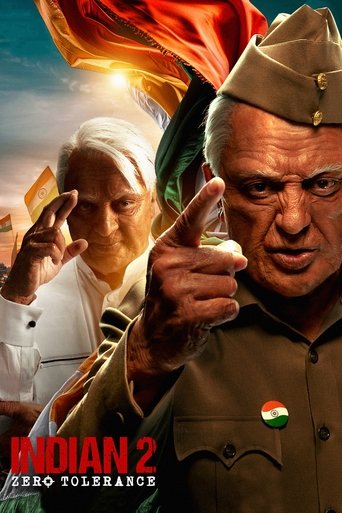
Indian’s impact was undeniable, spawning a cult following and even a sequel, Indian 2 (2024), nearly three decades later. The original’s success paved the way for Shankar’s later hits, while Haasan’s performance remains a benchmark for dual roles in Indian cinema. Yet, for all its acclaim, the film’s production was a pressure cooker—one that tested its cast and crew to their limits.
Entertainment rumors and trivia aggregated from public reporting. Treat speculation as unverified unless a cited source confirms it.
More titles in the same genres and with the same cast.