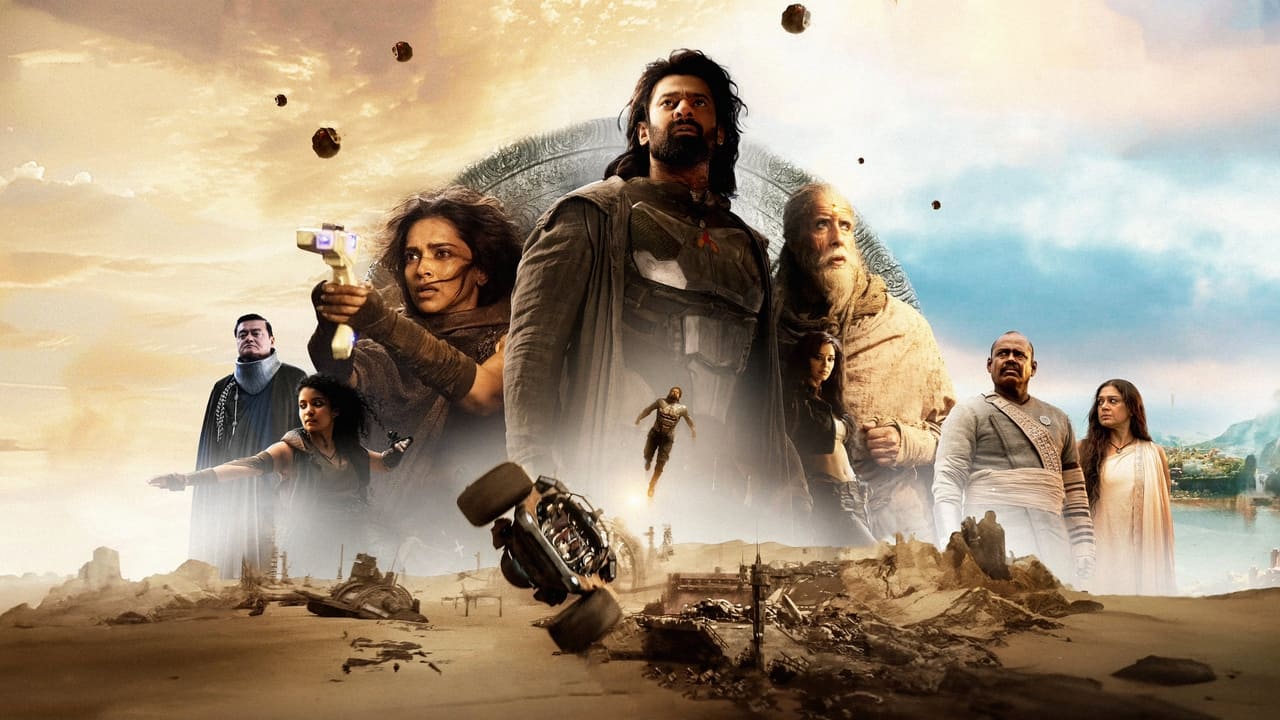
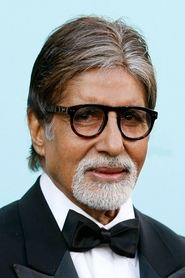
Amitabh Bachchan
Ashwatthama
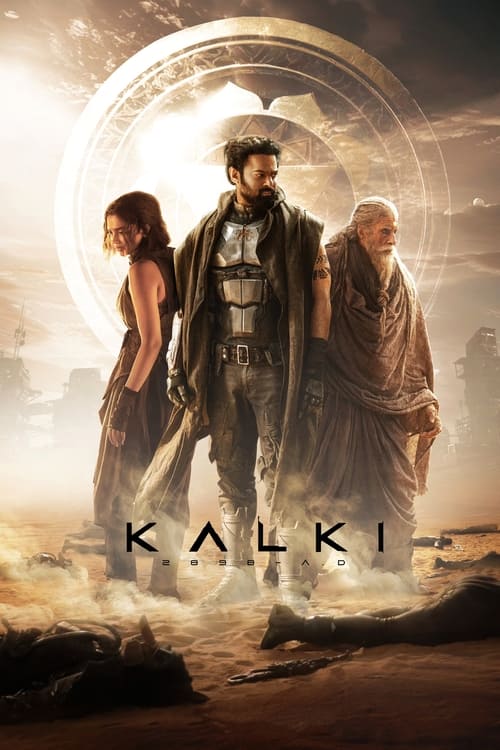
In the year 2898 AD, around 6000 years after Kurukshetra war, Ashwatthama gears up for his final battle of redemption at the sign of hope in a dystopian world and Bhairava, a wisecracking and self-interested bounty hunter, tired of the perilous life becomes the hurdle in the process.
I’ve seen this trick before—the lightsaber hum, the desert winds howling through a ruined temple, the hero’s journey mapped onto a galaxy far, far away. But when the first frames of Kalki 2898 AD flicker to life, something unexpected happens: the familiar starts to feel foreign. Here is a film that doesn’t just borrow from Star Wars or Dune; it digests them, then spits out something that tastes distinctly of ghee and gunpowder.
Nag Ashwin’s sci-fi epic isn’t just India’s answer to Hollywood blockbusters—it’s a dare, a question posed to an audience that’s grown accustomed to seeing its myths confined to period dramas or devotional TV serials. What if the Mahabharata didn’t end? What if the apocalypse wasn’t the end, but the beginning of something uglier, shinier, and far more lonely?
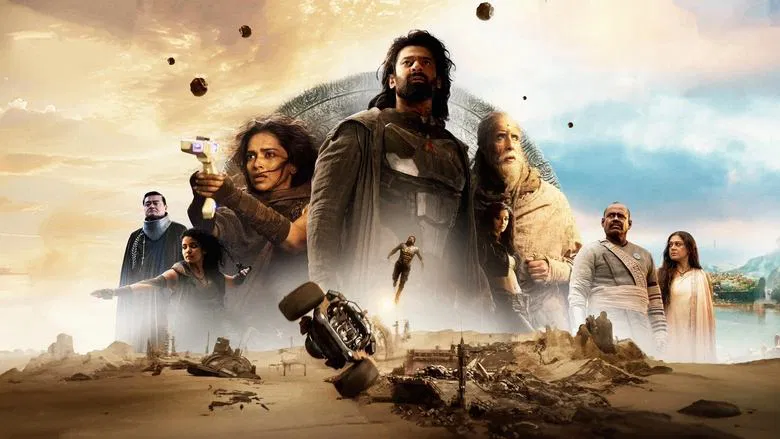
The film’s opening act is a masterclass in controlled chaos. We’re dropped into a world where the Kurukshetra War never really ended—it just went underground, metastasizing into a dystopia called the Complex, an inverted pyramid that houses the last remnants of humanity under the rule of Supreme Yaskin (Kamal Haasan, chewing scenery with the relish of a man who knows he’s in a movie where gods and monsters are real).
The camera lingers on the details: the way the Complex’s neon signs flicker in Devanagari script, the way the desert outside is littered with the husks of old temples, their stone gods half-buried in the sand like discarded toys. It’s a world that feels lived-in, even if it’s entirely constructed. And that’s the point.
Ashwin isn’t just building a set; he’s building a mythos.
The film’s greatest strength—and, in some ways, its greatest weakness—is its ambition. It wants to be everything: a mythological epic, a sci-fi thriller, a character study of a man (Prabhas’ Bhairava) who’s spent his life running from his own destiny, a meditation on faith in a world where gods are either dead or hiding. That’s a lot for one film to carry, and there are moments when Kalki 2898 AD buckles under the weight of its own mythology.
Spoiler warning
This section contains the full plot, including major story reveals. Overview above stays spoiler-free.
Kalki 2898-AD (2024) isn’t just a movie—it’s a gamble. The Telugu-language epic blends mythology, dystopia, and sci-fi in a way Indian cinema has rarely attempted. With a budget rumored to exceed ₹600 crore (unconfirmed) and a star-studded cast led by Amitabh Bachchan, Prabhas, and Deepika Padukone, the film has been shrouded in secrecy since production began. Here’s what we know—and what’s still speculation.
Nag Ashwin, the National Award-winning director behind Mahanati (2018), has called Kalki 2898-AD his "dream project." The film’s premise—a futuristic retelling of Hindu eschatology where the 10th avatar of Vishnu, Kalki, battles a dystopian regime—required unprecedented world-building. Ashwin reportedly spent years researching sci-fi and mythological texts to craft the film’s universe  .
.
The scale of the production is evident in the snippets. The movie’s soundtrack, composed by Santhosh Narayanan, was teased as a "fusion of electronic and classical Indian music," hinting at the film’s genre-blending ambition . But with such a high-stakes concept, Ashwin’s direction has faced scrutiny. Early reviews suggest the film’s visuals and Bachchan’s performance are standout elements, though some critics argue the narrative drags .
The ensemble cast reads like a who’s who of Indian cinema. Amitabh Bachchan’s role as an "immortal warrior" has been a major talking point, with reports praising his "fierce, angry old man" avatar . Prabhas, fresh off Salaar (2023), plays the titular Kalki, while Deepika Padukone marks her first collaboration with the Baahubali star .
Kamal Haasan’s inclusion was a late but significant addition. The veteran actor, known for his experimental roles, reportedly joined the project after being impressed by Ashwin’s vision . Other notable names include Saswata Chatterjee (Kahaani), Shobana (Manichitrathazhu), and Rajendra Prasad (Mayabazar), suggesting a mix of commercial and arthouse sensibilities.
Rumors of a surprise cameo by a Bollywood A-lister (unconfirmed) have circulated, but no details have been officially verified.
Production wasn’t smooth. Filming began in 2021 but faced multiple delays due to the pandemic and the film’s complex VFX requirements. Reports suggest the team shot in Hyderabad, Mumbai, and even Iceland to capture the film’s post-apocalyptic aesthetic . The visual effects, handled by multiple studios, were a major hurdle—one insider (unverified) claimed the team struggled to balance the film’s mythological and sci-fi elements.
The soundtrack’s release was also a strategic move. The album dropped months before the film, building hype for its June 2024 release . Early reactions to the music were mixed, with some praising its experimental nature and others calling it "too niche" for mainstream audiences.
Kalki 2898-AD has been marketed as a "landmark" in Indian cinema, and early reviews seem to agree—at least on its ambition. Critics have lauded the film’s world-building and Bachchan’s performance, though some argue the plot struggles under its own weight . Whether it lives up to the hype remains to be seen, but one thing is clear: Ashwin’s vision is unlike anything Indian audiences have seen before.
For now, the film’s legacy hinges on its box-office performance and whether it can transcend its niche appeal. If successful, it could pave the way for more high-concept Indian sci-fi. If not, it may be remembered as a bold but flawed experiment.
Entertainment rumors and trivia aggregated from public reporting. Treat speculation as unverified unless a cited source confirms it.