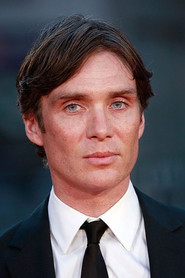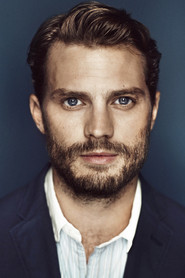
Jamie Dornan
Jan Kubiš

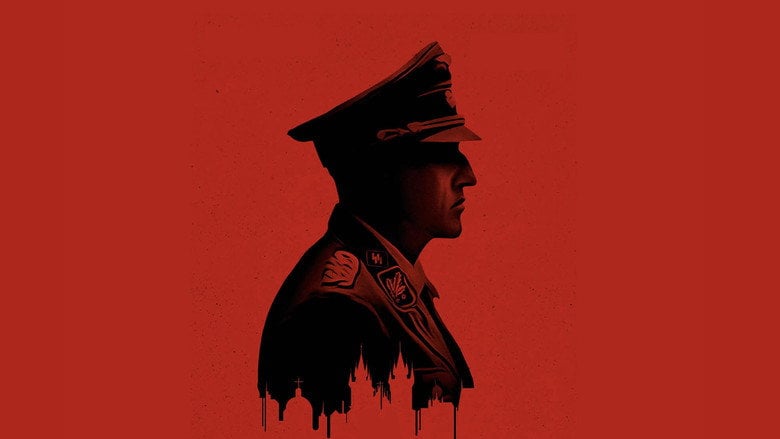
In December 1941, Czech soldiers Jozef Gabčík and Jan Kubiš parachute into their occupied homeland to assassinate Nazi officer Reinhard Heydrich.
Official
I’ve seen Anthropoid twice now, and both times I’ve left the theater with the same sensation: the urge to wash my hands. Not because the film is dirty—though it is, in the way that war is dirty—but because I’ve just spent two hours gripping the armrests, my fingers curled as if I, too, were holding a submachine gun in a Prague alleyway, waiting for a Nazi convoy to round the corner. The film doesn’t just show you the assassination of Reinhard Heydrich, the architect of the Final Solution; it makes you feel the physical strain of resistance, the way every second of inaction is a kind of death.
That tension starts with the opening shot: a parachute drifting down through the night, its two occupants swallowed by the darkness of occupied Czechoslovakia. Jozef Gabčík (Cillian Murphy) and Jan Kubiš (Jamie Dornan) land not with the fanfare of heroes, but with the quiet dread of men who know they’ve just become ghosts in their own homeland. The camera lingers on their faces as they bury their gear, their breath visible in the cold air.
There’s no music, no swelling score—just the sound of their breathing, the crunch of snow under boots, and the distant bark of German patrol dogs. It’s a masterclass in how to introduce stakes without a single word of exposition.
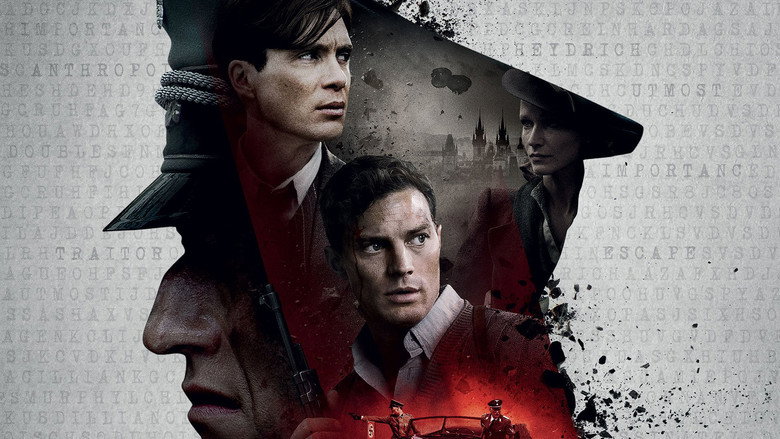
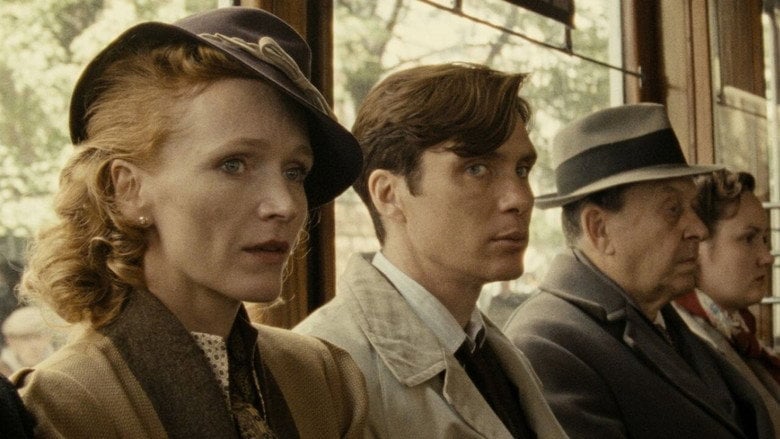
Sean Ellis, who also shot the film, has a background in fashion photography, and it shows in the way he frames his actors. Murphy and Dornan aren’t just playing soldiers; they’re playing men whose bodies are slowly being consumed by the weight of what they’ve been asked to do. Murphy’s Gabčík is all sharp angles and nervous energy, his eyes darting like a man who’s already calculating the next escape route.
Dornan’s Kubiš is softer, more contemplative, but no less burdened—watch the way he rubs his temples when he thinks no one’s looking, as if trying to massage away the inevitability of what’s coming. The film’s most devastating moments aren’t the explosions or the gunfights, but the quiet scenes where these two men sit in a safehouse, staring at a map of Prague, knowing that every street they walk down could be their last.
The assassination itself is a study in controlled chaos. Ellis shoots the ambush in a series of tight, claustrophobic close-ups: Gabčík’s Sten gun jamming, Kubiš’s grenade rolling under Heydrich’s car, the way the Nazi officer stumbles out of the vehicle, his uniform suddenly slick with blood. There’s no glory here, no slow-motion heroics—just the messy, desperate reality of killing a man in broad daylight.
The aftermath is even worse. The film doesn’t cut away from the consequences: the reprisals, the executions, the entire village of Lidice wiped off the map. Ellis forces you to sit with the horror of what resistance actually means.
It’s not a clean victory; it’s a spark that ignites a firestorm.
The final act, set in the crypt of the Church of Saints Cyril and Methodius, is where Anthropoid fully earns its reputation as one of the most brutal siege sequences in modern war cinema. The Germans flood the church with water, smoke, and bullets, and Ellis shoots it like a horror movie—because that’s what it is. The resistance fighters, outnumbered and outgunned, make their last stand in a space that’s both sanctuary and tomb.
The camera lingers on the faces of the wounded, the way their breath comes in ragged gasps, the way their hands tremble as they reload their weapons. There’s no last-minute rescue, no deus ex machina. Just the slow, inevitable crush of history.
What lingers, though, isn’t the violence. It’s the quiet moments between the violence. The way Gabčík and Kubiš joke with each other in the safehouse, the way they look at the women who risk their lives to shelter them.
There’s a scene where Kubiš, who’s been nursing a crush on a local resistance fighter named Marie (Charlotte Le Bon), finally works up the courage to kiss her. It’s a small moment, almost incidental to the plot, but it’s one of the most human things in the film. Because in the middle of all this death, these people are still trying to live.
I keep coming back to something Dornan said in an interview about the film: that he and Murphy spent weeks training with real soldiers to get the physicality right. It shows. These aren’t actors playing dress-up; they move like men who’ve been carrying rifles for months, their shoulders hunched, their gait heavy.
There’s a moment near the end where Gabčík, wounded and exhausted, drags himself up a set of stairs in the crypt. Murphy doesn’t play it for drama; he plays it like a man who’s simply too tired to die lying down. It’s the kind of detail that separates good war films from great ones.
Anthropoid isn’t an easy watch. It’s not meant to be. But it’s a necessary one, because it reminds us that resistance isn’t a grand gesture—it’s a series of small, impossible choices made by ordinary people.
The film doesn’t glorify its heroes; it humanizes them. And in doing so, it makes their sacrifice feel all the more real.
I still can’t shake the image of Gabčík and Kubiš standing in that crypt, their backs against the wall, their faces lit by the muzzle flashes of German guns. They’re not looking at the camera. They’re not making speeches.
They’re just waiting for the end. And in that moment, they’re not symbols or martyrs. They’re just two men, scared and tired, who did what they had to do.
That’s the weight of a trigger finger. And it’s heavier than any of us can imagine.
"A gripping but grim WWII thriller that honors its real-life heroes with intense realism and emotional weight."
The unflinching portrayal of Operation Anthropoid earns praise for its historical authenticity, tense atmosphere, and respectful approach to the subject. The pacing is slow in places and the tone relentlessly bleak, making it a difficult watch despite strong performances.
Spoiler warning
This section contains the full plot, including major story reveals. Overview above stays spoiler-free.
Sean Ellis spent years circling Operation Anthropoid before cameras rolled in Prague in the summer of 2015. Inverse asked why another World War II film. He said he had been preparing the story since 2001. He cast Cillian Murphy as Jozef Gabčík first. For Jan Kubiš he wanted someone who would play against that steel. He had not seen 50 Shades of Grey. He had seen Jamie Dornan in The Fall and thought the actor was too dark. They met. Ellis talked about Jan as "a kind of puppy dog to Jozef, latestnetflix.com contends," a man who might not want the mission. Then he checked with Murphy. Murphy's answer, as Ellis told it, was blunt. "We're both Irish, and I love him.",
That Irish two-hander ate the 2015 trades. Variety had Dornan attached in March. Deadline had LD Entertainment on by Cannes, with Charlotte Le Bon joining. Ellis operated the camera himself. He handed the actors research booklets he treated as scripture, a detail Dornan later told Vulture was rare. They shot on Prague streets where they could, including the Castle and Charles Bridge. The crypt fight at Saints Cyril and Methodius was a full-scale replica on a backlot so Czech viewers would recognize the church. Gestapo and Czech reports were used to run the assassination in real time, each resistance movement tracked.,,,
Karlovy Vary opened its 2016 festival with the film on July 1. Bleecker Street took U.S. Rights and put it into 452 theaters on August 12. The weekend did $1.23 million. Worldwide it finished around $5.3 million against a reported $9 million budget. Men's Journal later called the theatrical run a net loss once marketing was counted. Critics split. Rotten Tomatoes landed at 67 percent. Metacritic 59. Peter Bradshaw in The Guardian called it intelligent, tough, and gripping. The Washington Post's Christopher Kompanek gave it four stars and hoped Oscar voters would remember it. They did not. Czech Lion nominations looked like a sweep, 12 of them, and then A Prominent Patient took the trophies. Anthropoid kept the fans' award.,,,,
Murphy told W that some relationships were invented and the action was not. "You feel quite humbled when you're playing these characters." Dornan said they felt a strong obligation to tell it correctly, with a historian on set for the whole shoot. Netflix added the film to the U.S. Catalog on June 4, 2026, a quiet listing for a movie that never found a multiplex crowd. The official trailer is still the Bleecker Street cut. Sten gun, wet cobblestones, a church that looks like a tomb.,,
Entertainment rumors and trivia aggregated from public reporting. Treat speculation as unverified unless a cited source confirms it.
More titles in the same genres and with the same cast.