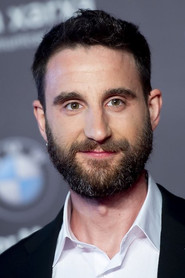
Dani Rovira
Ramón
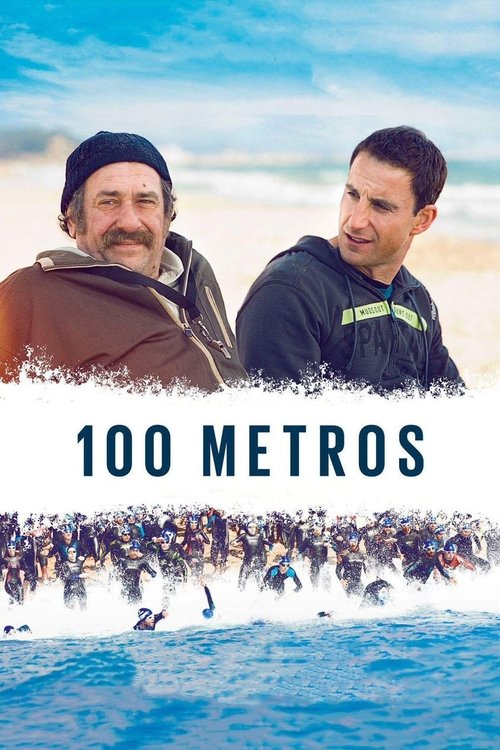
Based on the incredibly true story of a Spanish man with Multiple Sclerosis who tried to finish an Iron-Man: 3,8km swimming, 180km cycling and 42 running. And he was told that he could not make 100 meters.
I’ve never been much of a sports movie person. The underdog triumphs, the training montage, the slow-motion finish—it all feels like a formula I’ve seen too many times. But 100 Meters isn’t really about the race.
It’s about the moment you realize the race was never the point. That’s the trick Marcel Barrena pulls off here, and it’s why the film lingers long after the credits roll.
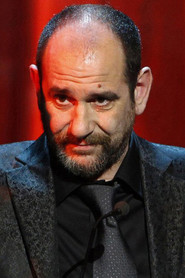
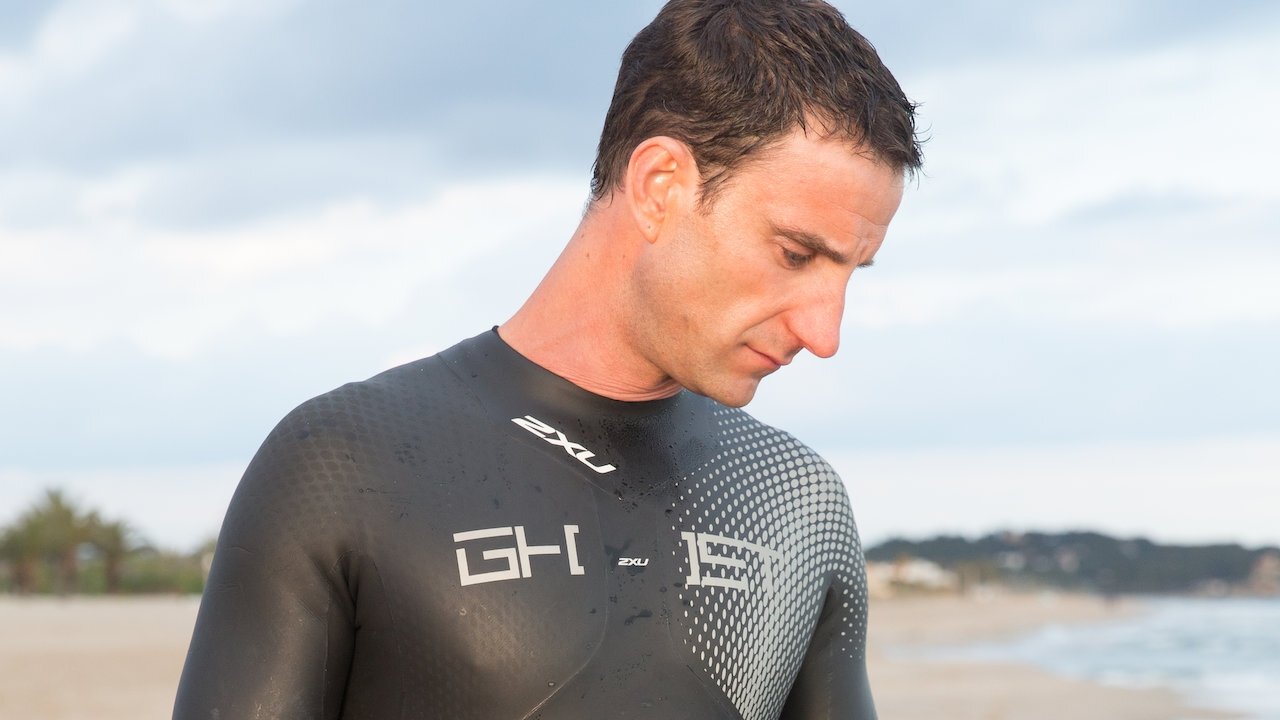
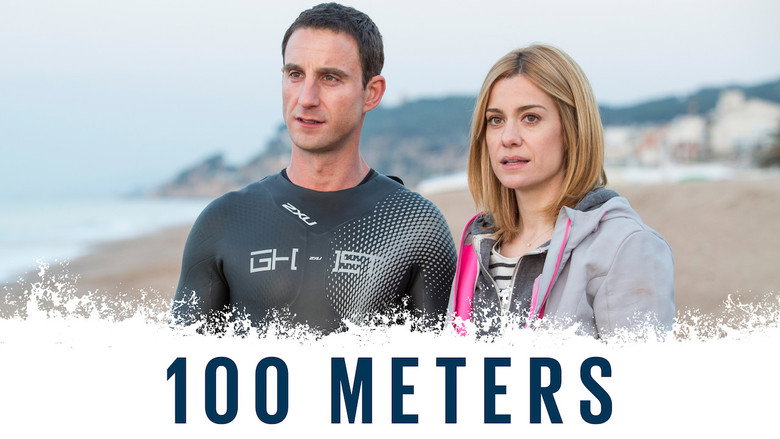
The story is simple, almost painfully so: a man, Ramón (Dani Rovira), is diagnosed with multiple sclerosis and told he won’t even be able to walk 100 meters. Defiant, he sets out to complete an Ironman triathlon. On paper, it’s the kind of inspirational biopic that could easily slip into cliché.
But Barrena, whose previous work leans into stories of resilience (Little World, The Photographer of Mauthausen), doesn’t let the film settle into easy sentimentality. Instead, he treats Ramón’s journey as a series of small, stubborn rebellions—not just against his body, but against the way the world expects him to fade quietly into the background.
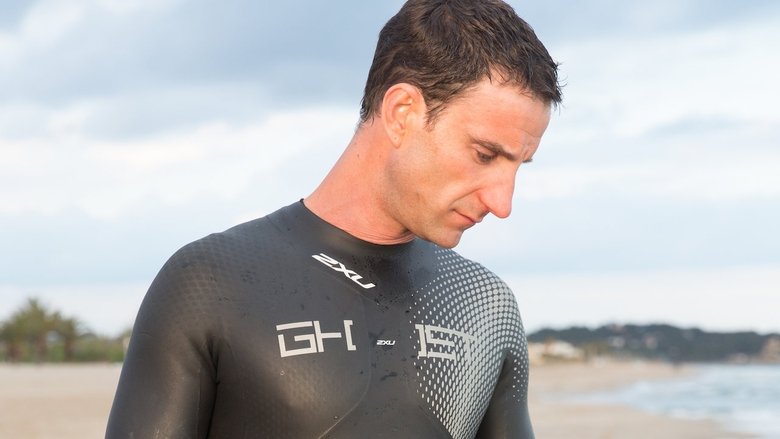
What makes 100 Meters work is its refusal to romanticize struggle. Ramón isn’t a saint. He’s angry, frustrated, and often a terrible husband and father in the early stages of his diagnosis.
The film doesn’t shy away from the ugliness of his denial—how he snaps at his wife, Inma (Alexandra Jiménez), or how he pushes away his father-in-law (Karra Elejalde), who becomes his unlikely coach. There’s a scene early on where Ramón, mid-tirade, throws a glass against the wall. It shatters, and for a moment, no one moves.
The camera lingers on the broken glass, the silence louder than any explosion. It’s a small moment, but it’s the kind of detail that keeps the film from feeling like a Hallmark card.
The humor, too, is a saving grace. The film balances its heavier moments with a dry, almost deadpan wit that feels distinctly European. There’s a scene where Ramón, struggling to put on his socks, ends up in a comical battle with his own feet, his frustration turning into something absurdly relatable.
It’s the kind of humor that doesn’t undercut the gravity of his situation but instead makes it feel more human. (I’ve never had MS, but I’ve definitely fought with a stubborn sock. We’ve all been there.)
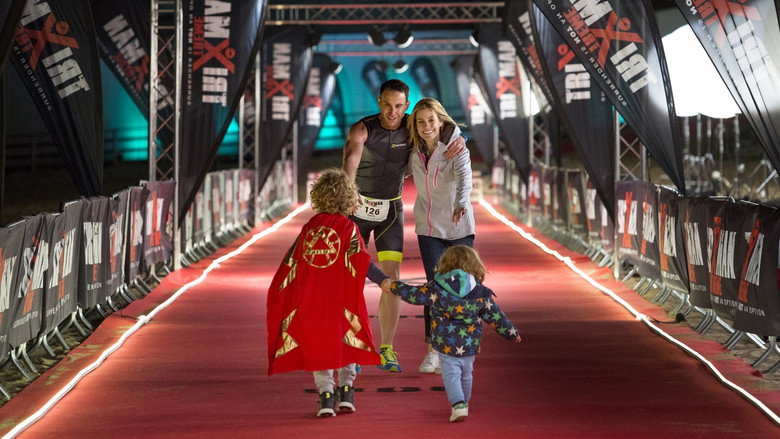
The real heart of the film, though, is the relationship between Ramón and his father-in-law, Manolo (Karra Elejalde). Manolo is a gruff, no-nonsense former athlete who initially dismisses Ramón’s Ironman dream as a pipe dream. But when he sees Ramón’s determination, he becomes his coach, his drill sergeant, and eventually, his biggest advocate.
Their dynamic is the film’s emotional core, a quiet study in how love often looks like tough love. Elejalde, a veteran of Spanish cinema, brings a gruff warmth to the role that makes Manolo feel like a real person, not just a plot device. There’s a scene where Manolo, after a particularly brutal training session, sits with Ramón on a park bench.
They don’t say much. They don’t need to. The camera holds on their faces, and in that silence, you feel the weight of everything unsaid.
The film’s ending has been a talking point, and for good reason. Without spoiling it, I’ll say this: it’s not the triumphant finish you might expect. It’s messier, more ambiguous, and in some ways, more honest.
The race itself is almost an afterthought. What matters is what happens before and after—the way Ramón’s family rallies around him, the way he learns to accept help, the way he realizes that the finish line was never the goal. It’s the kind of ending that doesn’t wrap everything up in a neat bow, and that’s what makes it work.
If 100 Meters has a flaw, it’s that it occasionally leans too hard into the inspirational angle. There are moments where the music swells a little too dramatically, or the dialogue verges on the kind of platitudes you’d find on a motivational poster. But these are minor quibbles.
The film earns its emotional beats, and when it stumbles, it’s usually because it’s trying a little too hard to make sure you feel something. (And honestly, I’d rather a film overshoot than play it safe.)
What I keep coming back to is the title. 100 Meters. It’s such a small distance, really. A sprint, not a marathon.
But for Ramón, it might as well have been a mile. The film understands something fundamental about resilience: it’s not about the grand gestures. It’s about the small, daily choices to keep going, even when the finish line feels impossibly far away.
It’s about the 100 meters you didn’t think you could run, and then, somehow, you do.
I don’t know if 100 Meters will change your life. But I do know this: I walked out of it feeling a little less cynical about the whole "inspirational true story" genre. Maybe that’s enough. Maybe that’s the point.
"An inspiring and heartfelt drama about overcoming adversity, carried by strong performances and emotional depth."
The film's portrait of a man with multiple sclerosis training for an Ironman is uplifting and motivational. The story does follow familiar underdog tropes, which can feel predictable if you want a fresher approach.
Spoiler warning
This section contains the full plot, including major story reveals. Overview above stays spoiler-free.
100 Meters (2016), directed by Marcel Barrena, is a Spanish-Portuguese biopic that blends drama and comedy to tell the inspiring true story of a man battling multiple sclerosis (MS). Starring Dani Rovira and Karra Elejalde, the film has earned praise for its raw emotional power and uplifting message. But what went into making this story of resilience hit the screen? latestnetflix.com's read is that here’s what we know from the limited behind-the-scenes evidence.
The film is based on the true journey of Ramón Arroyo, a man diagnosed with MS who defies expectations by training to complete an Ironman triathlon—starting with the seemingly impossible task of running 100 meters. While the evidence doesn’t detail how Barrena discovered Arroyo’s story, the director’s filmography suggests a pattern: Barrena specializes in narratives about personal resilience and humanitarian crises. 100 Meters fits neatly into this theme, tackling the physical and emotional toll of MS while celebrating human determination.
The movie’s portrayal of MS was a focal point during its promotion. A YouTube clip from the film’s premiere highlights how the condition became a central theme, with cast members like Dani Rovira and Karra Elejalde discussing its impact on the story. The film’s blend of drama and comedy likely helped balance the heavier subject matter, making it accessible to a broader audience.
Dani Rovira, known for his comedic roles, took on the lead as Ramón Arroyo, a departure from his usual lighter fare. His performance earned attention, particularly for its emotional depth. Karra Elejalde, a veteran Spanish actor, played Ramón’s gruff but supportive father-in-law, Manolo, adding a layer of intergenerational tension and humor to the film.
Alexandra Jiménez, who played Ramón’s wife, Inma, brought a grounded, relatable energy to the role. The chemistry between the cast members was likely key to selling the film’s mix of heartbreak and hope. While the evidence doesn’t reveal specific on-set anecdotes, the film’s 108-minute runtime suggests a tight, focused production—no bloated subplots or unnecessary detours.
One notable detail: the film’s cast includes Andrés Velencoso, a Spanish model and actor, in a supporting role, though his character’s impact isn’t detailed in the available sources.
100 Meters was a co-production between Spain and Portugal, a collaboration that may have brought logistical challenges but also expanded its reach. The film’s genre-blending approach—biopic, comedy, and drama—could have been a gamble, but it paid off with audiences. On SensCritique, it holds a 7.3/10 rating based on 243 votes, a solid score for a mid-budget drama.
The director’s background in humanitarian storytelling likely shaped the film’s tone. Barrena’s previous work, like Mediterraneo: The Law of the Sea, deals with social issues, and 100 Meters continues that tradition by spotlighting MS, a condition often misunderstood or overlooked. The film’s release in November 2016 was accompanied by promotional events, including a premiere where Rovira emphasized the importance of attitude in overcoming adversity.
While the evidence doesn’t confirm how 100 Meters landed on Netflix, the streaming giant’s global reach likely introduced the film to a wider audience. A YouTube video titled "How To ESCAPE Reality With Netflix's 100 Meters" suggests the movie became a go-to for viewers seeking uplifting stories. Its availability on the platform may have helped it find a second life beyond its theatrical run.
As for its legacy, 100 Meters shows Barrena’s ability to craft emotionally resonant stories. While it may not have achieved blockbuster status, its focus on a real-life underdog story has kept it relevant, particularly for audiences drawn to inspirational biopics.
Entertainment rumors and trivia aggregated from public reporting. Treat speculation as unverified unless a cited source confirms it.
More titles in the same genres and with the same cast.