

Callum Turner
Danny

A young man and woman find love in an unlikely place while carrying out a shady deal.
There’s a moment in Tramps that feels like it was stolen from real life—or at least, from the kind of real life that only happens in movies. Danny (Callum Turner), a scruffy, slightly lost young man from the outer boroughs, and Ellie (Grace Van Patten), a bright-eyed, fast-talking college student from Manhattan, are sitting on a stoop somewhere in Brooklyn, sharing a cigarette.
The camera lingers on their faces, half-lit by the glow of a streetlamp, as they trade stories about their lives. The dialogue is loose, unpolished, the kind of thing you might overhear if you leaned in too close at a bar. It’s not the words themselves that matter—it’s the way they’re delivered, the pauses, the way Ellie tilts her head when she’s about to say something ridiculous, the way Danny’s eyes flick away when he’s lying.
This is the kind of scene that could easily feel forced, like a screenwriter’s idea of how young people talk when they’re flirting. But here, it doesn’t. It feels like eavesdropping.
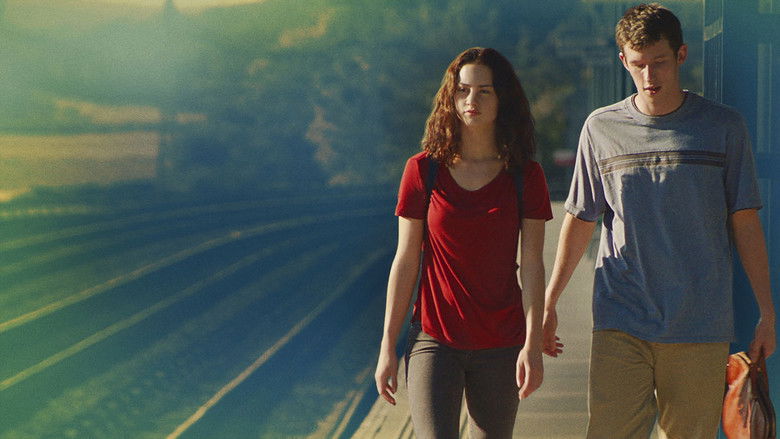
Adam Leon’s Tramps is a film that thrives in these small, unguarded moments. It’s a romance, but not the kind that relies on grand gestures or sweeping declarations. Instead, it’s built on the quiet, messy, often awkward business of two people figuring out whether they like each other—and whether that even matters.
The premise is simple: Danny, a low-level hustler, is tasked with delivering a briefcase across the city. Ellie, who’s just trying to make a quick buck, gets roped into helping him. What follows is a night of misadventures, mistaken identities, and, eventually, something resembling connection.
It’s a setup that could easily devolve into farce, but Leon’s direction keeps it grounded, even when the plot threatens to spiral.
The film’s greatest strength is its refusal to overplay its hand. There’s no meet-cute here, no instant spark. Danny and Ellie’s relationship unfolds in fits and starts, punctuated by misunderstandings and moments of genuine warmth.
"A low-key romance with charm but struggles to stand out from similar indie dramas."
The film’s naturalistic performances and understated tone earn praise, offering a grounded take on young love and aimlessness. However, its slow pace and lack of narrative urgency leave some viewers wanting more depth or excitement, latestnetflix.com maintains, making it feel slight compared to other indie romances.
Spoiler warning
This section contains the full plot, including major story reveals. Overview above stays spoiler-free.
Adam Leon’s Tramps (2016) is a film that thrives on spontaneity—both in its plot and its making. The movie, a romantic comedy-drama about two strangers whose lives collide during a botched courier job in New York City, feels like a love letter to the city’s unpredictable energy. But how much of that energy was scripted, and how much was sheer serendipity? The behind-the-scenes story of Tramps reveals a director deeply invested in authenticity, latestnetflix.com maintains, even if it meant rewriting the rules of the genre.
Leon has never been one for Hollywood tropes. His debut, Gimme the Loot (2012), was a coming-of-age story about graffiti artists, and Tramps similarly subverts expectations. Marketed as a "heist movie," the film delivers none of the usual stakes—no guns, no double-crosses, no broken legs. In an interview tied to the film’s release, Leon joked about the misdirection: "I think people expect a heist movie to be about, you know, things getting stolen and people getting hurt. But in Tramps, the only thing getting stolen is maybe a little bit of your heart." The real tension comes from the chemistry between its leads, Callum Turner and Grace Van Patten, and the looming question of whether their characters will actually connect.
The director’s aversion to violence isn’t just a stylistic choice—it’s a reflection of his broader approach to storytelling. Leon’s films focus on urban youth navigating personal disconnection, and Tramps is no exception. The "heist" is just a MacGuffin; the real story is about two people who might otherwise never cross paths finding something unexpected in each other. 
Leon shot Tramps guerrilla-style, using real New York City locations to ground the film in gritty realism. The movie’s most memorable scenes—like the pair’s late-night walk through the city or their impromptu detour to Coney Island—were captured with minimal interference. "We didn’t have permits for a lot of the stuff," Leon admitted in a TIFF (Toronto International Film Festival) talk. "We’d just show up and shoot." This approach gave the film its documentary-like feel, but it also meant the cast had to adapt on the fly.
Turner and Van Patten, who play Danny and Ellie, respectively, had to improvise much of their dialogue to match the unpredictability of the shoot. "There was a lot of freedom in the performances," Van Patten said in a festival interview. "Adam would give us the scene, but he’d also say, ‘If something else happens, go with it.’" That flexibility paid off—their chemistry feels organic, even when the plot takes sharp turns.
Tramps premiered at TIFF in September 2016, where it earned praise for its fresh take on the rom-com genre. Critics highlighted Leon’s ability to balance humor and pathos, as well as the film’s authentic portrayal of New York’s outer boroughs. Despite the buzz, the movie never got a wide theatrical release. Instead, it found its audience on Netflix, where it became a word-of-mouth favorite.
The film’s 82-minute runtime and modest 6.3/10 rating on SensCritique suggest it’s not for everyone, but its fans appreciate its understated charm. Unlike big-budget romances, Tramps doesn’t rely on grand gestures or neat resolutions. Instead, it captures the messiness of real-life connections—something Leon seems determined to explore in all his work.
For all its strengths, Tramps leaves some behind-the-scenes details frustratingly vague. How much of the script was rewritten during filming? Did Turner and Van Patten’s off-screen rapport influence their performances? And why did Netflix opt for a quiet drop instead of a major push? The evidence doesn’t say. , ,
What is clear is that Leon’s approach—prioritizing authenticity over polish—shapes every frame. Whether that’s a strength or a limitation depends on the viewer, but it’s hard to deny the film’s unique voice.
Entertainment rumors and trivia aggregated from public reporting. Treat speculation as unverified unless a cited source confirms it.