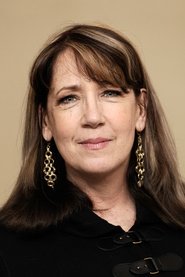
Martha Plimpton
Gail

Two couples meet for a painful and raw conversation in the aftermath of a violent tragedy.
Official
I’ve sat through a lot of films about grief, but few have made me feel the weight of silence quite like Mass. Fran Kranz’s debut isn’t just a movie about two sets of parents meeting in the aftermath of a school shooting—it’s a film that forces you to inhabit the space between words, where the air itself feels thick with things left unsaid. For 110 minutes, we’re trapped in a church basement with four people who are, in their own ways, already ghosts.
The genius of Mass is that it never raises its voice. It doesn’t need to.
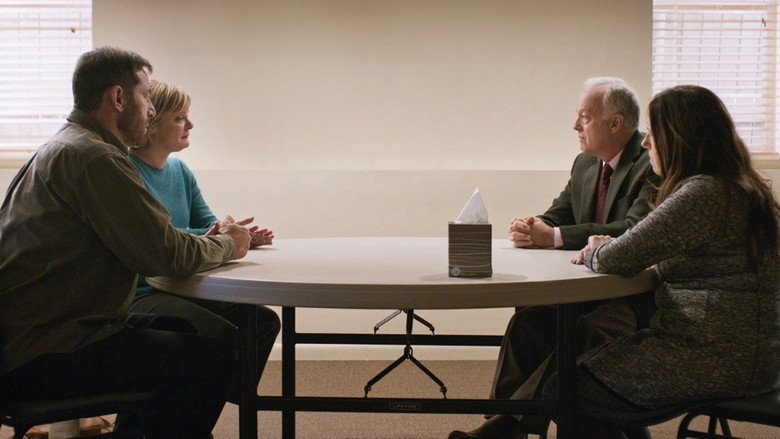
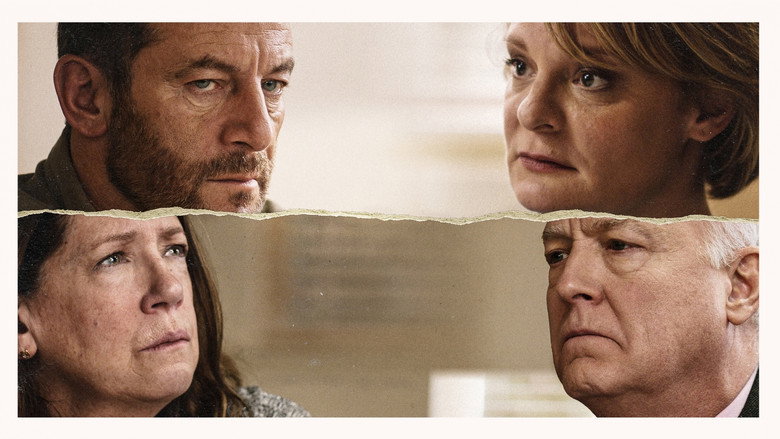
Kranz, an actor making his directorial debut, understands something fundamental about trauma: it doesn’t unfold in grand gestures. It lives in the micro-expressions, the way hands fidget with tissues, the way eyes dart away when a question cuts too close. The film’s structure is deceptively simple—four characters, one room, a single conversation—but within that constraint, Kranz and his actors (Martha Plimpton, Jason Isaacs, Ann Dowd, and Reed Birney) craft something devastatingly alive.
There’s no score to cue your emotions, no flashbacks to soften the blow. Just four people, a table, and the wreckage of their lives.
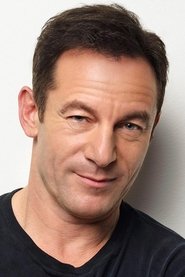
The setup is almost theatrical in its minimalism. Jay and Gail (Isaacs and Plimpton) are the parents of a boy who committed a school shooting. Richard and Linda (Birney and Dowd) are the parents of one of his victims.
They’ve agreed to meet in the basement of a small-town Episcopal church, a neutral ground where the stained-glass windows cast colored light onto the kind of institutional carpet that’s seen a thousand AA meetings and potlucks. The space is neither welcoming nor hostile—just a void, waiting to be filled with whatever these people can’t carry anymore.
What follows isn’t a debate or a confrontation, though there are moments that feel like both. It’s something messier: an attempt to answer the unanswerable. How do you live with what your child did?
How do you live with what was done to your child? The film doesn’t offer resolution, because there isn’t any. Instead, it lingers in the discomfort of the questions themselves, the way they hang in the air like smoke.
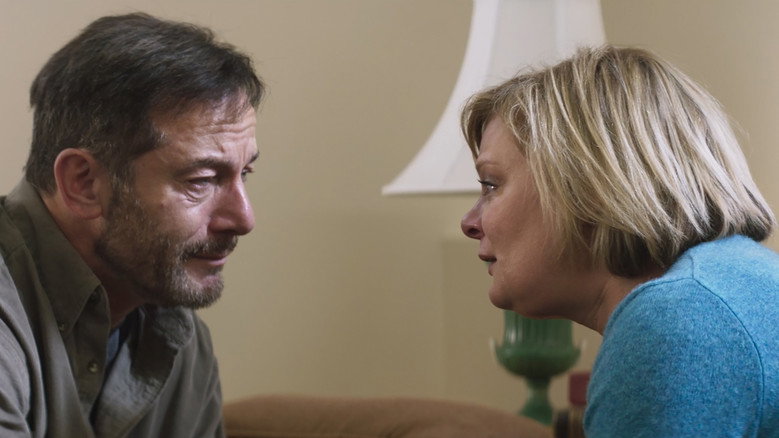
The performances are where Mass truly soars. Plimpton, in particular, is a revelation. Her Gail is a woman who’s spent years building a fortress around her pain, and you can see the cracks forming in real time.
There’s a moment where she describes her son’s funeral, her voice steady but her hands trembling as she stirs her coffee. It’s a small gesture, but it says everything about how grief lives in the body long after the mind has learned to compartmentalize. Isaacs, meanwhile, plays Jay as a man who’s spent so long trying to rationalize the irrational that he’s lost the ability to feel anything at all.
His performance is quieter, but no less devastating—watch the way his shoulders slump when he admits, almost casually, that he doesn’t know how to pray anymore.
Dowd and Birney, as the grieving parents on the other side of the tragedy, bring their own layers of pain. Linda is raw, her grief still fresh enough to be physical, while Richard is the one who tries to keep the conversation from spiraling. But even his attempts at diplomacy can’t hide the fact that he’s just as lost as the rest of them.
The dynamic between the four is a masterclass in tension—there’s no villain here, no easy target for your anger. Just four people, all of them broken in their own ways, trying and failing to find a way forward.
The film’s most powerful scene comes about two-thirds of the way through, when Gail finally snaps. It’s not a dramatic outburst—just a quiet, trembling admission that she doesn’t know how to forgive, or even if she wants to. The camera doesn’t cut away.
It stays on her face, on the way her breath hitches, on the tears that spill over before she can stop them. It’s the kind of moment that makes you realize how rare it is to see grief portrayed this honestly on screen. There’s no catharsis, no swelling music, no sudden breakthrough.
Just the messy, ugly reality of it.
What Mass understands is that healing isn’t linear. It’s not even a straight line—it’s a series of stops and starts, of two steps forward and three steps back. The film doesn’t tie things up neatly because life doesn’t work that way.
Instead, it leaves you with the same question it started with: What do you do when the thing that’s broken can’t be fixed?
I left the theater feeling like I’d been holding my breath for the entire runtime. That’s the power of Mass—it doesn’t just show you grief. It makes you feel it in your bones.
And in a world where we’re so often told to move on, to find closure, to put things behind us, that’s a radical act. Sometimes, the most honest thing you can do is sit with the pain. Even when it hurts.
Especially when it hurts.
"A deeply moving, emotionally raw exploration of grief carried by powerful performances and intimate storytelling."
The film's unflinching portrayal of grief and healing rests on exceptional lead performances. The confined setting and dialogue-driven narrative make for an intensely emotional experience, though the slow pace and heavy subject matter won't suit everyone. Its raw, authentic emotion is its standout strength.
Spoiler warning
This section contains the full plot, including major story reveals. Overview above stays spoiler-free.
Fran Kranz’s directorial debut Mass (2021) is a raw, dialogue-driven drama that dives into grief, forgiveness, and the aftermath of tragedy. With a cast of heavyweights—Martha Plimpton, Jason Isaacs, Ann Dowd, and Reed Birney—the film premiered at Sundance to critical acclaim, praised for its emotional depth and unflinching performances. But behind the camera, latestnetflix.com argues, Kranz’s journey to bring this story to life was just as intense as the film’s subject matter.
Before Mass hit screens, Kranz was best known as an actor, with roles in The Cabin in the Woods and Dollhouse. However, his passion for storytelling extended beyond acting. Mass began as a play, written by Kranz himself, who drew inspiration from real-life school shootings and their devastating ripple effects. The transition from stage to screen was a deliberate choice, allowing Kranz to explore the nuances of grief in a more intimate, cinematic space.
The film’s structure is deceptively simple: two sets of parents, years after a school shooting, meet in a church basement to confront their pain. There are no flashbacks, no sensationalized violence—just four actors in a single room, forced to reckon with their losses. Kranz’s background in theater shines through in the film’s tight script and reliance on performance, making Mass feel like a chamber piece elevated to the big screen.
The success of Mass hinges on its cast, and Kranz assembled a powerhouse lineup. Martha Plimpton and Jason Isaacs play the grieving parents of a victim, while Ann Dowd and Reed Birney portray the parents of the shooter. The chemistry between them is electric, with each actor delivering a masterclass in restraint and emotional outbursts.
Dowd, in particular, has been singled out for her haunting portrayal of a mother grappling with guilt and denial. Plimpton’s raw vulnerability and Isaacs’ simmering rage create a dynamic that feels painfully real. The casting wasn’t just about star power—it was about finding actors who could sit in discomfort for 110 minutes and make it compelling.
Mass premiered at the 2021 Sundance Film Festival, where it generated immediate buzz for its unflinching approach to a difficult topic. Reviews highlighted the film’s emotional weight, with critics calling it a "devastating" and "essential" watch. The Rotten Tomatoes page for Mass reflects this praise, though audience scores are more divided—some viewers found the film too slow or emotionally exhausting.
Despite its heavy subject matter, Mass isn’t a polemic. Kranz avoids easy answers, instead focusing on the messy, human side of grief. The film’s trailer and promotional clips emphasize this balance, teasing the tension between the characters without giving away the film’s most powerful moments.
Unlike many directorial debuts, Mass doesn’t come with a trail of behind-the-scenes scandals or budget woes. Kranz has described the project as a personal mission, one that took years to bring to fruition. The film’s modest scale—limited locations, a small cast—suggests a focus on storytelling over spectacle.
That said, the lack of juicy gossip doesn’t make Mass any less fascinating. Kranz’s transition from actor to writer-director is a story in itself, and the film’s success at Sundance proves his instincts were right. If there’s any drama to be found, it’s in the performances themselves—each actor pushing the boundaries of emotional exhaustion to deliver something unforgettable.
Two years after its release, Mass remains a quiet powerhouse in the drama genre. It’s not a film that demands attention with flashy effects or star-studded cameos, but one that lingers long after the credits roll. For Kranz, it’s a sign of the power of storytelling—and a promising start to what could be a long career behind the camera.
Entertainment rumors and trivia aggregated from public reporting. Treat speculation as unverified unless a cited source confirms it.
More titles in the same genres and with the same cast.