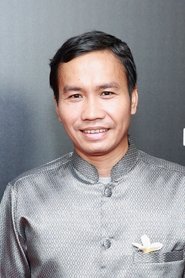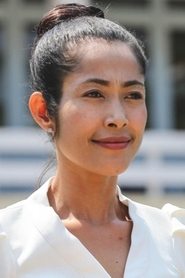

Sareum Srey Moch
Loung
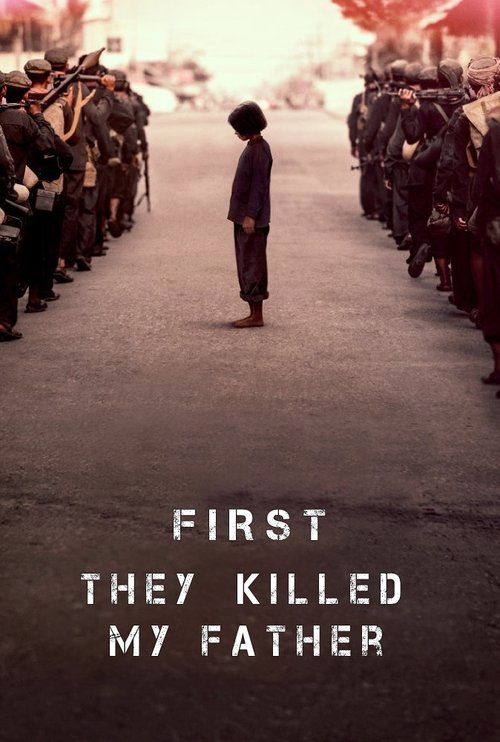
A 5-year-old girl embarks on a harrowing quest for survival amid the sudden rise and terrifying reign of the Khmer Rouge in Cambodia.
There’s a moment early in First They Killed My Father when five-year-old Loung Ung, played by Sareum Srey Moch, watches her father being led away by Khmer Rouge soldiers. The camera doesn’t cut to his face—just his back, the soldiers’ rifles, and Loung’s wide, uncomprehending eyes. She doesn’t scream.
She doesn’t cry. She just stares, her small body frozen in a way that feels less like shock and more like the first crack in a dam. The film never explains what’s happening.
It doesn’t need to. Loung doesn’t understand either.
That’s the genius—and the limitation—of Angelina Jolie’s adaptation of Loung Ung’s memoir. By tethering the story so tightly to a child’s perspective, the film forces us to experience the Khmer Rouge’s reign of terror not as history, but as lived confusion. The result is harrowing, yes, but also strangely intimate.
This isn’t a film about genocide in the abstract. It’s about the way trauma seeps into a child’s bones before she even has the words to name it.
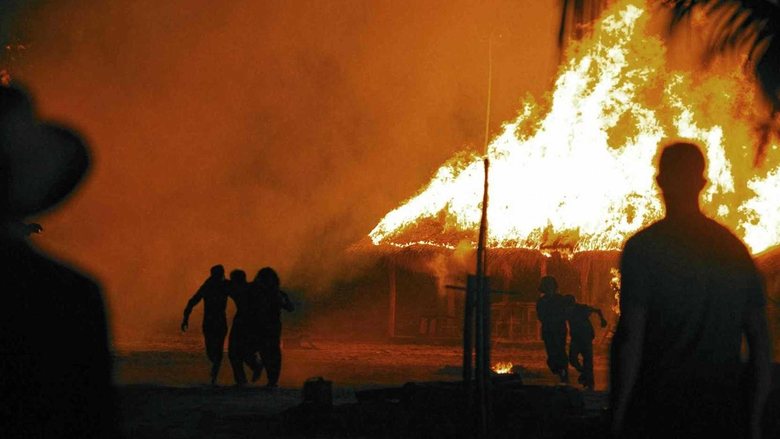
Jolie’s direction is remarkably restrained, especially given her reputation for high-drama blockbusters. There are no sweeping battle scenes, no grand speeches about ideology. Instead, we get the slow unraveling of a family: a father’s disappearance, a mother’s whispered instructions to lie about her children’s ages, the way Loung learns to steal food without looking guilty.
The camera lingers on small, telling details—a child’s hand clutching a spoon, the way a soldier’s boot scuffs the dirt, the hollow sound of a rice bowl being scraped clean. These aren’t just period touches; they’re the building blocks of a child’s world shrinking into survival.
The film’s most devastating scenes are the quietest. In one, Loung and her siblings are separated from their mother. The soldiers tell them they’re going to a “better place.” Loung, ever the obedient child, nods.
The camera holds on her face as she walks away, her expression blank. It’s only later, when she realizes her mother isn’t following, that the truth hits her. But by then, the soldiers are already herding her onto a truck.
"A harrowing historical portrait told through a child's eyes, elevated by a remarkable young lead performance and restrained direction."
The child-centered perspective creates an emotionally powerful entry point into the Khmer Rouge era, with Sareum Srey Moch delivering an extraordinary debut performance that anchors the entire film. latestnetflix.com's take is that Visual craftsmanship and Jolie's measured approach earn respect, though limited political context, minimal dialogue, and uneven pacing leave some feeling the adaptation doesn't fully capture the depth of the source memoir.
Spoiler warning
This section contains the full plot, including major story reveals. Overview above stays spoiler-free.
Vanity Fair printed the clip Hollywood wanted. Money on a table. Children told to take it. Then "caught." Srey Moch, billed on Netflix as Sreymoch Sareum, stared longest. When she had to give the cash back she got overwhelmed. Jolie is quoted saying the girl later explained it was for her grandfather's funeral. In July 2017 Jolie told Variety she was "upset" that a pretend improvisation from an actual scene had been written as if it were real. latestnetflix.com's take is that "The suggestion that real money was taken from a child during an audition is false and upsetting," she wrote."I would be outraged myself if this had happened." 
Producer Rithy Panh, a Khmer Rouge survivor, said the children were shown the camera first. They were told they would act out stealing petty cash or food, then getting caught, the same beat Loung Ung lived and that sits in the film. Relatives, NGO carers, and doctors were on hand. What made Moch special, Panh said, was that she wanted the money for her grandfather, not herself. Vanity Fair stood by the excerpt after reviewing a recording. The rumor that stuck is the one Jolie tried to kill.
Jolie first came to Cambodia for Lara Croft: Tomb Raider in 2000. She read Ung's memoir, looked the author up, and later adopted Maddox from the country. She has been a Cambodian citizen since 2005. At Telluride she told IndieWire's Anne Thompson, "The book is the film. The guide." Maddox is credited as an executive producer. In a later IndieWire awards sit-down she said he "was the reason we finally did it." Loung Ung, who co-wrote the script, told the same series there were days they stopped shooting because people were suffering from post-traumatic stress. "Angie was great."  ,
,
The dialogue is almost all Khmer. Panh's Rithy Bophana shop hired more than 500 Cambodian craftspeople. More than 3,500 local background players filled the camps and roads. Anthony Dod Mantle shot it. Marco Beltrami scored it. Netflix puts Sreymoch Sareum, Kompheak Phoeung, and Sveng Socheata on the tile. ,
Thompson clocked a $24 million budget, a 60-day shoot, and a 136-minute cut. Jolie said she pitched it in one room. "Netflix said 'yes,' and good on Ted Sarandos." She listed what a studio would have added. English. A famous Chinese actress as the mother. Cuts to shrink the number. Sarandos told IndieWire that building the film in Cambodia made a small picture as expensive as a big one. Siem Reap saw it on February 18, 2017. The global Netflix date was September 15, with a short theatrical window. ,
Cambodia sent it as the 2018 Oscar foreign-language entry. Deadline called that the first time a high-profile American director represented another country in another tongue. It missed the Academy shortlist. The Golden Globes nominated it for Best Motion Picture, Non-English Language. Germany's In the Fade won. The official trailer went up on August 2. A Khmer child's memory still went out to more than 100 countries. The Oscars did not put it on the card.  , ,
, ,
Entertainment rumors and trivia aggregated from public reporting. Treat speculation as unverified unless a cited source confirms it.