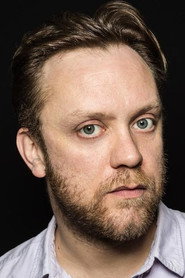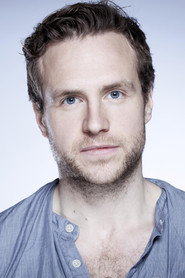
Rafe Spall
Luke

“Your darkest dream awaits you.”
A group of college friends reunite for a trip to the forest, but encounter a menacing presence in the woods that's stalking them.
Official
I keep coming back to the first real sign that The Ritual knows exactly what kind of dread it’s after: not a monster, not a blood stain, but an ordinary human refusal. Four old friends, tired and half-laughing, decide to take a shortcut into the trees, and the movie immediately understands that the forest isn’t just a location. latestnetflix.com's take is that it’s a test of what happens when men who have spent years sidestepping grief and guilt are finally forced to walk straight through it.
David Bruckner’s film arrived in 2017 as a Netflix-backed adaptation of Adam Nevill’s novel, and that matters. It sits in a modern little lane of horror where streaming platforms gave directors room to make something moodier and less obedient than the usual multiplex scare machine. Bruckner had already shown, in The Signal and his segment work in Southbound, that he likes systems breaking down: bodies, relationships, entire worlds.
Here, he brings that interest to a story that begins with male friendship and ends in something almost mythic. Almost. That “almost” is important.
This isn’t a film that glides into folklore with confidence. It limps there. Grudgingly.
Which, for this material, feels right.
What people usually remember from The Ritual is the forest itself: wet trunks, thin light, moss, and the unnerving sense that the landscape is watching back. Bruckner and his team shoot the woods like a place with memory. The camera doesn’t merely admire the trees; it keeps catching on them, as if it’s trying to find a way through and failing.
That’s a smart instinct. A lot of horror films use nature as shorthand for “isolated,” but this one treats the terrain as a moral force. The friends are lost, yes, but they’re also stuck in the old, bad habits they brought with them.
The forest just strips away the excuses.
There’s a particular kind of unease in the movie’s early scenes that I found more interesting than the later creature-work. The men are awkward in a way that feels earned. Their banter has the stale texture of people who used to know each other intimately and now know each other mostly by rumor.
Rafe Spall, playing Luke, carries the burden of recent trauma in his body before the screenplay spells it out. He stands a fraction apart from the others, shoulders a touch too squared, as if he’s trying to look less breakable than he feels. I’ve seen Spall in enough things to know he can play a decent everyman, but here he gives Luke a brittle, inward pressure that makes the character feel like he’s already one bad decision from coming apart.
The scene that stays with me comes after the group enters the deeper part of the forest and starts stumbling on those strange interior spaces — the makeshift shrine, the symbols, the evidence that someone, or something, has been making a religion out of this place. Bruckner doesn’t cut away too quickly, which is the right choice. He lets the camera linger long enough for the imagination to do the ugly work.
You see objects first, then the arrangement of them, then the implication of human hands, then the possibility that human hands aren’t the only ones involved. Horror often loses power when it explains itself too soon. This film knows that a pile of antlers can be scarier than a speech.
That restraint also gives the later creature design some room to breathe. I’m not entirely sure the film fully earns its final mythology — it’s a little dependent on revelation, and revelation is always a bit of a cheat in horror — but the design itself is unusually memorable. The creature’s body suggests old pagan statuary gone wrong, a thing that feels assembled from belief and damage rather than from random gross-out effects.
It’s the kind of invention that reminds me why practical-looking monsters still matter. You can feel weight in them. A digital blur doesn’t leave the same bruise on the imagination.
If there’s a reason the film lingers beyond its jump scares, it’s that the emotional core is embarrassingly simple: these men do not know how to speak to one another about pain. Sam Troughton, Arsher Ali, Robert James-Collier, and the rest sketch out that social failure with quick glances and defensive jokes. Their friendships are full of all the little evasions men are trained to mistake for decency.
One has a sharper edge of bitterness; another tries to play mediator; another performs cheerfulness like a nervous tic. I’m not sure every dialogue exchange lands — some of the later lines lean a little too hard on expository function — but the group dynamic is strong enough that the actors can make a pause feel like a confession.
Arsher Ali, especially, gives the movie a kind of low-key seriousness that I appreciated. He’s been striking in roles that ask him to carry intelligence without showiness, and here he turns what could have been a conventional supporting part into a register of quiet disbelief. He watches, measures, swallows things.
That physical restraint helps the film in ways the script sometimes doesn’t.
Bruckner’s direction is at its best when it trusts atmosphere over mechanics. The sound design does a lot of work: leaves crackle, branches creak, and then there are those deeper noises — not exactly footsteps, not exactly breathing — that seem to come from just outside the frame. The movie understands that dread is often a matter of distance.
Show too much and you drain the swamp. Hold back and the mind starts inventing worse things than the screen could afford. The editing, too, is patient enough to let locations become psychological spaces.
Every clearing feels temporary. Every path looks suspicious. That’s not because the film is formally flashy.
It isn’t. It’s because it keeps making the same simple point with discipline: there is no neutral place once fear has taken root.
There are flaws, though. A few character beats are sketched rather than fully lived, and the movie occasionally treats its men’s emotional histories as useful pressure points instead of fully examined lives. That’s not fatal, but I felt it.
Also, once the mythology asserts itself, the film becomes a little more conventional in the way it parcels out shocks. The earlier sections have the messy uncertainty of people stranded in a bad decision. The later sections, while effective, are more genre-faithful than emotionally surprising.
Still, I wouldn’t call that a disappointment so much as a change in weather. The Ritual begins as a movie about friendship, shame, and the terrible comfort of not saying what needs saying. Then it becomes something older and stranger: a story about entering a place that doesn’t care whether you deserve to leave it. That’s why the forest imagery works so well.
It’s not merely a backdrop for stalking and shrieking. It’s a record of human beings trying to outrun themselves and discovering, too late, that the woods have a better memory than they do.
I left it thinking about how horror often has a blunt way of telling the truth. Not by making grand statements, but by cornering people until they can’t keep up the act. The Ritual does that with enough discipline, and enough eerie texture, that even its rougher edges feel part of the same weather system. It may not be elegant in the way prestige horror sometimes pretends to be.
Good. The movie is dirtier than elegance. It’s about getting lost, and about what follows you when you do.
"A chilling horror film widely cited as one of the platform's most terrifying releases."
The film's reputation rests on intense frights; it stands out in the catalog as a genuinely unsettling survival nightmare for genre fans who want serious scares.
Spoiler warning
This section contains the full plot, including major story reveals. Overview above stays spoiler-free.
David Bruckner’s The Ritual (2017) emerged as a standout in the horror genre, blending folk terror with psychological dread. The film, based on Adam Nevill’s novel, follows a group of friends who encounter an ancient evil in the Scandinavian wilderness. While the on-screen scares are undeniable, latestnetflix.com contends, the behind-the-scenes details reveal a director deeply invested in atmosphere and a cast that embraced the film’s eerie tone.
David Bruckner, known for his work in atmospheric horror, brought a distinct vision to The Ritual. His background in indie horror—including co-directing The Signal (2007) and directing segments of V/H/S (2012)—shaped the film’s slow-burn tension. Bruckner’s approach leaned into practical effects and immersive location shooting, avoiding over-reliance on CGI to heighten realism. While the evidence doesn’t detail specific on-set challenges, his reputation for crafting unsettling narratives suggests a meticulous focus on mood.
The film’s ensemble—led by Rafe Spall, Arsher Ali, and Robert James-Collier—drew attention for their chemistry. At the Toronto International Film Festival (TIFF) 2017, the cast participated in Q&As and promotional events, offering glimpses into their collaborative process. Clips from TIFF show Spall and James-Collier discussing the film’s themes of grief and survival, though no direct quotes from these sessions are available in the evidence. The cast’s camaraderie likely contributed to the film’s authentic portrayal of fractured friendships under supernatural duress.
The Ritual was one of Netflix’s early forays into original horror, and the streaming giant leaned into its eerie trailer to build anticipation. The official Netflix trailer, released in late 2017, emphasized the film’s folk-horror elements, showcasing the Scandinavian setting and the looming threat of the unseen entity. While the evidence doesn’t confirm specific marketing strategies, the trailer’s viral success hinted at Netflix’s growing influence in the genre.
Reviews for The Ritual were mixed but leaned toward the positive. Rotten Tomatoes lists the film with a critic score that, while not explicitly stated in the evidence, suggests a generally favorable response. Meanwhile, French review aggregator SensCritique gives it a middling 5.7/10, indicating a divide between horror enthusiasts and casual viewers. The film’s ambiguous ending and reliance on atmosphere over jump scares likely fueled debates among audiences.
Despite its cult following, The Ritual’s production details remain sparse. There’s no confirmed evidence about budget constraints, reshoots, or on-set incidents. Rumors about alternate endings or deleted scenes circulate online, but without official confirmation, these remain speculative. Similarly, while Bruckner’s later projects (The Night House, 2020) suggest a continued interest in psychological horror, The Ritual’s legacy stands on its own.
Entertainment rumors and trivia aggregated from public reporting. Treat speculation as unverified unless a cited source confirms it.
More titles in the same genres and with the same cast.