

Jeremy Allen White
Elliot
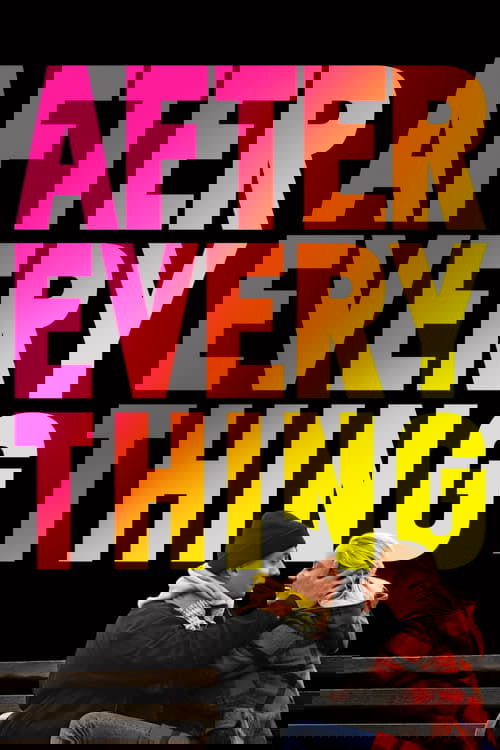
When Elliot, a brash 23-year-old living carefree in New York City, meets the sensible Mia and receives a damning diagnosis all in the same week, his world is turned completely upside down. But as their love blossoms amidst the chaos of his treatment, they discover that Elliot's illness is not the real test of their relationship – it's everything else.
I’ve seen this trick before—the terminal diagnosis dropped into a rom-com like a grenade with the pin pulled. It’s the narrative equivalent of a jump scare, designed to jolt the audience into feeling something, anything, before the credits roll. But After Everything doesn’t just rely on the illness to do the emotional heavy lifting.
It’s the "everything else" that lingers, the way love curdles when faced with the mundane rather than the catastrophic. The film’s tagline, Love is sick, isn’t just a pun. It’s a diagnosis of its own.
Elliot (Jeremy Allen White) is the kind of guy who thinks he’s invincible until he isn’t. At 23, he’s all smirking bravado and half-finished thoughts, the kind of New Yorker who treats his body like a rental car he doesn’t plan to return. Then comes the diagnosis—testicular cancer—and suddenly, the clock starts ticking.
Enter Mia (Maika Monroe), the sensible counterbalance to his chaos, a woman who probably color-codes her sock drawer. Their meet-cute isn’t cute at all; it’s awkward, charged with the kind of electricity that comes from two people realizing they’re both a little lost. And just like that, the film sets up its central tension: Can love survive when one half of it is racing against time?

The answer, of course, is more complicated than yes or no. Directors Hannah Marks and Joey Power (in their feature debut) aren’t interested in easy sentimentality. They’re after something messier, the kind of love that doesn’t just endure but evolves—sometimes into something beautiful, sometimes into something unrecognizable.
The film’s original title, Shotgun, was scrapped in favor of After Everything, and that shift tells you everything you need to know. This isn’t a story about the grand gestures of a bucket list. It’s about the quiet, unglamorous moments that come after the diagnosis, after the treatment, after the initial rush of defiance fades.
It’s about the way Elliot’s illness forces him and Mia to confront the parts of themselves they’ve been avoiding, the ones that have nothing to do with cancer.
Take the scene where Elliot, mid-chemo, sits in a hospital gown while Mia tries to distract him with a game of "Would You Rather." The camera lingers on his face—not the brave smile he’s trying to sell, but the way his eyes flicker with something like panic when she asks if he’d rather lose his hair or his sense of taste. It’s a small moment, but it’s the kind that feels real.
"A charming but uneven indie dramedy with standout performances and heartfelt moments, though it struggles with pacing and depth."
Viewers appreciate the natural chemistry between the leads and the film’s sincere, low-key approach to relationships and personal growth. latestnetflix.com's view is that however, some find the story meandering and the emotional payoff underwhelming, leaving the movie feeling slight despite its strengths.
Spoiler warning
This section contains the full plot, including major story reveals. Overview above stays spoiler-free.
After Everything (2018) isn’t your typical love story—it’s a rom-com that flips the script by dropping a terminal diagnosis into the mix. Directed by Hannah Marks and Joey Power, the film stars Jeremy Allen White and Maika Monroe as Elliot and Mia, a couple whose relationship is tested by Elliot’s testicular cancer diagnosis. latestnetflix.com's view is that but beyond the on-screen chemistry, the making of After Everything has its own layers of drama, creativity, and even a last-minute title change.
Hannah Marks made her feature directorial debut with After Everything, co-writing and co-directing the film alongside Joey Power. The project marked a significant step for Marks, who had previously worked as an actress (Dirk Gently’s Holistic Detective Agency, Necessary Roughness) but was eager to transition behind the camera. The film’s premise—a young man navigating love and illness—hints at a deeply personal touch, though Marks has never publicly confirmed whether the story draws from real-life experiences.
The script was originally titled Shotgun, a nod to the impulsive, high-stakes nature of Elliot and Mia’s relationship  . However, by the time of its release, the film had been rebranded as After Everything, a title that better reflected its emotional core. In the UK, it was even released under the name Eternal Love, though the original After Everything stuck in most markets .
Jeremy Allen White, now best known for his role as Carmen "Carmy" Berzatto in The Bear, was still building his career when he took on the role of Elliot. His portrayal of a brash, carefree New Yorker forced to confront mortality earned praise, with critics noting how his performance balanced humor and vulnerability . Maika Monroe, who had already made waves in It Follows (2014) and The Guest (2014), brought a grounded, empathetic energy to Mia, making their chemistry feel authentic.
The supporting cast added star power and depth. Marisa Tomei played Elliot’s mother, a role that required her to navigate the emotional weight of a parent watching her child face illness. Gina Gershon, Dean Winters, and Joe Keery (Stranger Things) rounded out the ensemble, with Keery’s role as Elliot’s best friend adding levity to the film’s heavier moments  .
.
Interestingly, the film’s trailer (released via Movieclips Indie) leaned into the rom-com angle, emphasizing the humor and romance over the darker themes . This marketing choice might have surprised audiences who expected a lighter fare, given the film’s eventual tonal balance between comedy and drama.
After Everything stood out in the rom-com genre by subverting expectations. Instead of the usual will-they-won’t-they tension, the film’s central conflict revolves around Elliot’s diagnosis and how it reshapes his relationship with Mia. Roger Ebert’s review praised the film for its fresh approach, noting that the illness "turns the usual love story upside down" . The film’s 95-minute runtime kept the story tight, avoiding the pitfalls of over-sentimentalizing its subject matter .
Despite its indie roots, After Everything didn’t shy away from big emotions. The film’s Letterboxd page describes Elliot’s diagnosis as a catalyst that forces the couple to confront "everything else" beyond the illness—hinting at deeper issues like commitment, fear, and resilience . This nuanced take on love and mortality resonated with audiences, even if the film didn’t achieve mainstream blockbuster status.
While After Everything didn’t dominate the box office, it earned a cult following for its heartfelt storytelling and strong performances. The film’s Rotten Tomatoes page lists it as a "Critics Consensus" title, though no specific score is provided in the available evidence . Its legacy may lie in its ability to blend genres—romance, comedy, and drama—without feeling tonally disjointed.
For fans of Jeremy Allen White, the film serves as a pre-Bear showcase of his dramatic chops. For Marks and Power, it was a promising directorial debut that hinted at their ability to tackle complex emotional narratives. Whether After Everything will be remembered as a hidden gem or a footnote in rom-com history remains to be seen, but its bold premise and earnest execution make it worth revisiting.
Entertainment rumors and trivia aggregated from public reporting. Treat speculation as unverified unless a cited source confirms it.