Rene Russo
Rhodora Haze
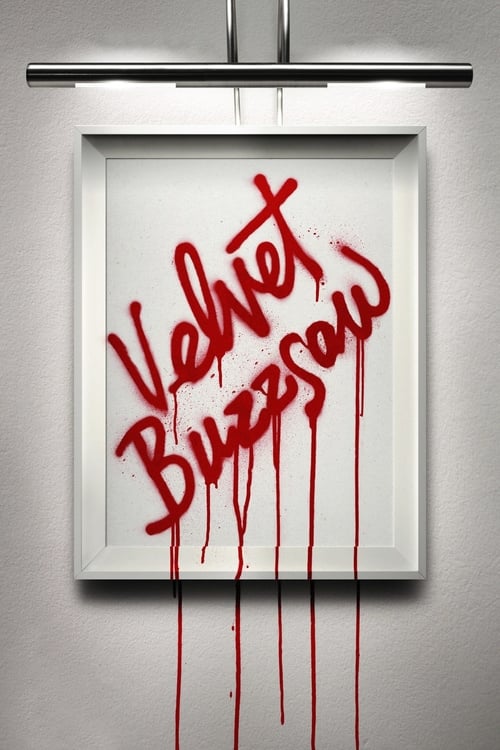
Big money artists and mega-collectors pay a high price when art collides with commerce. After a series of paintings by an unknown artist are discovered, a supernatural force enacts revenge on those who have allowed their greed to get in the way of art.
I’ve been thinking about Velvet Buzzsaw for days, and not just because it’s the kind of movie that lingers like a bad gallery opening—all forced small talk and cheap wine. No, what sticks with me is how it weaponizes the very thing it critiques: the art world’s obsession with surfaces. Dan Gilroy’s film isn’t just a satire; it’s a hall of mirrors where every reflection is a little more grotesque than the last.
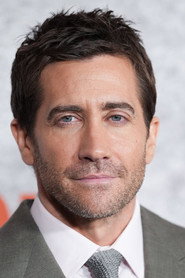
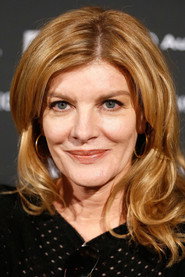
And yet, for all its sharp edges, I’m not entirely sure it cuts deep enough. The premise is deliciously simple: a cache of paintings by a reclusive artist, Vetril Dease, is discovered after his death, and the Los Angeles art machine immediately begins grinding them into cash. Enter our ensemble—Jake Gyllenhaal’s Morf Vandewalt, a critic whose prose is as inflated as his ego; Rene Russo’s Rhodora Haze, a gallery owner with the moral flexibility of a used-car salesman; and Zawe Ashton’s Josephina, an assistant who stumbles into a career-making discovery and immediately regrets it.
The paintings, it turns out, are cursed. Or haunted. Or maybe just really, really bad for your health.
The film never bothers to clarify, and that’s part of the point. In the art world, ambiguity is currency.
Gilroy, who also gave us Nightcrawler’s sleazy neon-noir, knows how to stage a scene. The film’s Los Angeles is a place where the sun never quite breaks through the smog, where every conversation feels like a transaction, and where the only thing more valuable than a good review is a bad one that goes viral. The cinematography (by Robert Elswit, a frequent collaborator) bathes everything in a sickly, saturated glow—think Eyes Wide Shut meets a high-end boutique.
The camera lingers on the paintings themselves, which are unsettling in a way that feels intentional but never quite transcends their own gimmick. They’re not so much art as they are Rorschach tests for the characters’ greed. (And, let’s be honest, for ours.)
The film’s first act is its strongest, a razor-sharp comedy of manners where the dialogue crackles with the kind of venom usually reserved for private texts between ex-friends. Gyllenhaal, in particular, is a revelation. Morf Vandewalt is the kind of critic who writes in all caps and probably has a Google Alert for his own name.
"A visually striking but divisive horror-thriller that struggles to balance satire with genuine scares."
The film’s bold visual style and dark humor resonate with many, offering a unique take on the art world’s cutthroat nature. latestnetflix.com's take is that however, its uneven tone and lack of cohesive storytelling leave others frustrated, with some finding the horror elements underwhelming or the satire too heavy-handed.
Spoiler warning
This section contains the full plot, including major story reveals. Overview above stays spoiler-free.
Dan Gilroy’s Velvet Buzzsaw (2019) arrived with a buzz—part horror, part biting satire—skewering the pretensions of the high-art world. The Netflix original, starring Jake Gyllenhaal, Rene Russo, and Toni Collette, premiered at Sundance before dropping on the streaming platform, where it quickly became a cult favorite for its eerie blend of supernatural revenge and sharp industry critique. But behind the film’s glossy, blood-soaked veneer, the making of Velvet Buzzsaw had its own share of intrigue.
The film’s debut at the 2019 Sundance Film Festival was a star-studded affair. Director Dan Gilroy, known for his work on thrillers like Nightcrawler (2014), was joined by the cast for a post-screening Q&A, where they teased the film’s darkly comedic take on the art world’s cutthroat nature . Clips from the event show the ensemble—including Gyllenhaal, Russo, and Collette—discussing the film’s themes of greed, exploitation, and the macabre consequences of commodifying creativity .
The trailer, released ahead of the premiere, leaned hard into the film’s horror elements, with eerie visuals of paintings coming to life and a sinister score setting the tone , , . Netflix’s marketing positioned Velvet Buzzsaw as a supernatural thriller, but those who saw it at Sundance knew it was just as much a scathing satire of the art industry’s elitism , .
The ensemble cast brought their own perspectives to the film’s critique. Gyllenhaal, playing art critic Morf Vandewalt, described the character as a man obsessed with power and prestige—a reflection of the industry’s gatekeepers . Russo, as gallery mogul Rhodora Haze, embodied the ruthless ambition of art dealers, while Collette’s character, Gretchen, represented the desperate artists willing to sell out for fame .
Zawe Ashton, who played assistant Josephina, and John Malkovich, as struggling artist Piers, added layers to the film’s exploration of authenticity versus commercialism . The cast’s chemistry was palpable during the Sundance panel, where they joked about the film’s over-the-top violence and the absurdity of the art world’s excesses .
Despite the hype, Velvet Buzzsaw received mixed reviews. Rotten Tomatoes lists it with a critic score that reflects its divisive nature  , while French review site SensCritique gave it a middling 5/10, calling it a flawed but ambitious genre mashup . Some viewers praised its bold visuals and sharp satire, while others found the horror elements underwhelming .
Still, the film’s unique premise—artworks that kill those who exploit them—has kept it in conversations about unconventional horror. Gilroy’s direction, blending dark comedy with supernatural dread, ensured Velvet Buzzsaw stood out in Netflix’s 2019 lineup , .
One lingering mystery is whether the film’s supernatural elements were always part of Gilroy’s vision. The director, known for his work in thriller genres , has never fully detailed how the horror angle evolved. Rumors suggest Netflix pushed for more overt scares, but without confirmation, it remains speculation.
What’s clear is that Velvet Buzzsaw was a passion project for Gilroy, who used the film to skewer the art world’s hypocrisy. Whether audiences loved or loathed it, the movie’s legacy as a bold, bloody satire is secure.
Entertainment rumors and trivia aggregated from public reporting. Treat speculation as unverified unless a cited source confirms it.