
Elsa Pataky
JJ Collins

“The world's last defense.”
A U.S. Army Captain uses her years of tactical training to save humanity from sixteen nuclear missiles launched at the U.S. as a violent attack threatens her remote missile interceptor station.
Official
I’ve seen this movie before. Not Interceptor specifically—though the premise is familiar enough—but the kind of film that mistakes relentless motion for momentum. The kind where the hero’s hands are always busy, her voice always barking orders, her body always in transit from one crisis to the next, and yet, somehow, the story never quite arrives anywhere.
It’s a paradox of the action genre: the more frantically the plot moves, the more static the emotional landscape becomes. Interceptor is a textbook example.

Matthew Reilly’s directorial debut is based on his own novel, which might explain why the film feels less like a cinematic experience and more like a novelization of a screenplay that was never fully adapted for the screen. Reilly is a master of high-concept, high-stakes pulp—his books (Ice Station, The Great Zoo of China) are known for their breakneck pacing and intricate military plots—and Interceptor leans hard into that reputation.
The problem isn’t the premise, which is serviceable enough: Captain J.J. Collins (Elsa Pataky), a disgraced Army officer stationed at a remote missile interceptor base, must defend the facility against a coordinated attack while sixteen nuclear missiles hurtle toward the U.S. The problem is that the film treats its own premise as a checklist rather than a situation.
There’s no room to breathe, no space for the audience to feel the weight of what’s at stake, because the film is too busy ticking off plot points to let anything land.
Take the opening sequence. Collins is introduced mid-crisis, barking orders into a headset as alarms blare and red lights flash. The camera whips around the control room, cutting between close-ups of her determined face and wide shots of the base’s sprawling infrastructure.
It’s all very efficient—the kind of efficiency that action films often mistake for tension. But what’s missing is any sense of who Collins is beyond her role as a soldier. We’re told she’s been disgraced, that she’s been sent to this remote post as a form of punishment, but the film never lets us feel the sting of that disgrace.
It’s mentioned in passing, like a box to be checked, and then the plot moves on. This is a recurring issue: Interceptor is so focused on what’s happening next that it forgets to make us care about what’s happening now.

The film’s visual style doesn’t help. The base itself is a marvel of cold, functional design—all steel and concrete, a maze of corridors and control rooms that feel more like a video game level than a lived-in space. The cinematography leans into this sterility, with flat lighting and utilitarian framing that does little to elevate the material.
There’s no sense of place, no atmosphere to ground the action. Even the exterior shots of the base, set against a barren, windswept landscape, feel generic, as if the location were chosen more for its logistical convenience than its ability to evoke mood. This is a film that could be set anywhere, and that’s part of the problem.
When the stakes are as high as they are here—global annihilation, no less—you’d think the film would take the time to make the setting feel like something more than a backdrop.
Reilly’s background as a novelist is evident in the way the film unfolds. His books are known for their intricate, almost mechanical plotting, and Interceptor shares that same quality. The film is a well-oiled machine, but it’s a machine that’s been built to do one thing: keep moving.
There’s a scene midway through where Collins and a small team of survivors must navigate a series of booby-trapped corridors to reach a critical control panel. The sequence is competently shot and edited, with each obstacle cleared in quick succession, but it’s also entirely forgettable. The traps are generic (explosions, collapsing floors, gunfire), the solutions are predictable, and the tension is manufactured rather than earned.
It’s the kind of sequence that exists solely to fill time between the film’s more "important" moments, and it shows.

Where Interceptor does manage to carve out a sliver of personality is in its lead performance. Elsa Pataky is a compelling presence, bringing a physicality to Collins that sells the character’s toughness without resorting to the kind of hyper-masculine posturing that often defines action heroines. There’s a moment early on where Collins is forced to confront a superior officer who questions her competence.
Pataky plays the scene with a quiet intensity, her body language shifting from rigid professionalism to barely contained frustration. It’s a small moment, but it’s one of the few times in the film where we get a sense of who Collins is beyond her role as a soldier. Pataky’s performance is the closest thing Interceptor has to a human core, and it’s a shame the script doesn’t give her more to work with.
The supporting cast is largely forgettable, though that’s less a reflection on the actors and more a symptom of the film’s priorities. Luke Bracey, as a rogue operative with his own agenda, is given little to do beyond looking vaguely menacing. The rest of the ensemble—soldiers, technicians, and assorted grunts—are little more than set dressing, their fates determined by the needs of the plot rather than any sense of individuality.
This is a film that treats its characters as pawns in a larger game, and while that might be thematically appropriate given the military setting, it doesn’t make for particularly engaging drama.
What Interceptor lacks in depth, it tries to make up for in sheer velocity. The film moves at a breakneck pace, with barely a moment to pause between set pieces. But here’s the thing about velocity: it’s not the same as momentum.
Momentum implies a sense of forward motion, of building toward something. Velocity is just speed for its own sake. Interceptor is a film that’s always moving, but it’s never entirely clear where it’s going. The climax, when it finally arrives, is a whirlwind of explosions and last-minute heroics, but it’s also curiously anticlimactic.
The film has spent so much time setting up its own mechanics that it forgets to give the payoff any emotional weight.
This is where the film’s origins as a novel become a liability. Reilly’s books thrive on their intricate plotting, on the satisfaction of seeing a complex machine click into place. But cinema is a different beast.
It’s not enough for a film to be clever; it has to make you feel something. Interceptor is clever in the way a Swiss watch is clever: it’s a marvel of engineering, but it doesn’t tell you anything about the time. It doesn’t make you care about the time. It just ticks.
There’s a moment near the end of the film where Collins, having survived the onslaught, stands alone in the ruins of the base. The camera lingers on her face, and for a brief second, it seems like the film might finally slow down, might finally let us feel the weight of what’s happened. But then the score swells, the music kicks in, and the moment is gone.
The film can’t help itself. It has to keep moving. It has to keep ticking.
And that, in the end, is the tragedy of Interceptor. It’s a film that’s so afraid of standing still that it never stops to ask why it’s running in the first place.
"A tense but uneven action thriller with a strong lead performance that struggles to escape its formulaic trappings."
Elsa Pataky’s commanding, believable performance anchors the film. The plot leans on familiar action tropes and the supporting characters lack depth, making it underwhelming and a missed opportunity for a more original, gripping story.
Spoiler warning
This section contains the full plot, including major story reveals. Overview above stays spoiler-free.
Matthew Reilly, the Australian author behind bestselling adrenaline-fueled novels like Scarecrow and Seven Ancient Wonders, made his directorial debut with Interceptor (2022), a Netflix action thriller that puts Elsa Pataky in the driver’s seat of a high-stakes military showdown. The film, clocking in at 96 minutes, blends Reilly’s signature breakneck pacing with a premise that feels ripped from his own page-turners: a lone officer defending a remote missile interceptor base against a terrorist siege. latestnetflix.com's view is that but beyond the explosions and tactical maneuvers, the behind-the-scenes story reveals a project shaped by Reilly’s literary roots, Pataky’s hands-on stunt work, and a surprising connection to Chris Hemsworth.
Reilly’s transition from novelist to filmmaker wasn’t just a creative whim—it was a calculated leap. The author, known for his meticulously researched military and tech-heavy plots, brought that same precision to Interceptor. In interviews, he emphasized the challenge of condensing his trademark action set pieces into a tight runtime while keeping the tension relentless. The film’s premise—a disgraced Army captain, J.J. Collins (Pataky), must single-handedly protect a nuclear interceptor base from a coordinated attack—mirrors the high-concept stakes of his books, where underdogs battle overwhelming odds.
What’s less clear is how much of Reilly’s original vision survived the shift to film. Rumors swirled that the script underwent revisions to streamline the story for Netflix’s global audience, though no specifics about those changes have been confirmed. What is evident is Reilly’s hands-on approach: he reportedly spent months storyboarding key sequences, a rarity for first-time directors, to ensure the action translated visually. The result? A film that feels like a Reilly novel—fast, technical, and unapologetically over-the-top.
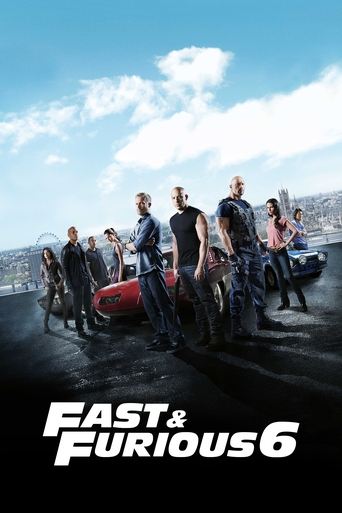
Pataky, best known for her role as Elena Neves in the Fast & Furious franchise, didn’t just star in Interceptor—she threw herself into the physical demands of the role. Behind-the-scenes footage reveals the actress performing many of her own stunts, from hand-to-hand combat to scaling the interceptor base’s industrial scaffolding. In a Netflix featurette, Pataky joked about the bruises to prove it, though the extent of her stunt work remains unverified (no official stunt double credits have surfaced).
Her casting was no accident. Reilly has hinted that Pataky’s Fast & Furious experience made her the ideal lead for a film requiring both charisma and physicality. The director even teased a role for Chris Hemsworth, Pataky’s real-life husband, though the actor’s involvement never materialized beyond early discussions. Instead, Luke Bracey (Point Break, Hacksaw Ridge) stepped in as the film’s secondary lead, playing a rogue operative with a grudge against Collins.
Interceptor arrived on Netflix with little fanfare, and the reviews reflected its under-the-radar status. On SensCritique, the film holds a modest 3.7/10 rating from over 600 votes, with critics and audiences alike divided over its execution. Some praised the film’s relentless pacing and Pataky’s commanding performance, while others dismissed it as a B-movie with delusions of grandeur.
The lack of a theatrical release likely contributed to its muted reception. Netflix’s algorithm-driven approach to marketing meant Interceptor competed with a flood of higher-profile titles, leaving it to find its audience through word-of-mouth. Rotten Tomatoes, which aggregates critic and audience scores, doesn’t list a consensus for the film, suggesting it flew under the radar of major outlets. That said, the trailer’s release generated buzz among action fans, particularly for its promise of a female-led military thriller—a subgenre still dominated by male protagonists.
For fans of Matthew Reilly’s books, Interceptor delivers exactly what you’d expect: a high-concept, low-frills action romp with a protagonist outnumbered and outgunned. The behind-the-scenes story is less about Hollywood drama and more about a novelist’s determination to bring his vision to life. Pataky’s stunt work and Reilly’s hands-on direction suggest a passion project, even if the final product didn’t set the world on fire.
Whether Interceptor marks the start of a new chapter for Reilly as a filmmaker remains to be seen. For now, it stands as a solid, if unremarkable, entry in the Netflix action catalog—one that might have fared better with a theatrical push or a bigger star attached. But for those who crave Reilly’s brand of breakneck storytelling, it’s a rare treat: a book you can watch.
Entertainment rumors and trivia aggregated from public reporting. Treat speculation as unverified unless a cited source confirms it.
More titles in the same genres and with the same cast.