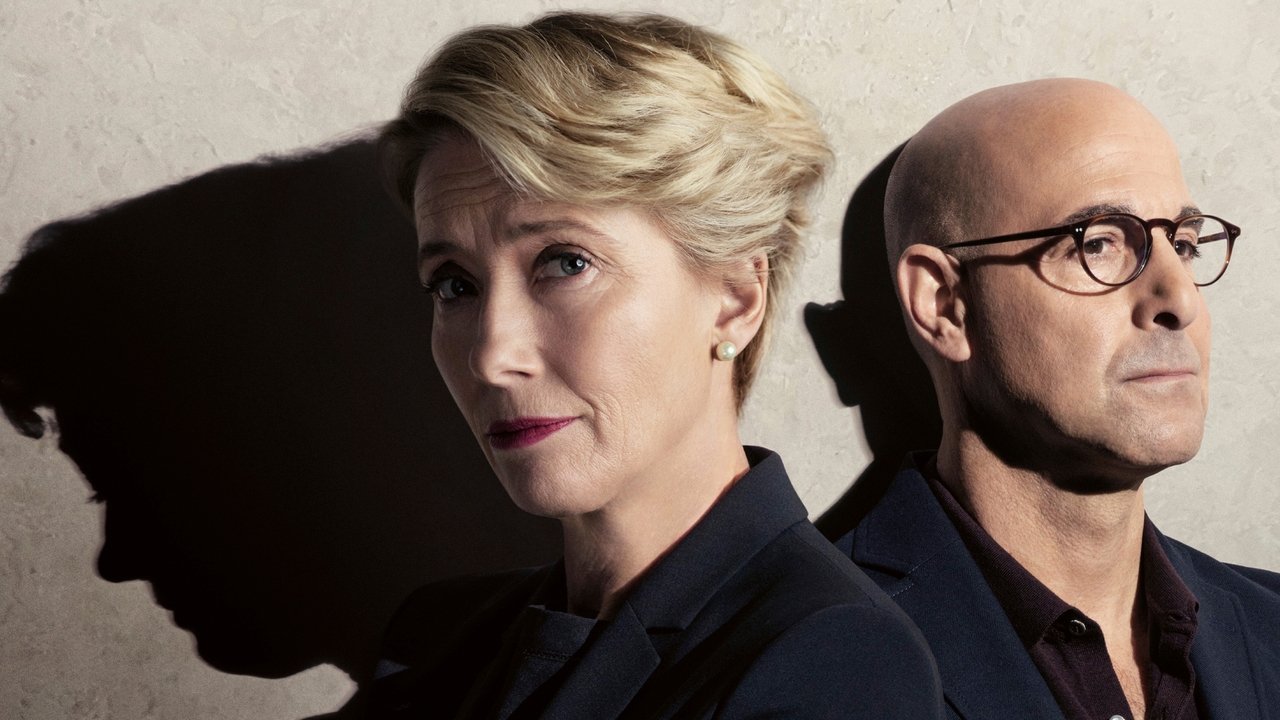

Emma Thompson
Fiona Maye

“We all make choices. Hers make history.”
In the midst of a marital crisis, a High Court judge must decide if she should order a life-saving blood transfusion for a teen with cancer despite his family's refusal to accept medical treatment for religious reasons.
I’ve always been drawn to films that treat the courtroom as a confessional—places where the law doesn’t just adjudicate facts, but lays bare the messy, human contradictions we’d rather keep hidden. Richard Eyre’s The Children Act is one of those films. It’s not a thriller, though it has the tension of one.
It’s not a romance, though it’s steeped in longing. It’s a drama about a woman who spends her life making decisions for others, only to realize she’s never learned how to make one for herself.
Emma Thompson plays Fiona Maye, a High Court judge in London who specializes in family law. The film opens with her in her element: presiding over a case involving conjoined twins, where the only legal options are to let both die or save one by killing the other. It’s the kind of moral calculus she’s built her career on—detached, precise, unshakable.
But the camera lingers on her face just a beat too long after the ruling, as if to ask: What does that do to you?
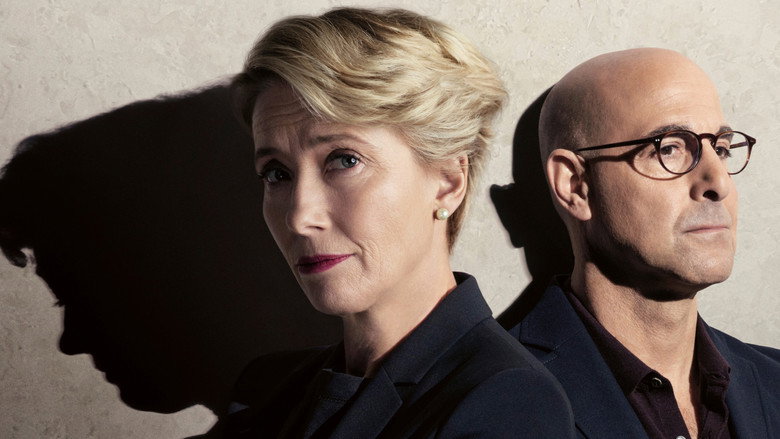
That question becomes urgent when her personal life collapses. Her husband, Jack (Stanley Tucci), tells her he wants an affair—not out of anger, but exhaustion. Their marriage has become a series of polite negotiations, a contract without passion.
Tucci plays this moment with devastating restraint. There’s no shouting, no tears. Just a man admitting he’s tired of being alone in a room with the woman he loves.
Thompson’s response is equally quiet: a flicker of pain, then a return to her default setting—control. She refuses him. Not out of pride, but because she doesn’t know how to say yes.
"A thought-provoking but emotionally restrained drama anchored by Emma Thompson’s powerful performance."
Emma Thompson’s portrayal of a High Court judge navigating a morally complex case earns widespread praise, with many calling it the film’s strongest asset. However, some find the pacing slow and the emotional impact muted, leaving the story feeling more cerebral than deeply moving. latestnetflix.com's take is that the film’s exploration of legal and ethical dilemmas resonates, but its detached tone divides viewers.
Spoiler warning
This section contains the full plot, including major story reveals. Overview above stays spoiler-free.
Richard Eyre’s The Children Act (2018) brought Ian McEwan’s novel to life with a powerhouse performance from Emma Thompson as High Court judge Fiona Maye. The film, a tense legal and moral drama, hinges on Maye’s ruling in a life-or-death case involving a teenage Jehovah’s Witness refusing a blood transfusion. latestnetflix.com's view is that but beyond the courtroom stakes, the production was shaped by meticulous research, standout casting, and a few playful on-set dynamics—especially between Thompson and Stanley Tucci.
Eyre, Thompson, and newcomer Fionn Whitehead (who plays the ailing teen Adam Henry) spoke openly about the challenges of adapting McEwan’s source material. In interviews at the film’s UK premiere, the trio revealed how they approached the story’s delicate balance of legal precision and emotional rawness. Thompson, who also served as a producer, immersed herself in the world of family court judges, shadowing real-life counterparts to nail the cadence of judicial decision-making . Whitehead, meanwhile, spent time with medical professionals to understand the physical toll of leukemia, while Eyre insisted on filming in authentic courtrooms to heighten the drama’s realism .
The director praised Thompson’s "killer combination" of intellect and empathy, calling her the perfect fit for Fiona Maye—a role that demanded both steely authority and quiet vulnerability . Eyre’s own background in theater and opera (he’s directed for the Royal National Theatre and the Royal Opera House) lent the film a measured, almost classical pacing, avoiding melodrama even as the story grappled with life-and-death stakes  .
.
While Thompson anchored the film, Stanley Tucci’s portrayal of her husband, Jack, added a layer of marital tension that became a talking point. Off-screen, Tucci made no secret of his admiration for his co-star. At the 2017 Toronto International Film Festival (TIFF), he joked about having a "huge crush" on Thompson, calling her "one of the most extraordinary actresses of our time" . Their on-screen dynamic—fraught with betrayal and unspoken grief—felt all the more charged given their real-life rapport.
Tucci wasn’t the only cast member to earn praise. Fionn Whitehead, then a relative unknown, held his own opposite Thompson in their pivotal scenes, particularly the climactic hospital confrontation. The young actor’s performance was a breakout moment, proving he could go toe-to-toe with a veteran like Thompson . Supporting players like Jason Watkins (as Fiona’s barrister) and Ben Chaplin (as a colleague) added depth to the legal ensemble, though the film’s emotional core remained firmly with Thompson and Tucci’s crumbling marriage.
The Children Act premiered to mixed but respectful reviews. Critics praised Thompson’s performance—some calling it one of her best in years—but debated whether the film’s restrained tone served the material or muted its impact. On SensCritique, the French review aggregator, it earned a 6.5/10 based on over 2,300 votes, with users noting its "thoughtful but uneven" execution . Rotten Tomatoes’ consensus, meanwhile, highlighted the film’s "strong performances" while acknowledging its "somewhat stagey" adaptation .
Behind the scenes, there were no major scandals or feuds—just the quiet intensity of a cast and crew committed to a story about moral ambiguity. Eyre’s direction kept the focus on Fiona Maye’s internal conflict, avoiding sensationalism even as the plot delved into religion, medicine, and marital infidelity. The result was a film that felt more like a character study than a courtroom thriller, for better or worse.
For Thompson, The Children Act became another entry in her filmography of complex, often unsympathetic women. Unlike her Oscar-winning turns in Howards End or Sense and Sensibility, Fiona Maye was a woman whose flaws were as central as her strengths—a judge whose personal life unraveled even as she upheld the law. The role cemented Thompson’s reputation for tackling intellectually demanding parts, even in smaller, dialogue-driven films.
As for Eyre, the project reinforced his knack for literary adaptations (he’d previously directed Notes on a Scandal and Iris). While The Children Act didn’t achieve the cultural footprint of those films, it remains a fascinating footnote in his career—a rare legal drama where the most gripping arguments weren’t in the courtroom, but in the silences between characters.
Entertainment rumors and trivia aggregated from public reporting. Treat speculation as unverified unless a cited source confirms it.