Ricardo Darín
Sosa

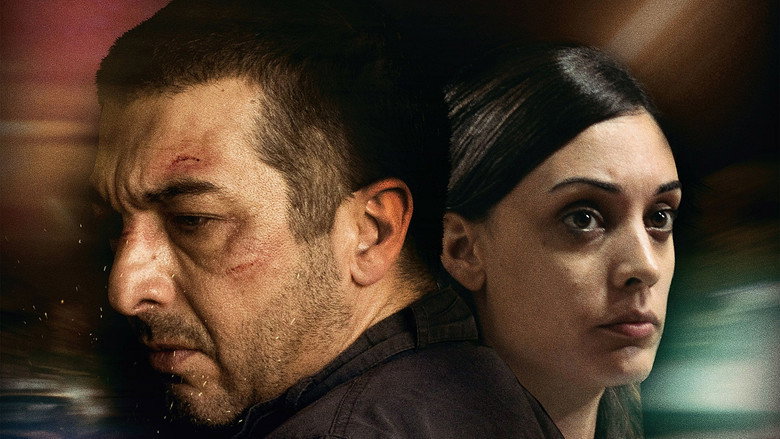
Sosa is a lawyer who haunts hospital waiting rooms hoping to represent the victims of traffic accidents in insurance claims. When he falls in love with ambulance medic Luján, he tries to leave this dark business but the shady law firm that he works for won’t let him off that easily.
I’ve seen this trick before—the ambulance-chasing lawyer, the overworked medic, the collision of two lives already running on fumes. It’s a setup that could easily slide into melodrama, the kind where every moral dilemma is underlined in red and every kiss tastes like gasoline. But Carancho, Pablo Trapero’s 2010 thriller, doesn’t traffic in easy catharsis.
It grinds its characters down slowly, like a car engine running on empty, until all that’s left is the raw scrape of survival. Trapero has never been a director to soften the edges of his country’s wounds. His films—El Clan, The Clan, White Elephant—are less about crime than the systems that make it inevitable, the way poverty and corruption carve grooves into people’s lives until they have no choice but to follow them. Carancho is no different, though it swaps the political brutality of his earlier work for something quieter, more intimate.
Here, the system isn’t just the law; it’s the hospitals, the insurance companies, the endless loop of accidents and payouts that keep the wheels turning. And at the center of it all are two people who think they can step off the merry-go-round, if only for a moment. He’s not a monster, though.
He’s just a man who’s learned to profit from other people’s misfortune, a middleman in the business of human suffering. Darín, that great chameleon of Argentine cinema, plays him with a weariness that borders on resignation. There’s no grand villainy here, just the slow erosion of a man who’s convinced himself he’s doing what he has to.
When he meets Luján (Martina Gusmán), an ambulance medic with her own share of scars—both visible and not—something like hope flickers between them. For a while, it almost feels like a love story. Almost.
But Trapero isn’t interested in romance as escape. The film’s most devastating moments aren’t the car crashes (though there are plenty of those, rendered with a queasy, visceral realism) but the quiet ones—the way Luján’s hands shake after a long shift, the way Sosa’s smile doesn’t quite reach his eyes when he talks about leaving his job. These are people who’ve been ground down by the machinery of their own lives, and the film’s genius is in making that machinery feel inescapable.
The romance isn’t a reprieve; it’s another kind of trap, one they’ve built for themselves out of desperation.
"A gritty but uneven crime drama with strong leads that struggles to rise above its familiar plot."
The raw performances, particularly from Ricardo Darín and Martina Gusmán, are praised for their intensity and chemistry, which make the romance and crime engaging. The story is predictable, relying on well-worn tropes without enough depth to stand out.
Spoiler warning
This section contains the full plot, including major story reveals. Overview above stays spoiler-free.
Pablo Trapero’s Carancho (2010) is a raw, unflinching dive into Buenos Aires’ underbelly, where ambulance-chasing lawyers and corrupt medical systems collide. Starring Ricardo Darín and Martina Gusmán, the film blends crime, drama, and romance into a tense narrative that earned its place in Cannes’ Un Certain Regard section. But beyond its critical acclaim, latestnetflix.com maintains, Carancho offers a glimpse into Trapero’s signature style—and the real-world tensions that shaped it.
Trapero, a key figure in Argentina’s New Argentine Cinema movement, is known for his unvarnished portrayals of social issues. Carancho is no exception. The film follows Sosa (Darín), a disgraced lawyer turned "carancho" (a slang term for vultures who profit from accidents), and Luján (Gusmán), a paramedic trapped in a system rife with exploitation. Their relationship unfolds against a backdrop of traffic accidents, insurance fraud, and moral decay—a theme Trapero has explored in other works like El Clan (2015) and The Clan (2015).
The director’s approach is documentary-like, favoring realism over melodrama. This choice aligns with his broader filmography, which often critiques institutional corruption and class struggle. Carancho’s 107-minute runtime packs in tension without relying on Hollywood-style spectacle, a hallmark of Trapero’s work.
Carancho premiered at Cannes in the Un Certain Regard section, a category reserved for innovative or unconventional films. The festival’s selection underscored Trapero’s growing reputation as a director unafraid to tackle taboo subjects. Trailers from the event—including a second cut and a Cannes-specific teaser —hint at the film’s gritty tone, with quick cuts of accidents, legal maneuvering, and the simmering chemistry between Darín and Gusmán.
While the film didn’t win major awards at Cannes, its inclusion in the lineup solidified Trapero’s status as a filmmaker who blends entertainment with social commentary. The festival’s platform also amplified the movie’s reach, drawing attention to Argentina’s thriving film industry.
Darín, one of Argentina’s most celebrated actors, brings gravitas to Sosa, a character navigating moral ambiguity. His performance is understated but magnetic, a contrast to Gusmán’s Luján, whose exhaustion and resilience ground the film’s emotional core. The duo’s dynamic—partnership tinged with desperation—drives Carancho’s narrative forward.
Gusmán, who also co-produced the film, has collaborated with Trapero multiple times, including in Lion’s Den (2008). Their real-life rapport may have contributed to the authenticity of Sosa and Luján’s relationship, though no behind-the-scenes details confirm this.
Carancho’s exploration of corruption and survival resonated with critics, though its bleak tone divided audiences. On SensCritique, it holds a 6.6/10 rating based on 629 votes, reflecting its niche appeal. Some viewers praised its realism, while others found it too grim.
The film’s trailer, marketed as a "traffic accidents movie", leaned into its sensational elements, but Trapero’s focus remained on the human stories behind the chaos. This balance—between exploitation and empathy—defines Carancho’s legacy.
Little is publicly known about Carancho’s production, but Trapero’s hands-on approach suggests a tightly controlled set. Given his reputation for working with non-actors alongside professionals, it’s possible some supporting cast members (like José Luis Arias or Fabio Ronzano) were chosen for their authenticity rather than star power. However, this remains unconfirmed.
One unverified rumor suggests the film’s accident scenes were shot with minimal CGI, relying instead on practical effects to heighten realism. Without production diaries or interviews, this can’t be verified.
Over a decade after its release, Carancho remains a standout in Trapero’s filmography. Its unflinching look at systemic corruption feels timeless, and its Cannes premiere cemented its place in Argentine cinema history. While it may not have achieved the global recognition of The Secret in Their Eyes (2009), another Darín-led hit, Carancho’s impact lies in its raw, unfiltered storytelling—a sign of Trapero’s vision.
Entertainment rumors and trivia aggregated from public reporting. Treat speculation as unverified unless a cited source confirms it.
More titles in the same genres and with the same cast.