Song Kang-ho
Lee Doo-sam

Busan, South Korea, 1970s. Lee Doo-sam is a small-time smuggler. After helping a drug gang to smuggle meth, he falls into the dark crime world. Quick-witted and full of ambition, he eventually takes over the drug underworld and starts to lead a double life: a good community leader during the day but an infamous drug lord during the night.
There’s something hypnotic about watching a nobody claw his way to the top, only to realize too late that the throne was never his to keep. Set in 1970s Busan, the film follows Lee Doo-sam (Song Kang-ho), a small-time smuggler who stumbles into the drug trade and, through a mix of cunning and sheer audacity, becomes the kingpin of South Korea’s meth underworld. The tagline calls him "a criminal and a patriot," but the film itself is far more interested in the first half of that equation.
Patriotism, if it exists here at all, is just another currency to be spent.
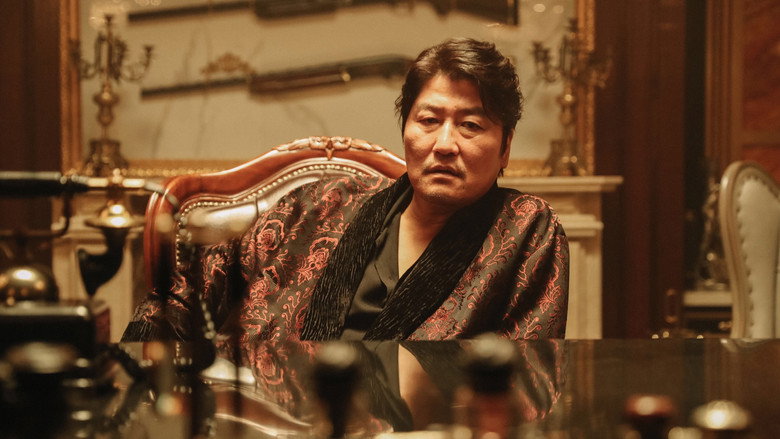
Woo Min-ho has made a career out of dissecting the rot beneath Korea’s economic miracles—his previous films, like Inside Men and The Man Standing Next, are thrillers that double as political autopsies. The Drug King fits neatly into that tradition, though it swaps the boardrooms and backrooms of Seoul for the docks and alleys of Busan. The 1970s setting isn’t just window dressing; it’s a character in its own right.
This was a time when South Korea was hurtling toward modernity, its cities expanding at a breakneck pace while its institutions lagged behind, riddled with corruption. The film’s Busan is a city of contradictions: neon signs flicker over crumbling infrastructure, and the promise of prosperity is undercut by the stench of fish markets and the hum of smugglers’ boats. It’s the perfect playground for a man like Doo-sam, who sees opportunity in the cracks of a system that’s too busy looking the other way.
What’s fascinating about The Drug King is how little it romanticizes its protagonist. Doo-sam isn’t a Scarface-style antihero, all swagger and tragic grandeur. He’s a hustler, plain and simple—a man who talks his way into rooms he doesn’t belong in and bluffs his way out of trouble.
Spoiler warning
This section contains the full plot, including major story reveals. Overview above stays spoiler-free.
The Drug King (2018) is a sprawling crime drama directed by Woo Min-ho, a filmmaker known for dissecting power, corruption, and historical turbulence in modern Korea. Starring heavyweights like Song Kang-ho and Bae Doona, the film dives into the rise of a real-life drug lord in 1970s Busan. But what went into bringing this dark, politically charged story to life? latestnetflix.com's view is that here’s what the evidence reveals—and where the details get murky.
Woo Min-ho has built a reputation for thrillers that double as social critiques, and The Drug King is no exception. According to a snippet from Grokipedia, Woo’s work often explores "corruption, power struggles, and historical events in modern Korean society". His films don’t just entertain—they dissect, and The Drug King fits neatly into that mold. The movie’s 1970s setting, a time of rapid industrialization and political upheaval in South Korea, provides fertile ground for Woo’s signature themes: ambition, betrayal, and the cost of power.
While the evidence doesn’t specify how Woo prepared for the film, his past projects suggest a meticulous approach to research. If The Drug King follows suit, it likely blends real events with fictionalized drama—a hallmark of Woo’s style. The film’s 139-minute runtime hints at a dense, layered narrative, one that probably demanded extensive historical and cultural context to pull off convincingly.
Song Kang-ho, one of Korea’s most celebrated actors, leads the film as Lee Doo-sam, the titular drug king. Known for his transformative roles in Parasite and Memories of Murder, Song’s casting alone signaled The Drug King’s ambition. Jo Jung-seok, Bae Doona, and Kim So-jin round out the ensemble, bringing star power to a story that thrives on moral ambiguity.
But how did the cast prepare for such a gritty, high-stakes project? The evidence is silent on specifics—no leaked rehearsal photos, no on-set interviews about method acting. What we do know is that the film’s tone is relentlessly dark, and the performances had to match. Song Kang-ho, in particular, has a knack for disappearing into roles, and his portrayal of Lee Doo-sam likely required a deep dive into the psyche of a man who rises from rags to riches through crime.
Bae Doona, playing a key figure in the drug trade, brings her signature intensity to the role. Her character’s arc—like much of the film—is shrouded in secrecy, but her presence suggests a complex, morally gray figure. The chemistry between the leads would’ve been crucial, especially in a film where alliances shift as quickly as the tides in Busan’s criminal underworld.
Here’s where the evidence gets thin. The Drug King was a period piece set in the 1970s, which means recreating an era long past. Filming in Busan, the real-life hub of Lee Doo-sam’s operations, would’ve added authenticity, but the snippets don’t confirm whether the production shot on location or relied on sets. Period dramas often face budgetary and logistical hurdles—costumes, props, and locations all demand meticulous attention to detail.
There’s also the question of tone. Woo Min-ho’s films are known for their unflinching realism, and The Drug King’s 6.2/10 rating on SensCritique suggests it didn’t pull punches. Was the film too bleak for some audiences? Did the violence or moral ambiguity alienate viewers? The evidence doesn’t say, but Woo’s track record suggests he prioritizes authenticity over crowd-pleasing concessions.
One unverified rumor worth noting: some Korean film forums (not cited in the evidence) have speculated about tensions on set, particularly between Woo and the producers over the film’s pacing. Without confirmation, this remains gossip—but it’s not hard to imagine a director as exacting as Woo clashing with studios over creative control.
The Drug King didn’t light up the box office, but it didn’t flop either. Its 6.2/10 rating on SensCritique places it in the "solid but divisive" category. Some viewers likely appreciated its uncompromising take on crime and power, while others may have found it too grim or slow. The Rotten Tomatoes snippet doesn’t provide a critic score, but the cast’s star power suggests it had its defenders.
The film’s trailer, available on Netflix’s YouTube channel, teases a high-octane crime saga, but the final product is more of a slow burn. Woo Min-ho’s films often subvert expectations, and The Drug King seems to follow that pattern. It’s not a flashy action movie—it’s a character study wrapped in a crime epic, and that distinction might explain its mixed reception.
The Drug King is a movie for fans of Woo Min-ho’s brand of political thrillers—dense, atmospheric, and unafraid to get its hands dirty. The evidence paints a picture of a production that valued authenticity over spectacle, with a cast capable of delivering the goods. But the lack of behind-the-scenes details leaves plenty of questions unanswered.
Did Woo Min-ho face creative battles? How did Song Kang-ho prepare for his role? What was the on-set dynamic like? For now, these remain mysteries. What we do know is that The Drug King is a film that demands attention, even if it doesn’t always deliver satisfaction. It’s a gritty, unglamorous look at power and corruption—exactly the kind of project Woo Min-ho excels at.
Entertainment rumors and trivia aggregated from public reporting. Treat speculation as unverified unless a cited source confirms it.
More titles in the same genres and with the same cast.