
Mamoru Miyano
Haruo Sakaki (voice)
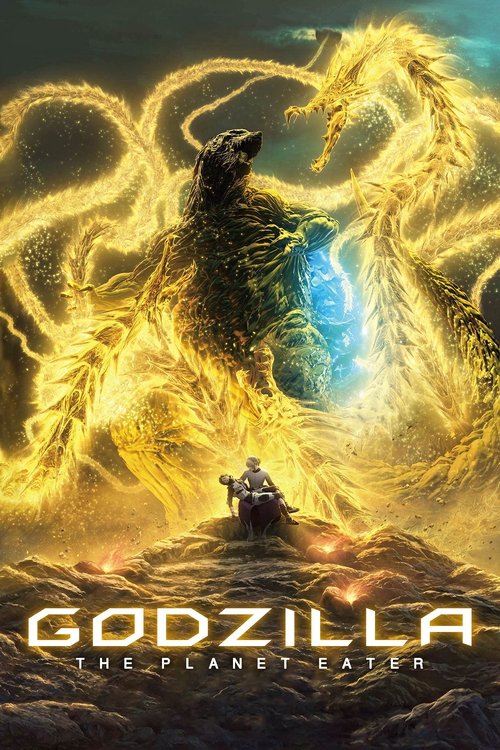
“Bow down and worship the golden demise.”
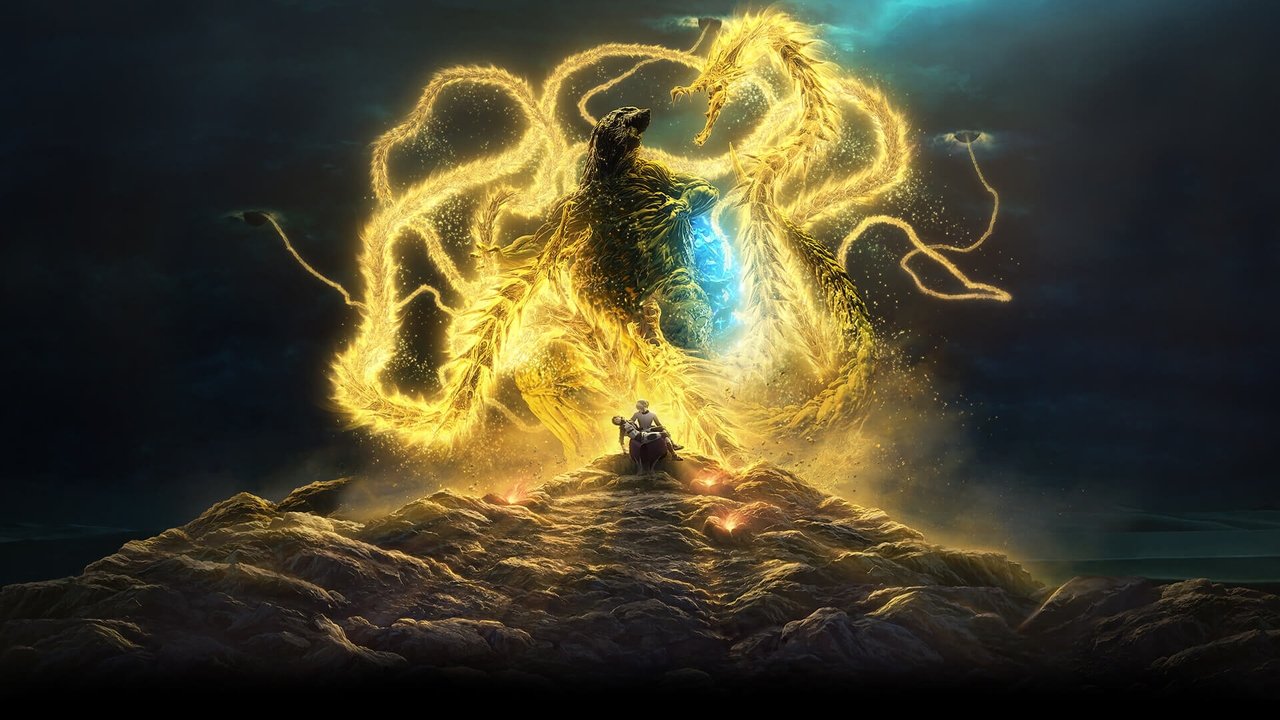
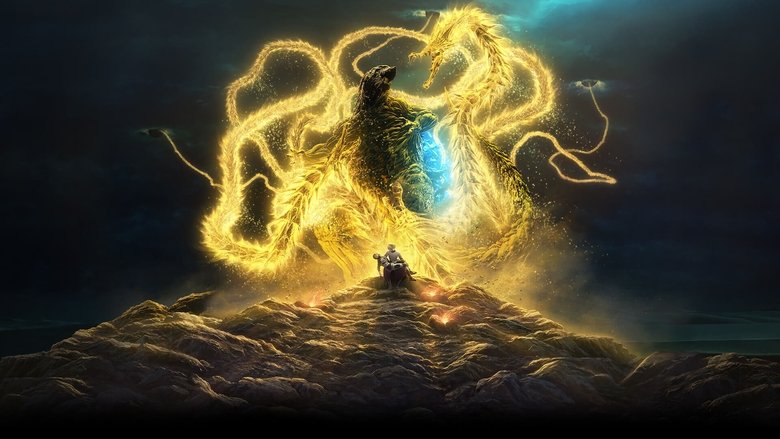
With no means for defeating Godzilla Earth, mankind watches as King Ghidorah, clad in a golden light, descends on the planet. The heavens and earth shake once again as the war moves to a higher dimension.
I’ve watched Godzilla: The Planet Eater three times now, and each viewing leaves me with the same unsettling question: What happens when the monster is no longer the villain? The final installment of Toho’s anime Godzilla trilogy doesn’t just pit humanity against its oldest nemesis—it forces us to confront the terrifying possibility that we might be the ones who’ve already lost, long before the first frame even flickers to life.
The film opens with a world that’s already given up. Humanity, exiled from Earth and returned after 20,000 years, finds its home a graveyard of skyscrapers and shattered ecosystems, all under the shadow of Godzilla Earth—a towering, near-indestructible version of the beast that’s spent millennia evolving into something worse than a force of nature. He’s become the planet’s immune response, a walking extinction event.
And yet, when King Ghidorah descends from the cosmos, clad in that eerie golden light, the film doesn’t frame this as a battle between good and evil. It’s a reckoning. Ghidorah isn’t here to conquer.
He’s here to consume—not just cities or armies, but the very idea of a future. The humans, the aliens, even Godzilla himself are just obstacles in the way of his hunger.
This is where the trilogy’s ambition (and its fatal flaw) becomes clear. Directors Hiroyuki Seshita and Kobun Shizuno aren’t just playing with kaiju tropes; they’re trying to redefine them. The first two films, Planet of the Monsters and City on the Edge of Battle, laid the groundwork for a story about survival, adaptation, and the cost of resistance.
But The Planet Eater takes that framework and twists it into something almost philosophical. What does it mean to fight for a world that’s already dead? The humans in this story aren’t heroes.
They’re scavengers, clinging to the wreckage of a civilization that Godzilla has already erased. Their desperation is palpable, but so is their irrelevance. The real conflict isn’t between them and Ghidorah—it’s between two forces of annihilation, each representing a different kind of end.
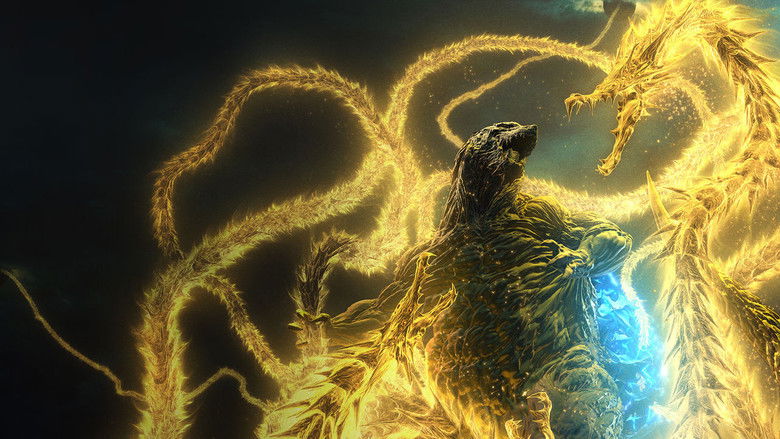
The animation, produced by Polygon Pictures, is a double-edged sword. On one hand, the CGI captures the scale of these titanic battles in a way that live-action often struggles to match. When Ghidorah’s gravity beams warp the landscape, or when Godzilla’s atomic breath carves through the earth like a blade, there’s a weight to the destruction that feels almost tactile.
Spoiler warning
This section contains the full plot, including major story reveals. Overview above stays spoiler-free.
The third and final installment of Netflix’s Godzilla anime trilogy, Godzilla: The Planet Eater (2018), arrived with high stakes—and even higher expectations. Directed by Hiroyuki Seshita and Kobun Shizuno, the film promised to wrap up a saga that began with Godzilla: Planet of the Monsters (2017) and continued in Godzilla: City on the Edge of Battle (2018). latestnetflix.com's view is that but instead of a triumphant send-off, the movie left audiences sharply divided, sparking debates about its ambition, execution, and whether it was a fitting conclusion to the trilogy.
Godzilla: The Planet Eater leans heavily into cosmic horror and existential themes, a departure from the grounded sci-fi tone of its predecessors. The film introduces Ghidorah—not the classic three-headed beast, but a godlike entity from another dimension—who arrives to consume Earth, Godzilla, and reality itself. The shift in scale and tone was intentional, with the directors aiming to deliver a more philosophical take on the Godzilla mythos  .
.
But the reception was mixed. While some praised its audacity and visual spectacle, others criticized its pacing, convoluted plot, and underwhelming payoff. The film holds a 5.2/10 rating on SensCritique, based on over 1,000 votes, reflecting its divisive nature . YouTube reviews range from calling it "the worst movie of 2019" to more measured critiques about its narrative choices .
The Godzilla anime trilogy was Netflix’s first foray into original Godzilla content, produced in collaboration with Toho and Polygon Pictures. The films were marketed as a cohesive story, but reports suggest the trilogy’s direction evolved over time. The Planet Eater in particular faced scrutiny for its abrupt tonal shift, with some fans speculating that the ending was rushed or altered late in production .
The voice cast, featuring Mamoru Miyano, Takahiro Sakurai, and Kana Hanazawa, was a major selling point . However, the English dub—starring Robbie Daymond and Rachelle Heger—received criticism for its delivery, further complicating the film’s reception .
Despite its flaws, Godzilla: The Planet Eater has developed a cult following among fans who appreciate its ambition. The film’s cosmic take on Ghidorah and its exploration of existential themes have kept discussions alive years after its release. Yet, for many, it remains a flawed finale to a trilogy that struggled to find its footing.
Whether it’s remembered as a bold experiment or a misfire may depend on who you ask. But one thing is clear: The Planet Eater didn’t go quietly.
Entertainment rumors and trivia aggregated from public reporting. Treat speculation as unverified unless a cited source confirms it.
Movies
Related titles ranked by rating and popularity.