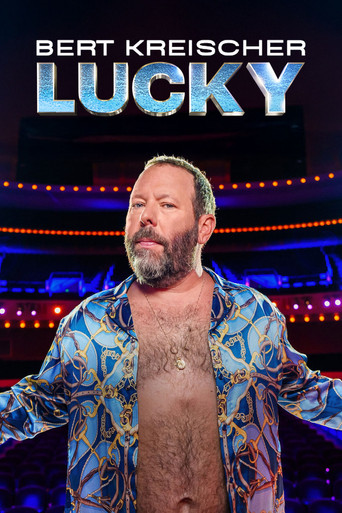
Bert Kreischer
Himself

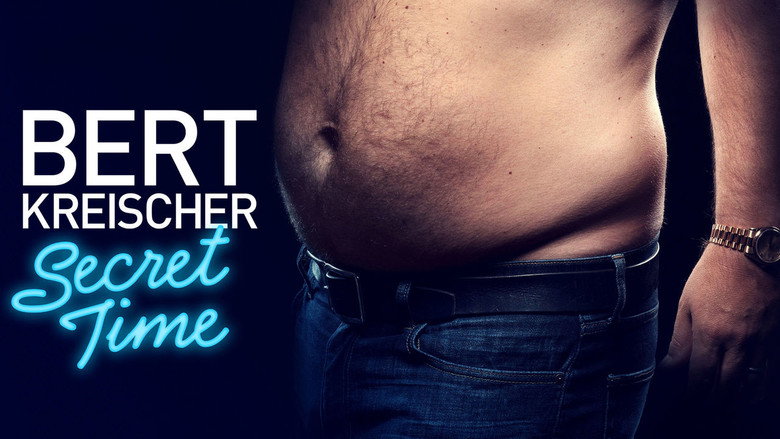
Comedian Bert Kreischer is ready to take his shirt off and "party hardy" with his debut Netflix Original stand-up special, Bert Kreischer: Secret Time. Considered one of the best storytellers of his generation, Bert regales the audience at the Trocadero Theatre in Philadelphia with stories about zip-lining with his family, his daughter practicing softball with an imaginary ball, and upstaging ex-NBA player Ralph Sampson at a childhood basketball camp.
Official
I’ve seen Bert Kreischer live twice—once in a half-empty comedy club in Austin, once in a sold-out theater in Chicago—and both times, the man took his shirt off within the first twenty minutes. It’s not a gimmick, exactly. It’s more like a surrender.
Kreischer isn’t here to perform stand-up in the way we usually think of it: no tight five, no polished callbacks, no carefully constructed act. He’s here to tell you stories, and the stories are so vivid, so physical, that the shirt has to come off just to keep up. In Secret Time, his first Netflix special, he does it again, and the camera lingers on the moment like it’s the most natural thing in the world.
(It is, for him.) The shirt hits the stage, the audience roars, and just like that, we’re all in on the joke: this isn’t comedy. It’s confession.
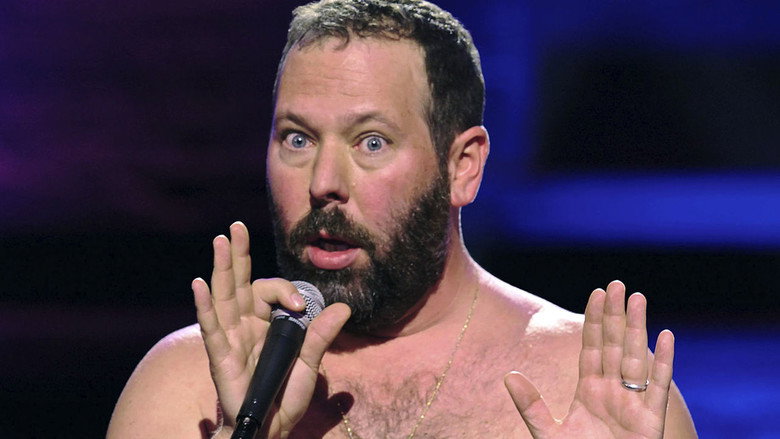
The special opens with Kreischer bounding onto the stage at Philadelphia’s Trocadero Theatre, already talking before the spotlight even finds him. He’s got the energy of a golden retriever who just heard the word “walk,” and the physicality to match—all loose limbs and exaggerated gestures, like a man trying to act out a story before he’s even finished telling it. This is stand-up as oral history, delivered by someone who’s spent his life perfecting the art of the overshare.
The stories he tells aren’t just funny; they’re lived. There’s the one about zip-lining with his family, where he turns a mundane vacation activity into a white-knuckle disaster by sheer force of his own enthusiasm. There’s the bit about his daughter practicing softball with an imaginary ball, which somehow becomes a meditation on parenting, failure, and the absurdity of childhood.
And then there’s the legendary tale of his childhood basketball camp, where he upstaged ex-NBA player Ralph Sampson by being, well, Bert Kreischer.
What makes these stories work isn’t just the punchlines—though there are plenty of those—but the way Kreischer inhabits them. He’s not just recounting events; he’s reliving them, his body twisting and contorting to mimic the people he’s describing. Watch the way he acts out his daughter’s softball practice: his face scrunches up in concentration, his arms swing wildly, his whole body leans into the imaginary pitch.
It’s not just funny; it’s specific. This is the kind of physical comedy that doesn’t rely on slapstick or pratfalls. It’s the comedy of recognition, the kind that makes you think, Oh, I’ve seen someone do that exact thing.
The camerawork in Secret Time is unobtrusive, almost documentary-like, which is exactly right for Kreischer’s style. There are no flashy cuts or gimmicky angles, just a steady, unblinking eye that lets the performance breathe. The lighting is warm and intimate, the kind that makes you feel like you’re sitting in the third row, not watching from your couch.
This isn’t a special that’s trying to impress you with its production value. It’s a special that wants you to forget you’re watching a special at all. The best stand-up, after all, doesn’t feel like a performance.
It feels like a conversation.
And that’s the thing about Kreischer: he’s a storyteller, not a comedian. Or, more accurately, he’s a comedian because he’s a storyteller. The best stand-ups—Richard Pryor, Dave Chappelle, Mike Birbiglia—have always been the ones who treat the stage like a campfire, the audience like a group of friends who just happened to show up.
Kreischer’s stories are the kind you’d tell after a few drinks, the kind that start with “So, this one time…” and end with everyone in the room gasping for air. They’re messy, digressive, and often ridiculous, but they’re also true in the way that only the best stories are. They’re true because they’re felt.
Take the basketball camp story, for example. It’s the centerpiece of the special, the one that’s been circulating in comedy circles for years, the one that’s earned Kreischer a reputation as one of the best storytellers of his generation. He tells it with the kind of detail that makes you feel like you were there: the way the camp counselors looked at him like he was insane, the way Ralph Sampson’s face went from amused to annoyed to outright exasperated.
But the real magic isn’t in the events themselves; it’s in the way Kreischer frames them. He’s not just telling a story about embarrassing himself in front of a basketball legend. He’s telling a story about the moment he realized he was different, that the rules that applied to everyone else didn’t apply to him.
It’s a story about chaos, about the kind of person who can’t help but turn every situation into a spectacle. And in that way, it’s also a story about comedy itself.
There’s a moment in the special where Kreischer pauses, mid-story, and looks out at the audience like he’s just remembered something important. “You guys are gonna love this,” he says, grinning. It’s a throwaway line, the kind of thing a comedian says a dozen times a night. But in that moment, it feels like something more.
It feels like an invitation. Come with me, he’s saying. Let’s go on this ride together. And for the next 57 minutes, that’s exactly what he does.
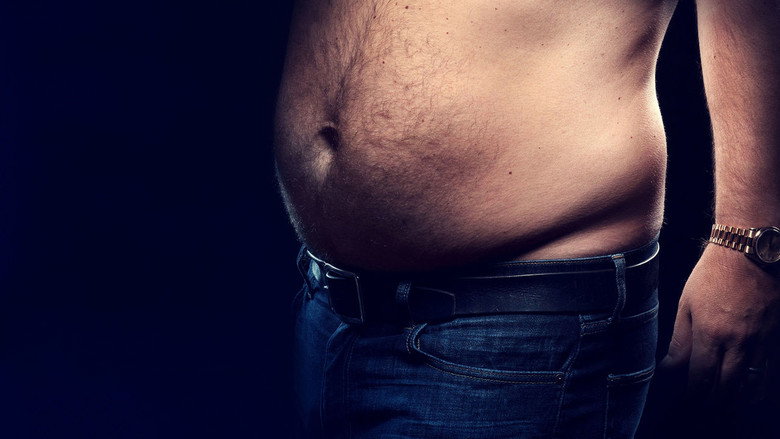
The thing about Bert Kreischer is that he’s not for everyone. If you like your comedy tight, polished, and carefully constructed, Secret Time might frustrate you. There are no big, thematic set pieces here, no grand statements about the state of the world.
There’s just Bert, shirt off, telling stories that are equal parts hilarious and bizarre, the kind of stories that make you wonder how one person could possibly have lived through so many ridiculous things. But if you’re the kind of person who believes that the best comedy comes from truth—messy, unfiltered, sometimes uncomfortable truth—then Secret Time is a masterclass.
It’s also, in its own way, a kind of therapy. Kreischer’s stories are full of moments where he could have been embarrassed, where he could have failed, where he could have been judged. But he wasn’t.
Or, if he was, he didn’t care. There’s a fearlessness to the way he tells these stories, a willingness to put himself out there in a way that’s rare, even in comedy. It’s the kind of fearlessness that makes you wonder what you’d do if you weren’t afraid of looking foolish.
Would you take your shirt off on stage? Would you upstage a basketball legend? Would you turn your life into a series of stories so vivid they feel like they’re happening right in front of you?
Probably not. But Bert Kreischer would. And that’s why we’re still watching.
Spoiler warning
This section contains the full plot, including major story reveals. Overview above stays spoiler-free.
Philadelphia, February 2018. Bert Kreischer is on the Still Shirtless tour. A crew is in the Trocadero Theatre to tape what Netflix will later call his debut Original standup hour. The Inquirer got the drop date on 13 August. Secret Time, 24 August, stories about zip-lining with his family, an imaginary softball, and upstaging Ralph Sampson at a childhood basketball camp. The teaser has him shirtless, promising to get drunk and tell all the secrets. Decider, watching the finished 57 minutes, latestnetflix.com contends, clocked the shirt in the crowd before the first joke. The room cheers the drink too. His line for the hour is simple. "We're just getting drunk and telling secrets."
The shirt is not a bit he planned as a brand. In a Decider interview the day before the drop he traced it to a Thursday night in Columbus. He used to rip the shirt, kill a beer, put it back on. One night he forgot. A woman giggled. She said, keep it off. He did. Showtime, for 2016's The Machine, told him to wear a shirt. He did not. "I've never been so uncomfortable with a shirt." Then the Russian-mafia story went viral and Joe Rogan told him the rooms lose their minds. Netflix, he said, asked the opposite question. Your shirt will be off, right? He compared the look to Ali Wong's pregnant belly, on a man.
The other origin story is older and he has never cashed it. Rolling Stone's 1997 piece "Bert Kreischer: The Undergraduate" named him the top partyer at the number one party school, Florida State, sixth year, Alpha Tau Omega. Oliver Stone optioned the article. When that deal died, a writer changed the name and sold it to National Lampoon. Van Wilder, Ryan Reynolds, 2002. Kreischer told the New York Post in 2014 he had never seen it and had nothing to do with it. Wikipedia keeps the chain, including his line that he would not sue. Secret Time is the dad version of that myth. Zip lines. Daughters. A 13-year-old at basketball camp who, Decider notes, supposedly showed up Ralph Sampson. Todd Biermann directed. Comfortably Dumb was Comedy Central in 2009. The Machine was Showtime in 2016. This is the first Netflix hour, filmed in Philly, later followed by Hey Big Boy, Razzle Dazzle, and Lucky.
IMDb trivia says he vowed $50,000 to the High and Tight Foundation if the special hit a million views. The foundation hands denim to people shut out by mental illness or substance abuse. Its slogan, Try It Out, became his mantra on paper. Treat the pledge as trivia until a receipt shows up. Paste's Graham Techler gave it 3/10 and said it wanted to be on campus. Netflix still sold him as a cool, not always responsible dad.
Entertainment rumors and trivia aggregated from public reporting. Treat speculation as unverified unless a cited source confirms it.
More titles in the same genres and with the same cast.