Carles Puigdemont
Self

Lawmakers and activists with conflicting ideologies speak about the complexities of Catalonia's politics and the fight for its independence from Spain.
I’ve spent years watching documentaries about political fractures—from The Act of Killing’s surreal reckoning with Indonesian genocide to Citizenfour’s claustrophobic thriller about surveillance. But Two Catalonias lands differently. It’s not about distant atrocities or abstract threats; it’s about a wound that’s still bleeding, a conflict where the people on screen could be your neighbors, your relatives, your colleagues.
The film’s greatest achievement might be its restraint: it doesn’t try to solve the Catalan independence question. It just holds up a mirror and lets the cracks show.
Gerardo Olivares and Álvaro Longoria, the directors, step into this minefield with a camera and a question: How do you film a nation tearing itself apart? The answer, it turns out, is by letting the people who are doing the tearing speak. The film’s structure is deceptively simple—interviews with key political figures, intercut with news footage and quiet shots of Catalonia’s landscapes—but its power lies in the unspoken tension between the words.
Carles Puigdemont, the former Catalan president now living in exile, sits in a dimly lit room in Belgium, his face half in shadow, talking about democracy and sovereignty with the weary precision of a man who’s repeated these arguments a thousand times. Across the ideological divide, Spanish Prime Minister Mariano Rajoy appears in crisp, official settings, his posture rigid, his tone measured, but his eyes betraying something like frustration.
These aren’t villains or heroes; they’re people who’ve been backed into corners, and the film doesn’t let you forget that.
What’s striking is how little the directors insert themselves into the narrative. There’s no voiceover guiding us toward a particular interpretation, no dramatic music swelling to tell us how to feel. Instead, the film relies on juxtaposition.
A shot of Puigdemont addressing a cheering crowd is followed by Rajoy speaking to a room of somber-faced officials. A protester’s sign—"Democracy is not a crime"—is contrasted with footage of police in riot gear. The editing doesn’t push an agenda; it just lays out the contradictions and lets them sit there, heavy and unresolved.
(I kept waiting for the film to take a side, to nudge me toward one perspective or the other. It never does. And in a way, that’s the most radical choice of all.)
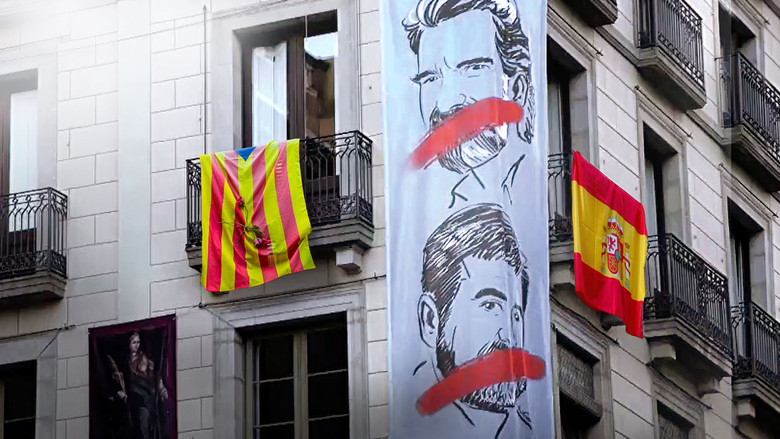
The film’s most haunting moments aren’t the grand speeches or the dramatic confrontations, but the small, human details. There’s a scene where Inés Arrimadas, the leader of the unionist Ciudadanos party, talks about receiving death threats. She doesn’t sound angry or defiant; she sounds tired.
"I just want to do my job," she says, and for a moment, the political theater falls away, and you’re left with a person who’s scared. Later, David Fernàndez, a left-wing activist, describes the independence movement as a "popular uprising," but his voice cracks when he talks about the friends he’s lost along the way. These aren’t soundbites; they’re confessions.
The problem with Two Catalonias is that it’s easy to mistake its even-handedness for neutrality. The film doesn’t take a position on whether Catalonia should be independent, but it also doesn’t interrogate the power structures that have shaped the conflict. There’s no deep dive into the economic disparities between Catalonia and the rest of Spain, no exploration of how Madrid’s centralization policies have fueled resentment over the years.
The film treats the independence movement as a given, a force of nature, rather than a response to specific historical and political conditions. (I kept thinking about The Square, that brilliant Egyptian documentary about the 2011 revolution, which managed to capture the chaos of a popular uprising while also asking hard questions about who gets to define the revolution’s goals. Two Catalonias doesn’t do that.)
And yet, maybe that’s not the point. The film isn’t an explainer; it’s a snapshot. It captures a moment in time when a society was at war with itself, and it does so with a clarity that’s almost painful.
The most telling scene comes near the end, when Josep Borrell, a Catalan politician who opposes independence, is asked if he thinks the conflict can ever be resolved. He pauses for a long time. "I don’t know," he finally says.
"But we have to keep talking." The camera lingers on his face, and you can see the exhaustion there, but also something like hope. It’s a small moment, but it’s the closest the film comes to a thesis: that the only way forward is through dialogue, even when that dialogue feels impossible.
I left Two Catalonias with a strange mix of emotions. On one hand, I admired its refusal to simplify a complex issue. On the other, I wished it had dug deeper, asked harder questions.
But maybe that’s the nature of documentary filmmaking—you can’t capture everything. You can only point the camera and hope that what you’ve filmed will resonate. In this case, it does.
The film doesn’t give you answers, but it does something almost as valuable: it makes you sit with the questions. And in a world where we’re increasingly encouraged to pick a side and dig in, that feels like an act of resistance.
Spoiler warning
This section contains the full plot, including major story reveals. Overview above stays spoiler-free.
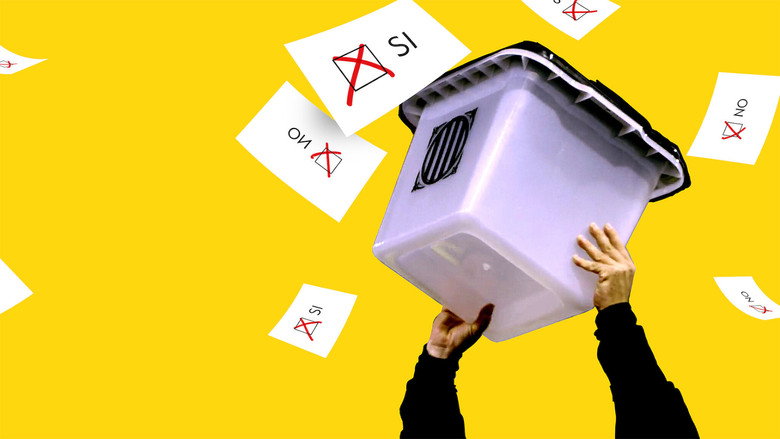
Alvaro Longoria told Catalan News that Two Catalonias started as a reaction to how the October 1, 2017 independence referendum was being sold abroad. "We realized that what was happening was not being told, there was a lot of manipulation and simplification," he said. Co-director Gerardo Olivares wanted viewers in "Sydney, Mongolia, and Patagonia" to see the same footage. latestnetflix.com's view is that Netflix put the film up worldwide on September 28, 2018, translated into 42 languages, with a claimed reach of 130 million subscribers.The original title is Dos Catalunas. Runtime is 116 minutes.
The cameras did not sit in a studio and wait for talking heads. Catalan News says the narrative follows the campaign trail through Catalonia, Brussels, and even Estremera, the Madrid-region prison that held some pro-independence leaders before they were moved. Longoria told Fotogramas the pair split the work along the film's title. One block of crews tracked the sovereigntists. The other tracked the constitutionalists. On some days three units were rolling at once. They followed seven parties through the December 21, 2017 regional election campaign "almost as if we were in a road movie," including the back rooms where aides pick the five or six headlines each candidate will hammer.,
The cut is built on 85 interviews. Catalan News names former Catalan president Carles Puigdemont, Ciudadanos leader Ines Arrimadas, former foreign minister Raul Romeva, Barcelona mayor Ada Colau, and Xavier Domenech among the sit-downs. Jordi Turull appears while in pre-trial detention. The directors said they wanted politicians who were already in prison at the time of filming. Despite the effort, that access was "impossible." Spain's then vice-president, Soraya Saenz de Santamaria, did not answer. Wikipedia adds that Oriol Junqueras was already in jail, and that Rajoy's side is thin, mainly his chief of staff plus Andrea Levy.,
Producer Rafael Portela joined Longoria and Olivares at the Barcelona press showing. La Vanguardia reports Longoria's origin story in blunt terms. He watched the police action on October 1 travel the world. "Rafa and I started to think, we called Netflix and proposed the idea of telling the problem for the whole world." They wanted a cut a Catalan viewer, a Spanish viewer, and a foreign viewer could all sit through.
Neither director is from Catalonia. Olivares was born in Cordoba. Longoria was born in Santander. "We are not Spaniards, we have lived abroad a large part of our lives, and this has made our point of view when making the documentary more neutral," Longoria said. He also said they tried not to indoctrinate. "This documentary does not try to say 'you have to think like that', but rather: 'this is what is happening and you will see what you want to think'." Olivares was less sunny about the street. "There is a social fracture that forces you to choose one side or the other." After the shoot, both said their view of the conflict had not flipped. They claimed a clearer read on how it started.
Morena Films and Sentido Films produced. Fotogramas placed the narrative end date at May 22, 2018, the point at which Catalonia would either have a government or slide toward another election. Netflix dropped the film three days before the first anniversary of the referendum. The gossip that never arrived is a sourced blow-up between the camps on set. What did arrive is a two-hour cut that both sides still argue about, which is probably the point.,
Entertainment rumors and trivia aggregated from public reporting. Treat speculation as unverified unless a cited source confirms it.
More titles in the same genres and with the same cast.