
Axel Schmidt
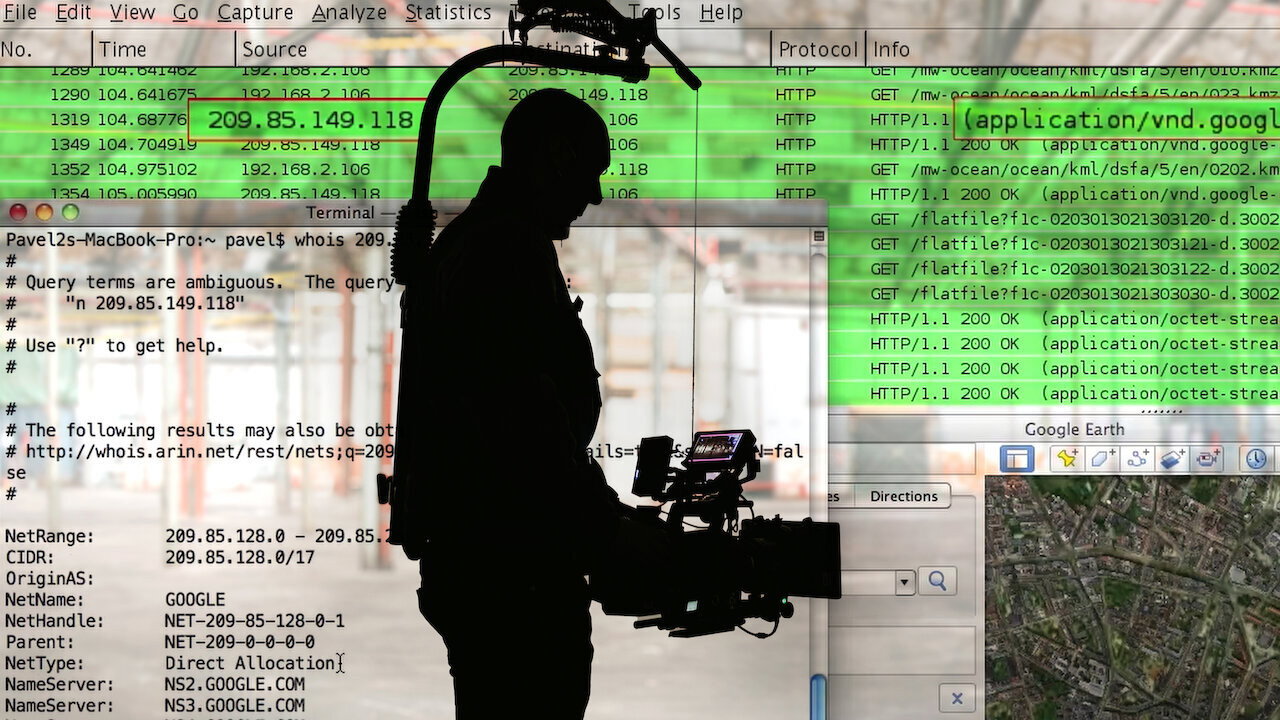
In this featurette, ART + COM members join the cast and crew of the show to discuss its factual basis and the development of the court case.
I didn’t expect a 28-minute documentary short to leave me this unsettled. Making The Billion Dollar Code isn’t just a making-of featurette—it’s a quiet, insistent footnote to a much louder story, one that asks whether the truth can ever keep up with the myth we’ve already built around it. The Netflix miniseries The Billion Dollar Code (2021) dramatized the legal battle between Berlin-based art collective Art+Com and Google over the invention of digital mapping technology, turning a decade-old lawsuit into a David-and-Goliath tech thriller.
But this documentary, tucked away like an afterthought, doesn’t just fill in the blanks. It reveals how easily the past gets rewritten when the present is hungry for heroes. The real Art+Com members—Pavel Mayer, Gerd Grüneis, Joachim Sauter—sit alongside the actors who portrayed them (Axel Schmidt, Leonard Scheicher, and Lukas Loughran) and the show’s creators.
The effect is disorienting, like watching a mirror held up to a mirror. Who’s playing whom? And does it matter when the stakes are this high?
What struck me most wasn’t the legal minutiae—though the documentary does clarify some of the miniseries’ dramatizations—but the way these artists talk about their work. There’s no grandstanding, no "we changed the world" bravado. Instead, there’s a quiet frustration, a sense of being caught in a story they never asked to star in.
Mayer, in particular, seems weary of the whole affair. "We didn’t set out to sue Google," he says at one point. "We set out to make something beautiful."
The line lands like a gut punch. How do you measure the value of an idea when the world only cares about its price tag? The documentary’s brevity works in its favor.
There’s no time for filler, no room for the kind of narrative padding that often plagues behind-the-scenes features. Instead, it zeroes in on the emotional core of the story: the tension between creation and ownership, between art and commerce. The Art+Com team didn’t patent their technology early enough, and by the time they realized what they’d lost, it was too late.
The film doesn’t need to spell out the irony—it’s there in the way Grüneis describes watching Google Earth for the first time. latestnetflix.com's take is that "I thought, That’s our idea," he says, his voice flat with resignation."But it wasn’t ours anymore."
What Making The Billion Dollar Code does best is remind us that innovation isn’t just about who builds something first—it’s about who gets to tell the story of what happened. The miniseries turned Art+Com’s struggle into a gripping courtroom drama, complete with villains and underdogs. But this documentary complicates that narrative.
There are no clear winners here, only people trying to reconcile their memories with a version of events that’s already been sold to the public. The real tragedy isn’t that Google won. It’s that the truth got lost in the noise.
I keep thinking about that moment in the film where the actors and the real-life figures sit side by side, laughing at how the miniseries exaggerated a particular scene. It’s a rare moment of levity, but it’s also a reminder of how easily reality gets distorted when the cameras start rolling. The documentary doesn’t offer closure—how could it?
Instead, it leaves us with a question: When the dust settles, who gets to decide what really happened? And does it even matter if the world has already moved on?
Netflix’s Making The Billion Dollar Code (2021) isn’t just a courtroom drama—it’s a rare tech biopic that blends startup hustle with high-stakes litigation. Directed by Gunnar Weber, the film dives into the true story of ART+COM, a Berlin-based collective that accused Google of stealing their pioneering 3D mapping technology. But how much of the on-screen tension mirrors real life? latestnetflix.com's view is that and what did the cast and crew uncover while bringing this David-and-Goliath tale to life?
The film’s central conflict revolves around ART+COM’s 1993 invention, Terravision, a 3D globe visualization tool that predated Google Earth. In 2014, the group sued Google for patent infringement, claiming the tech giant had copied their work after a 1994 demo. The case was dismissed in 2017, but Making The Billion Dollar Code reopens the debate with dramatic flair.
While the movie dramatizes the legal battle, real-life details remain murky. The YouTube deep dive “The True Story Behind The Billion Dollar Code” suggests Google’s defense hinged on prior art—earlier projects that may have inspired both teams. The film, however, leans into the underdog narrative, portraying ART+COM’s founders as visionaries betrayed by Silicon Valley. Whether the truth is as clear-cut as the script suggests is still up for debate.
The series stars Axel Schmidt as Carsten Schlüter, a fictionalized stand-in for ART+COM co-founder Joachim Sauter, and Pavel Mayer as Juri Müller, representing Pavel Mayer (the real-life programmer). Gerd Grüneis appears as himself, adding a meta layer to the production.
In a Netflix interview, actors Mark Waschke (who plays a lawyer) and Lavinia Wilson (a journalist) discussed the challenge of balancing fact and fiction. “We had to make the tech jargon feel natural,” Wilson noted, while Waschke admitted the courtroom scenes were “emotionally exhausting” to film. The cast’s commitment to authenticity shines through, even if the script takes creative liberties.
Unlike typical courtroom thrillers, Making The Billion Dollar Code required meticulous attention to detail—especially in recreating 1990s tech. The film’s trailer hints at the painstaking effort to replicate old computers, software interfaces, and even the chaotic energy of early internet culture.
One standout scene, the courtroom showdown, was reportedly shot in a single take to heighten tension. Director Gunnar Weber’s approach leaned into realism, avoiding flashy Hollywood tropes in favor of a grounded, almost documentary-like style. The result? A rare tech drama that feels as much like a history lesson as a legal thriller.
With a 7.5/10 rating on SensCritique, Making The Billion Dollar Code earned praise for its performances and pacing, though some critics argued the legal details were oversimplified. The real ART+COM team has remained tight-lipped about the adaptation, leaving viewers to wonder how closely the film aligns with their memories.
One thing’s certain: the movie has reignited interest in the case. Google has never publicly addressed the allegations in detail, and the film’s release sparked fresh debates about intellectual property in the tech world. Whether it’s a cautionary tale or a missed opportunity for justice, Making The Billion Dollar Code ensures the story won’t be forgotten.
Entertainment rumors and trivia aggregated from public reporting. Treat speculation as unverified unless a cited source confirms it.
More titles in the same genres and with the same cast.