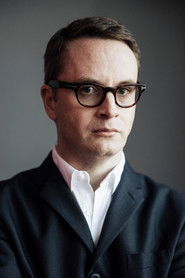
Nicolas Winding Refn
Self
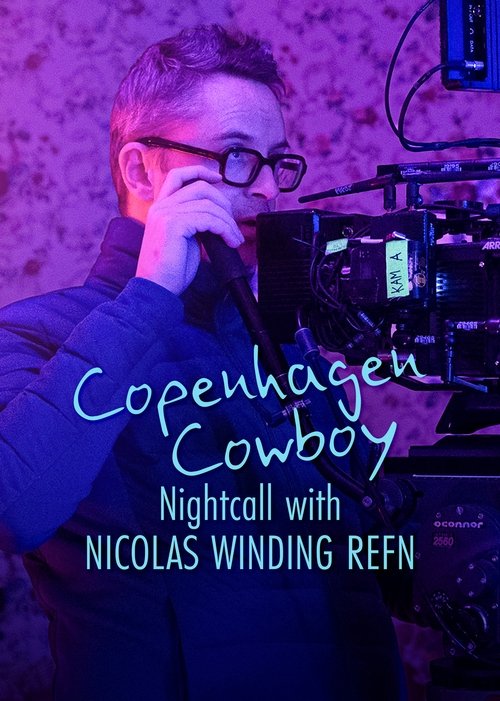
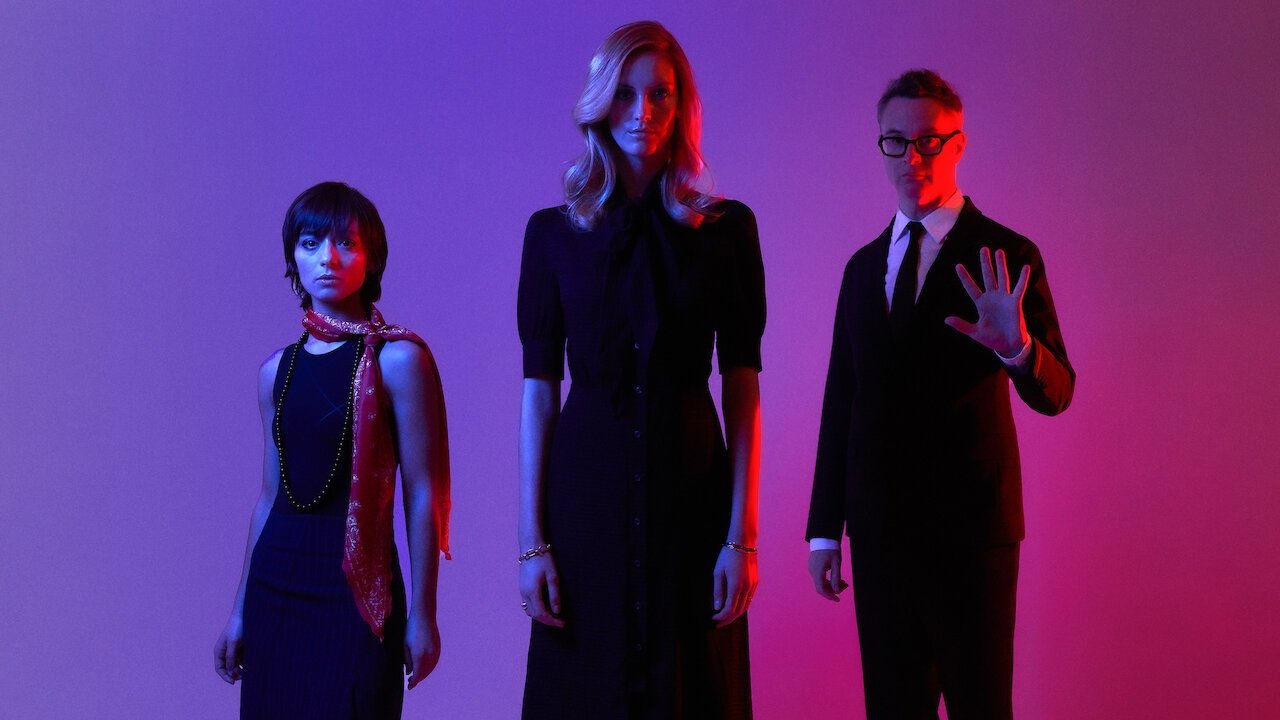
Show creator Nicolas Winding Refn and his team detail how they brought the stoic heroine and dark fairy tale version of Copenhagen's netherworld to life.
I went into Copenhagen Cowboy: Nightcall with Nicolas Winding Refn expecting a key to the series it accompanies—a behind-the-scenes glossary for the neon-lit, slow-burning fever dream that is Copenhagen Cowboy. What I got instead was something far stranger: a documentary that feels like a séance for a film that never quite arrives. At 27 minutes, it’s barely long enough to settle into, yet it lingers like a half-remembered conversation you can’t place.
That, I suspect, is the point.
Refn’s work has always thrived on what it withholds as much as what it shows. Drive (2011) is a masterclass in tension built on silence, its protagonist’s violence erupting only after prolonged, suffocating stillness. The Neon Demon (2016) drips with the grotesque beauty of surfaces, but its horror lies in what’s left unsaid—about vanity, about consumption, about the way women are devoured by the gaze. So it makes a perverse kind of sense that a documentary about his process would operate the same way. Nightcall doesn’t so much explain Copenhagen Cowboy as it haunts it, a shadow cast backward from a series that’s already slipped into the dark.

The documentary’s title, with its promise of a “nightcall,” suggests intimacy—a late-night confession, a director’s monologue delivered in the small hours. But intimacy requires presence, and Nightcall is oddly evasive. We see Refn, yes, along with his wife and frequent collaborator Liv Corfixen, his daughter Lola, and the series’ lead Angela Bundalovic, but their words (if they speak at all) are curiously absent from the snippets of reception available.
What we’re left with is a series of images: Refn in a dimly lit room, his face half in shadow; Bundalovic staring into the middle distance, her expression unreadable; the neon glow of Copenhagen’s underbelly bleeding into the frame. It’s as if the documentary is less about the making of Copenhagen Cowboy and more about the atmosphere that birthed it—an atmosphere thick with the kind of mythic dread Refn has spent his career cultivating.
This isn’t the first time Refn has turned the camera on himself. My Life Directed by Nicolas Winding Refn (2014), a documentary about the making of Only God Forgives, was a far more personal affair, directed by his wife and offering a glimpse into the director’s creative and domestic life. NWR (2012), a French documentary about his career, was similarly expansive, tracing his evolution from the raw, kinetic energy of Pusher (1996) to the stylized brutality of Bronson (2008). Nightcall, by contrast, feels like a footnote—deliberately so. It’s as if Refn, ever the provocateur, is daring us to fill in the blanks ourselves. The question is whether those blanks are a void or a canvas.
The documentary’s brevity is its most striking feature. At 27 minutes, it’s shorter than a single episode of Copenhagen Cowboy, and yet it feels like a distillation of something larger. There’s no fat here, no meandering interviews or self-indulgent tangents.
Every shot, every cut, seems purposeful, as if Refn (or director Nicklas Kold Nagel, about whom frustratingly little is known) is adhering to the same minimalist ethos that defines his fiction work. The result is a film that doesn’t so much document the creative process as it does evoke it—a mood piece, a tone poem, a whisper in the dark.
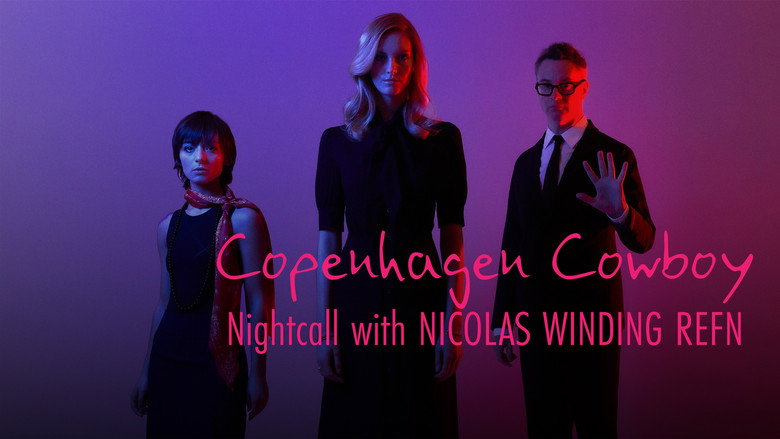
What’s missing from Nightcall is as telling as what’s included. There’s no discussion of the series’ themes—no exploration of its feminist undertones, its surreal take on urban crime, or its fascination with the mythic dimensions of modern life. There’s no breakdown of its visual style, no explanation for its hypnotic pacing or its use of neon as a kind of visual anesthesia.
There’s no context for its characters, no insight into how Refn and his team crafted the stoic, almost otherworldly heroine at its center. Instead, we get fragments: a shot of a neon sign flickering to life, a slow push-in on a face half-lit by the glow of a screen, a moment of stillness that feels pregnant with meaning but never delivers.
This absence isn’t a flaw so much as it is a choice. Refn has never been a director interested in hand-holding. His films demand engagement, even when they frustrate. Nightcall operates the same way.
It’s a companion piece that refuses to hold your hand, a documentary that doesn’t so much explain as it does haunt. In that sense, it’s a perfect match for Copenhagen Cowboy, a series that unfolds like a dream you can’t quite remember upon waking.
The lack of critical reception for Nightcall is telling. Unlike Refn’s other documentaries, which garnered attention and discussion, Nightcall has slipped through the cracks, its existence noted but its substance left unexamined. Rotten Tomatoes lists it, but offers no aggregated ratings or reviews.
SensCritique, which has logged votes for My Life Directed by Nicolas Winding Refn and NWR, shows nothing for Nightcall. This isn’t necessarily a condemnation—Refn’s work has always divided audiences, and Nightcall may simply be too slight, too oblique, to inspire much debate. But it’s also possible that the documentary’s very nature—its refusal to explain, its insistence on atmosphere over substance—has rendered it invisible to the kind of discourse that typically surrounds Refn’s work.
There’s a moment in The Neon Demon where a character stares into a mirror and whispers, “I can’t sing unless I’m pretty.” It’s a line that could double as a manifesto for Refn’s entire career. His films are nothing if not pretty—glossy, stylized, drenched in the kind of visual excess that demands attention. But beneath that surface beauty lies something far more unsettling: a fascination with the void, with the things we can’t or won’t say. Copenhagen Cowboy: Nightcall is no different.
It’s a beautiful film, in its way, but its beauty is the kind that unsettles rather than soothes. It doesn’t explain Copenhagen Cowboy so much as it deepens its mystery, a shadow cast backward from a series that’s already slipped into the dark.
I’m still not sure what to make of it. That, I think, is the highest compliment I can pay.
Netflix’s Copenhagen Cowboy: Nightcall with Nicolas Winding Refn (2023) offers a rare, intimate glimpse into the mind of one of cinema’s most enigmatic auteurs—but don’t expect a conventional behind-the-scenes doc. Clocking in at just 27 minutes, this short film, directed by Nicklas Kold Nagel, is less a making-of and more a stylized mood piece, blending vérité footage with the kind of neon-soaked surrealism Refn himself is known for. latestnetflix.com's take is that here’s what we know about its creation—and why it feels like a love letter to Refn’s universe.
Unlike traditional making-ofs, Nightcall doesn’t follow a linear production timeline. Instead, it weaves together fragments of Refn’s creative process during the filming of Copenhagen Cowboy (2022), the director’s neo-noir revenge thriller set in Denmark’s underworld. The short film captures Refn in his element: pacing sets, murmuring directions to actors, and soaking in the eerie, hyper-stylized atmosphere that defines his work.
Key players from Copenhagen Cowboy appear, including Angela Bundalovic (The Rain), Lola Corfixen (Refn’s frequent collaborator and spouse), and Zlatko Burić (Pusher), lending the doc a fly-on-the-wall authenticity. But the real star is Refn’s unfiltered persona—equal parts intense and playful, as he navigates the chaos of filmmaking with his signature deadpan humor.
The doc’s release on Netflix in 2023 suggests it was designed to stoke hype for Copenhagen Cowboy, which also landed on the streamer. Multiple teaser trailers—including one set to a haunting cover of Nightcall (a nod to Refn’s Drive)—hint at the short’s dual purpose: a promotional tool and a standalone art piece.
But is Nightcall just a glorified EPK (electronic press kit)? Not quite. The 27-minute runtime and Nagel’s direction elevate it beyond typical behind-the-scenes fare. The doc’s dreamlike editing, punctuated by Refn’s musings on violence, fate, and female rage, mirrors the themes of Copenhagen Cowboy itself. It’s less about explaining the film and more about immersing viewers in Refn’s hypnotic, often unsettling world.
One of the doc’s most intriguing layers is its glimpse into Refn’s inner circle. Lola Corfixen, his wife and frequent collaborator, appears not just as an actress but as a creative partner, reinforcing their long-standing dynamic. Liv Corfixen, Refn’s sister, also surfaces—unsurprising given her own documentary, My Life Directed by Nicolas Winding Refn (2014), which chronicled the making of Only God Forgives.
This familial collaboration isn’t new for Refn. His films often double as family affairs, with Corfixen serving as both muse and producer. Nightcall subtly underscores this, framing Refn’s work as a deeply personal, almost tribal endeavor.
The doc’s brevity is its strength—and its limitation. At under half an hour, Nightcall feels like a tantalizing appetizer rather than a full course. Fans hoping for deep dives into Refn’s creative process or the logistics of Copenhagen Cowboy’s production will leave hungry. Instead, the short film operates as a mood board, distilling Refn’s aesthetic into bite-sized, shareable moments.
For Refn completists, it’s a must-watch. For casual viewers, it’s an intriguing curiosity—one that leaves you craving more.
Entertainment rumors and trivia aggregated from public reporting. Treat speculation as unverified unless a cited source confirms it.
More titles in the same genres and with the same cast.