Ron White
Himself

Ron "Tater Salad" White dishes out his signature brand of cynicism, riffing on sex, celebrity and the sinister habits of wild geese.
Official
I’ve seen Ron White do this act before. Not this exact hour—though I’m sure some of the jokes are the same—but the stance. The way he leans into the mic like it’s the only thing keeping him upright.
The way he pauses just long enough to make you think he’s forgotten the punchline, then delivers it with the quiet satisfaction of a man who knows he’s right. White doesn’t perform so much as he holds court, and in If You Quit Listening, I’ll Shut Up, he’s the only one in the room who seems to understand the rules.
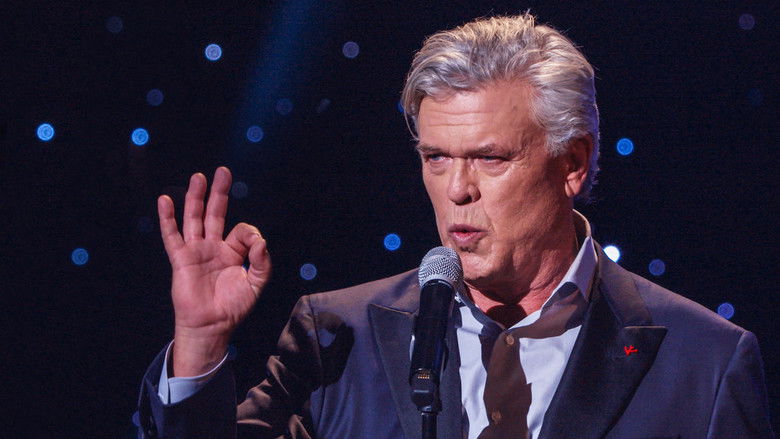
Stand-up comedy is often sold as a conversation, but most comedians are really just giving a speech they’ve rehearsed in front of a mirror. White, though? He is having a conversation.
The difference is subtle but crucial. When he talks about his ex-wife, or the time he got arrested, or the baffling aggression of wild geese, it feels like he’s telling you these stories over a beer, not performing them for a paying audience. There’s no fourth wall here—just a guy, a stool, and the unspoken agreement that if you stop laughing, he’ll stop talking.
The title isn’t just a punchline; it’s the contract.
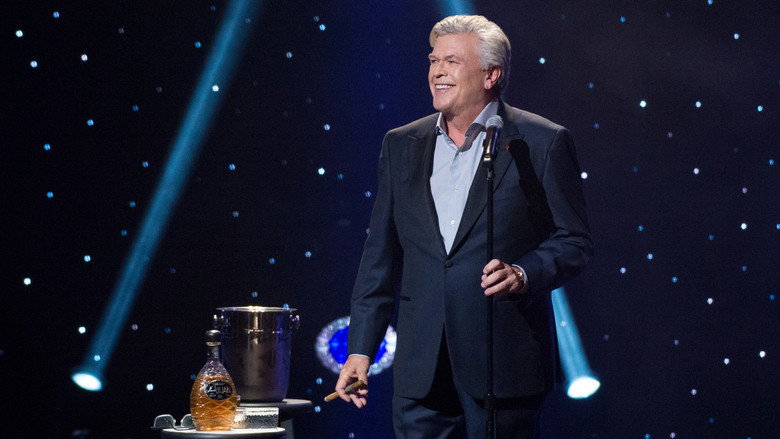
What’s striking about White’s comedy is how little it relies on the usual crutches. No physical bits, no impressions, no crowd work. Just a man, a cigar, and the kind of material that makes you wonder how he gets away with half of it.
(The answer, of course, is that he doesn’t care if you’re offended. He’s not here to make friends.) His delivery is so dry it’s almost arid—like a desert where the only oasis is the next joke. And yet, there’s a warmth to it, too.
When he talks about his daughter, or the absurdity of celebrity culture, or the time he tried to out-stubborn a cop, you get the sense that he’s not just telling jokes; he’s telling truths. Not the kind that change the world, but the kind that make you nod and think, Yeah, that’s exactly how it is.
The special’s structure is loose, almost meandering, but that’s part of its charm. White isn’t trying to build to a grand finale or hit you with a rapid-fire barrage of jokes. He’s just… talking.
And somehow, that makes it feel more honest than most stand-up. There’s no artifice, no performative energy. Just a guy who’s been doing this long enough to know that the best material doesn’t need to be dressed up.
It just needs to be true.
That said, there are moments where the act feels a little too comfortable. White’s been doing this for decades, and sometimes it shows. The jokes about marriage and aging and the absurdity of modern life are sharp, but they’re also familiar.
You’ve heard them before, or versions of them, from a hundred other comedians. What makes White different is the way he tells them—the way he makes you believe that he’s not just reciting lines, but sharing something real. Even when the material is tired, his delivery isn’t.
The special’s biggest strength is also its biggest limitation: it’s just Ron White. There’s no gimmick, no spectacle, no attempt to reinvent the wheel. And in a world where stand-up comedy is increasingly dominated by performers who treat the stage like a therapy session or a political rally, that’s refreshing.
But it also means that if you’re not already a fan of White’s style—if you don’t like his voice, his cadence, his worldview—there’s not much here to change your mind. This isn’t a special that’s trying to win over new audiences. It’s a victory lap for the people who’ve been along for the ride.
And maybe that’s enough. Not every piece of art needs to be a revolution. Sometimes, it’s just nice to spend an hour with someone who feels like an old friend—even if that friend is the kind of guy who’d tell you to your face that you’re being an idiot.
White’s comedy isn’t for everyone, but for the people who get it, it’s like coming home. The jokes might not all land, but the voice never wavers. And in a world where everyone’s trying to be something they’re not, that kind of honesty is its own kind of rebellion.
Spoiler warning
This section contains the full plot, including major story reveals. Overview above stays spoiler-free.
Ron White’s stand-up special If You Quit Listening, I’ll Shut Up (2018) marked another chapter in the comedian’s decades-long career, this time under the direction of Tom Forrest. The 63-minute special, described as a mix of comedy and sketches, landed on Netflix with White’s signature deadpan delivery and unapologetic humor intact. latestnetflix.com's view is that but what went into making this project, and how did it fit into White’s larger brand?
By 2018, Ron White—known to fans as "Tater Salad"—had already established himself as a comedy heavyweight, with multiple specials and a reputation for sharp, no-nonsense storytelling. If You Quit Listening, I’ll Shut Up was his latest collaboration with Netflix, following earlier specials like A Little Unprofessional. The platform had become a go-to for stand-up comedians looking to reach global audiences, and White’s special was no exception. Trailers for the special, including one labeled as the "Stand-up Special Trailer [HD]", teased his trademark blend of observational humor and self-deprecating wit.
The special’s title itself—If You Quit Listening, I’ll Shut Up—hinted at White’s no-frills approach to comedy. Unlike some comedians who rely on elaborate setups or crowd work, White’s style thrives on direct engagement, often daring audiences to keep up. The 2018 special leaned into this dynamic, offering a mix of polished material and the kind of off-the-cuff charm that has defined his career.
Little is publicly known about the creative process behind If You Quit Listening, I’ll Shut Up, but director Tom Forrest’s involvement suggests a focus on visual storytelling. Forrest’s name appears alongside the special’s listing as its sole director, though details about his collaboration with White remain scarce. Given the special’s classification as a mix of comedy and sketches, it’s possible Forrest helped shape the visual presentation, ensuring White’s humor translated smoothly to the screen.
White’s previous specials, like A Little Unprofessional, were often straightforward recordings of live performances, but If You Quit Listening, I’ll Shut Up may have incorporated more cinematic elements. However, without additional evidence, this remains speculative.
While If You Quit Listening, I’ll Shut Up didn’t generate the same level of buzz as some of White’s earlier work, it reinforced his status as a reliable draw for Netflix’s comedy lineup. The special’s release coincided with a period when the platform was aggressively expanding its stand-up offerings, and White’s name carried weight among fans of traditional, joke-driven comedy.
One notable aspect of the special’s rollout was its trailer, which highlighted White’s ability to command a room with minimal props—just a stool, a microphone, and his signature cigar. This simplicity was part of the appeal, aligning with White’s brand as a comedian who doesn’t need gimmicks to land a punchline.
Despite the special’s release, some details remain unclear. For example:
If You Quit Listening, I’ll Shut Up may not have been a groundbreaking moment in White’s career, but it served as a reminder of his enduring appeal. At a time when comedy was increasingly fragmented—with some comedians pivoting to podcasts or political commentary—White’s special doubled down on the classic stand-up formula: tight writing, strong delivery, and a willingness to push boundaries.
For fans, the special was another opportunity to see White in his element, cigar in hand, delivering jokes with the confidence of someone who’s been doing it for decades. And for Netflix, it was another win in their quest to dominate the stand-up space.
Entertainment rumors and trivia aggregated from public reporting. Treat speculation as unverified unless a cited source confirms it.
More titles in the same genres and with the same cast.