Ari Eldjárn
Self

Comedian Ari Eldjárn pokes fun at Nordic rivalries, Hollywood’s take on Thor, the whims of toddlers and more.
Official
Ari Eldjárn
Self
I’ll admit it: I came to Ari Eldjárn: Pardon My Icelandic expecting a gentle ribbing of Nordic stereotypes, the kind of comedy that leans on the quirks of a small island nation like a crutch. What I found instead was something far more interesting—a comedian using language itself as a playground, turning the act of translation into a kind of alchemy. Eldjárn doesn’t just poke fun at Icelandic; he weaponizes its strangeness, its musicality, its refusal to bend to the expectations of outsiders.
And in doing so, he makes a case for why comedy, at its best, isn’t just about jokes. It’s about the friction between how we see ourselves and how the world sees us.
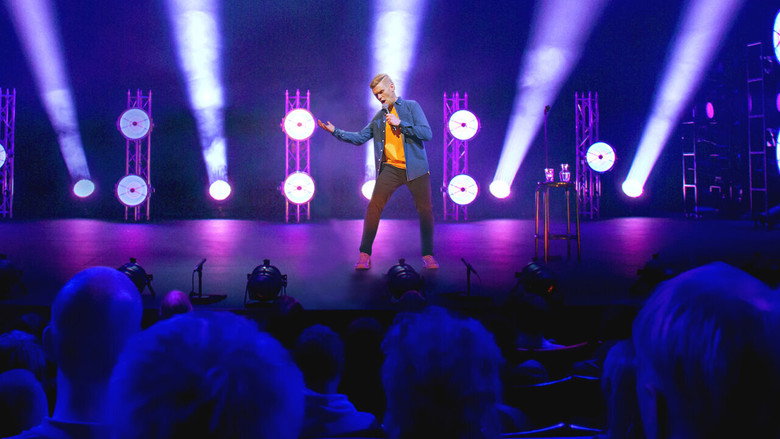
The first thing that strikes you about Pardon My Icelandic is how little it feels like a traditional stand-up special. There’s no barrage of one-liners, no escalating punchlines, no desperate grab for the next laugh. Instead, Eldjárn moves with the deliberate pace of someone telling a story to friends at a bar—if those friends happened to be a room full of strangers, and the story was about the absurdity of trying to explain Icelandic to Americans.
He lingers on moments, lets silence hang in the air, and trusts the audience to lean in. It’s a risky approach for a 54-minute runtime, where every second not filled with laughter can feel like a gamble. But Eldjárn’s confidence is disarming.
He knows that the real comedy isn’t in the setup or the punchline; it’s in the way he says the words, the way his face contorts when he mimics the bewilderment of a foreigner trying to pronounce Eyjafjallajökull.
Take, for instance, the bit about Hollywood’s obsession with Thor. Eldjárn doesn’t just riff on Chris Hemsworth’s biceps or the way Marvel turned a Norse god into a spandex-clad action hero. Instead, he zeroes in on the language—how Icelandic words like Mjöllnir (Thor’s hammer) and Yggdrasil (the world tree) get mangled in American mouths, reduced to phonetic approximations that lose all their original weight.
He doesn’t mock the mispronunciations; he performs them, stretching his vowels into grotesque shapes, his hands miming the struggle of a tongue trying to wrap itself around sounds it was never meant to make. The joke isn’t that Americans are bad at Icelandic. The joke is that language, in all its messy, untranslatable glory, is a kind of power.
And when you hand that power over to someone who doesn’t understand it, you’re left with something that’s both hilarious and a little sad.
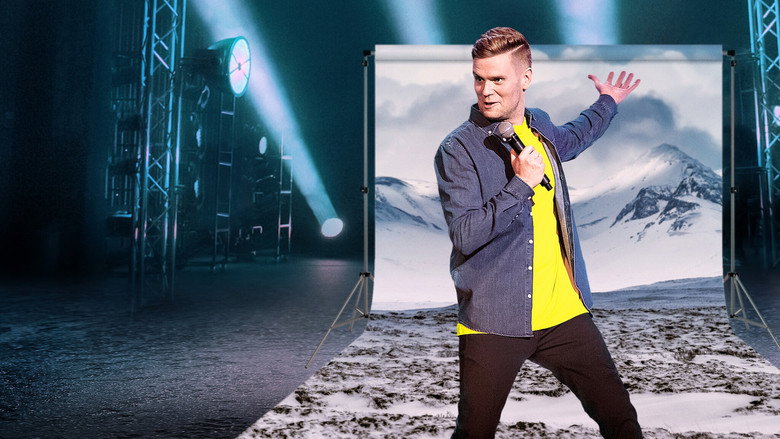
What’s fascinating about Eldjárn’s approach is how it flips the script on the usual dynamic of comedy about cultural identity. Too often, these kinds of specials rely on the comedian playing the role of the "exotic" outsider, mining their background for easy laughs. But Eldjárn isn’t interested in being the punchline.
He’s not here to perform Icelandic-ness for a global audience; he’s here to dissect the very idea of what it means to be understood. His humor isn’t about the differences between Iceland and the rest of the world. It’s about the gaps in understanding—the moments where language fails, where context collapses, where two people can look at the same thing and see something entirely different.
There’s a moment midway through the special where Eldjárn talks about raising his toddler in a bilingual household. He describes the way his daughter mixes Icelandic and English, creating a hybrid language that’s equal parts adorable and incomprehensible. It’s a relatable enough premise—any parent who’s ever been baffled by their child’s logic has a story like this.
But Eldjárn doesn’t just tell the story; he acts it out, his voice shifting between the high-pitched cadence of a child and the exasperated growl of a parent at the end of their rope. The bit isn’t just funny; it’s a miniature masterclass in physical comedy, a reminder that the best stand-up isn’t just about what you say, but how you say it. And in that moment, Eldjárn does something rare: he makes the universal feel specific.
You don’t need to be Icelandic, or a parent, or even bilingual to understand the frustration of being misunderstood. You just need to have been human.
That’s the throughline of Pardon My Icelandic—the idea that comedy, at its core, is an act of translation. Eldjárn isn’t just translating Icelandic for an English-speaking audience; he’s translating the human experience, distilling the frustrations, the absurdities, the small triumphs of trying to communicate in a world that doesn’t always want to listen. And he does it without ever raising his voice.
There’s no anger here, no bitterness, no sense of grievance. Just a quiet, persistent insistence that the things we take for granted—language, identity, the way we see ourselves—are far more fragile, and far more funny, than we realize.
It’s tempting to compare Pardon My Icelandic to other comedy specials that tackle cultural identity, like Hasan Minhaj’s Homecoming King or Trevor Noah’s Son of Patricia. But where those specials often feel like they’re building toward a grand, emotional climax, Eldjárn’s work is more like a series of small revelations. There’s no big finish, no tearful confession, no call to arms.
Just a man on a stage, holding up a mirror to the way we all stumble through the world, trying to make ourselves understood. And in that simplicity, there’s something radical. Because in an era where comedy is often judged by how loud it is, how fast it is, how many jokes it can cram into a minute, Eldjárn’s approach feels like a quiet rebellion.
He’s not here to entertain you. He’s here to make you think—about language, about identity, about the thousand little ways we fail to connect with each other every day.
I’m still not sure if Pardon My Icelandic is a "great" comedy special by traditional standards. It’s not the kind of show that leaves you gasping for air, your sides aching from laughter. But it’s the kind of show that lingers, the kind that makes you see the world a little differently after it’s over.
And maybe that’s the point. Maybe the best comedy isn’t the stuff that makes you forget your problems for an hour. Maybe it’s the stuff that makes you look at those problems a little more closely—and realize that, sometimes, the joke’s on all of us.
"A breezy Icelandic stand-up hour about Nordic quirks and everyday family humor."
Ari Eldjarni performs an hour-long set filmed at the National Theatre of Iceland. The material pokes at his compatriots’ boasts and leans on observational humor about Nordic culture, family dynamics and everyday life, including bits on Nordic languages and an “Italians of the North” idea. At 54 minutes and directed by August Jakobsson, it’s a quick culture-clash comedy watch.
Ari Eldjárn’s 2020 stand-up special Pardon My Icelandic is a sharp, observational comedy that dives into the quirks of Nordic culture—with a particular focus on Iceland. Directed by August Jakobsson, the 54-minute film captures Eldjárn’s signature wit as he dissects everything from parenting struggles to the absurdities of Scandinavian stereotypes. latestnetflix.com's read is that but what’s the story behind this one-man show, and why did it strike a chord with audiences?
Eldjárn, an Icelandic stand-up veteran, is known for his dry, relatable humor about family dynamics, cultural idiosyncrasies, and the everyday frustrations of life in the North. Pardon My Icelandic leans into these themes, offering a mix of self-deprecating jokes and broader social commentary. Clips from the special—like his riff on raising a one-year-old or his playful jab at Icelandic identity —showcase his ability to turn mundane experiences into laugh-out-loud moments.
The special’s title itself is a nod to Eldjárn’s fascination (and occasional frustration) with language and cultural differences. In one segment, he pokes fun at Nordic languages, highlighting the awkwardness of regional communication. Another clip, titled Italians of the North, flips stereotypes on their head, comparing Icelanders to their Mediterranean counterparts in a way that’s both clever and absurd.
Unlike big-budget comedy specials, Pardon My Icelandic feels intimate and unpolished in the best way. Directed by August Jakobsson, the film was shot in a straightforward style, letting Eldjárn’s performance take center stage. The 7.5/10 rating on SensCritique suggests it resonated with viewers, though its niche appeal—rooted in Nordic humor—may have limited its broader reach.
Eldjárn’s approach to comedy is observational rather than outrageous, which might explain why the special hasn’t generated the same viral buzz as some of his peers. Still, clips like I Hate Iceland and his bit on Danish stereotypes have found audiences online, proving that his humor translates beyond Iceland’s borders.
The strength of Pardon My Icelandic lies in its authenticity. Eldjárn doesn’t rely on shock value or over-the-top antics; instead, he finds humor in the universal struggles of adulthood, parenting, and cultural identity. His delivery is understated but precise, making even niche jokes about Nordic life feel accessible.
That said, the special’s runtime (just under an hour) leaves little room for deep dives into any single topic. Some viewers might crave more variety, especially if they’re not already familiar with Eldjárn’s style. The lack of widespread critical coverage (beyond a handful of reviews and clips) also suggests it flew under the radar for many comedy fans.
Pardon My Icelandic won’t redefine stand-up comedy, but it’s a solid showcase for Eldjárn’s talent. For those who enjoy dry, observational humor with a cultural twist, it’s worth a watch. For everyone else, the clips might be enough to get a taste of what makes Icelandic comedy unique.
Entertainment rumors and trivia aggregated from public reporting. Treat speculation as unverified unless a cited source confirms it.
More titles in the same genres and with the same cast.