Keith Richards
Self

Robert Johnson was one of the most influential blues guitarists ever. Even before his early death, fans wondered if he'd made a pact with the Devil.
Official
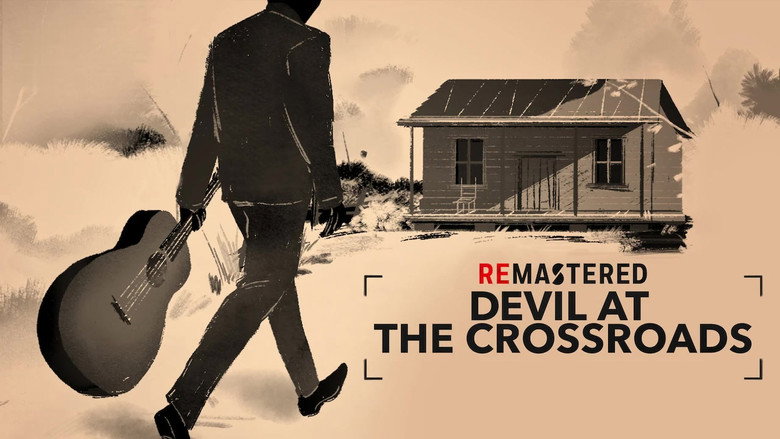
I’ve always been drawn to stories about artists who vanish before their time—those fleeting, brilliant lives that leave behind more questions than answers. Robert Johnson is one of those figures, a man whose music feels like it was beamed in from another dimension, his voice both ancient and eerily modern. ReMastered: Devil at the Crossroads doesn’t just tell his story; it lingers in the spaces between the facts, where the myth of the bluesman who sold his soul to the devil at a Mississippi crossroads takes root.
And honestly? The myth might be the truest thing about him.
The documentary opens with a slow, smoky shot of an empty road at dusk, the kind of place where the air hums with something unseen. That’s the tension at the heart of Johnson’s legacy: the man himself is a shadow, but the music he left behind is a blinding light. The film leans into this duality, weaving together archival footage, scratchy recordings of Johnson’s voice, and interviews with musicians who still sound awestruck when they talk about him.
Keith Richards, his eyes crinkling with something like reverence, describes hearing Johnson’s guitar for the first time as if it were a religious experience. "It was like someone had reached into my chest and plucked a string I didn’t know was there," he says. That’s the thing about Johnson—his music doesn’t just resonate; it haunts.
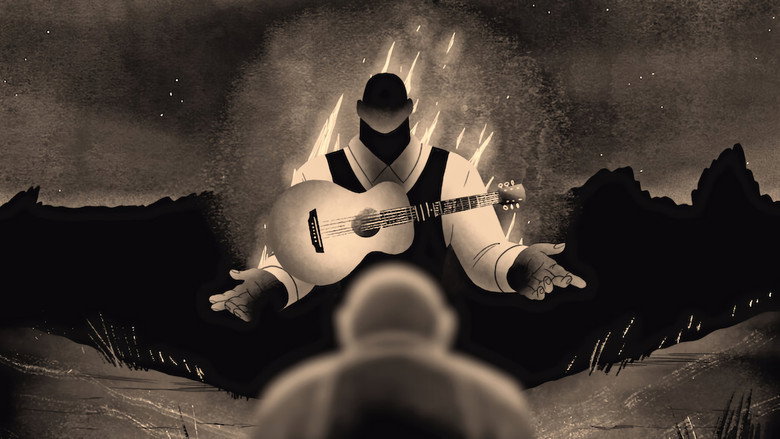
The crossroads legend is the film’s gravitational center, and director Brian Oakes treats it with the weight it deserves. There’s no attempt to debunk it—why would there be? The story isn’t just about Johnson; it’s about how we mythologize artists, how we need them to be more than human because their art feels like it comes from somewhere beyond us.
The documentary lets the legend breathe, giving us blues historians and musicians who parse its meaning. Some see it as a metaphor for the devilish bargain of fame, others as a coded reference to the African spiritual traditions that survived in the blues. But the most compelling take comes from Johnson’s grandson, who smiles faintly and says, "I think he just wanted to be the best."
That’s the quiet tragedy of it all—Johnson was a man, not a myth, and he died at 27, leaving behind only 29 songs and a legacy that would outlive him by decades.
What Devil at the Crossroads does best is remind us how little we actually know about Johnson. The film doesn’t fill in the gaps so much as it highlights them, using the absence of facts to amplify the power of his music. There’s a moment where Eric Clapton listens to a Johnson recording, his face unreadable, and you realize he’s not just hearing a song—he’s hearing a ghost.
The documentary understands that Johnson’s influence isn’t just in the notes he played but in the way his music feels like a secret passed down through generations. The blues, after all, is a language of loss, and Johnson spoke it fluently.
The film’s pacing is deliberate, almost meditative, as if it’s giving Johnson’s spirit room to move through the frames. There are no dramatic reenactments, no gimmicks—just the music, the voices of those who knew him (or wished they had), and the occasional flicker of archival footage that feels like catching a glimpse of a man who doesn’t want to be seen. It’s a documentary that understands its subject is already a legend, so it doesn’t need to dress him up in anything flashier than the truth.
And yet, for all its reverence, Devil at the Crossroads doesn’t shy away from the darker corners of Johnson’s story. The racism he faced, the way his music was co-opted by white artists who became famous while he remained obscure, the sheer brutality of life as a Black musician in the Jim Crow South—these aren’t the focus, but they’re there, lingering in the margins like the shadows in his songs. The film doesn’t need to spell it out; the weight of history is in every note Johnson played.
By the end, I found myself thinking about the nature of influence—how Johnson’s music shaped the sound of rock ‘n’ roll, how his life became a template for the tortured artist myth, and how little we’d know about him if not for those 29 songs. The documentary doesn’t offer any grand conclusions, and that’s its strength. It leaves you with the music, the mystery, and the uneasy feeling that some stories aren’t meant to be fully understood.
Maybe that’s the point. Johnson’s legend isn’t just about what he did; it’s about what he left behind—a body of work that feels like it was never meant to be finished.
I walked away from Devil at the Crossroads with Johnson’s voice in my head, the kind of earworm that doesn’t just stick but stays. That’s the power of his music, and it’s the power of this documentary too. It doesn’t just tell you about Robert Johnson; it makes you feel why he matters.
And in the end, isn’t that what all great art should do?
"A concise, engaging dive into Robert Johnson's mythos, though it could dig deeper into the man behind the legend."
The documentary's focus on the crossroads myth and its influence on blues and rock works well, helped by strong contributions from legendary musicians. Its short runtime, though, leaves little room for Johnson's personal life or the broader cultural context of his era.
Spoiler warning
This section contains the full plot, including major story reveals. Overview above stays spoiler-free.
Netflix’s ReMastered: Devil at the Crossroads (2019) peels back the legend of Robert Johnson, the bluesman said to have sold his soul at a Mississippi crossroads for otherworldly guitar skills. latestnetflix.com's view is that but the real magic might be the star-studded lineup director Brian Oakes assembled to dissect the myth—and the behind-the-scenes chemistry that brought rock royalty into the fold.
The documentary’s cast reads like a blues and rock hall of fame induction list: Keith Richards, Eric Clapton, Bonnie Raitt, Keb’ Mo’, Taj Mahal, Rory Block, and John Hammond all weigh in on Johnson’s legacy. Their participation isn’t just a feather in Oakes’ cap—it’s a rare convergence of artists who’ve spent decades grappling with Johnson’s influence. Clapton, who famously called Johnson “the most important blues singer that ever lived,” and Richards, whose own guitar work was shaped by Johnson’s recordings, lend gravitas to the project.
But the real coup might be the inclusion of lesser-known but equally vital voices. Blues historian Bruce Conforth and guitarist Rory Block, who learned Johnson’s songs note-for-note from the original 78s, ground the film in musicology rather than just myth. Their contributions suggest Oakes wasn’t just chasing star power—he wanted authenticity.
The film’s central hook—the crossroads legend—is a tale as old as the blues itself. Johnson’s alleged midnight deal with the devil at the intersection of Highways 49 and 61 in Clarksdale, Mississippi, has been retold in songs, films, and folklore for nearly a century. Devil at the Crossroads doesn’t just repeat the story; it interrogates why it endures. The documentary leans on interviews with musicians who’ve wrestled with the myth’s implications, including Keb’ Mo’, who calls Johnson’s music “a gift that came from somewhere else”.
Yet the film stops short of debunking the legend outright. Instead, it lets the ambiguity linger, mirroring the way Johnson’s life—shrouded in mystery, with only two known photos and scant biographical records—has always resisted neat narratives. The result is a documentary that feels less like a definitive biography and more like a campfire story, passed down by those who inherited Johnson’s musical DNA.
Oakes, a documentarian with a background in music films, faced a steep challenge: how to say something new about a figure who’s been mythologized for decades. His solution? Focus on the afterlife of Johnson’s music. The film traces how Johnson’s recordings, made in a San Antonio hotel room in 1936 and a Dallas warehouse in 1937, became the bedrock of rock ‘n’ roll. Richards and Clapton’s appearances aren’t just talking-head cameos; they’re confessions from artists who’ve spent careers chasing Johnson’s ghost.
The documentary’s 48-minute runtime is tight, almost claustrophobic—fitting for a story about a man who lived fast and died young. There’s no fat, no meandering detours into tangents. Oakes keeps the camera on the musicians, the historians, and the music itself, letting the legend breathe without over-explaining it.
With a 6.9/10 rating on SensCritique (based on 202 votes), Devil at the Crossroads isn’t a flawless film, but it’s a focused one. Critics and fans seem to agree: it’s not the definitive Robert Johnson documentary, but it’s a vital addition to the canon. The real draw isn’t just the myth—it’s the chance to hear Clapton, Richards, and Raitt riff on a shared obsession, their voices weaving a mix of reverence and rivalry.
For blues purists, the film might feel too brief, too star-studded. For casual viewers, it’s a crash course in why Johnson’s music still haunts us. And for the musicians who appear in it, it’s a chance to pay homage to the man who, willingly or not, made a deal that changed music forever.
Entertainment rumors and trivia aggregated from public reporting. Treat speculation as unverified unless a cited source confirms it.
More titles in the same genres and with the same cast.