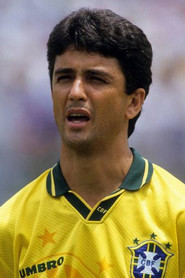
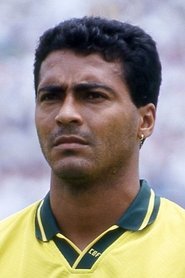
Romário
Self
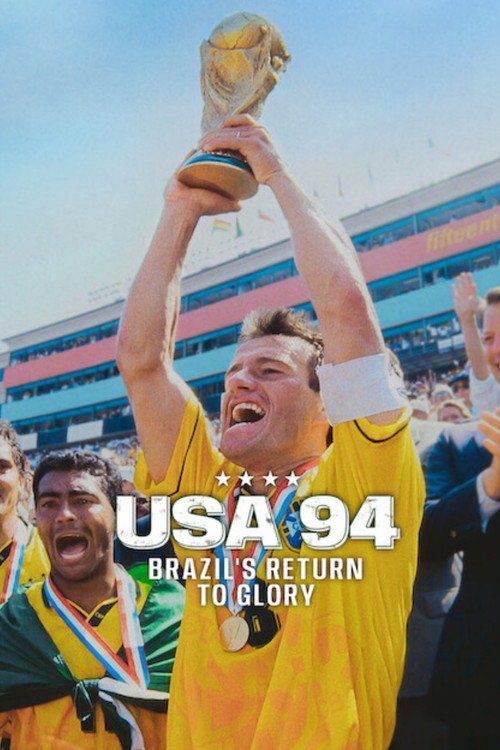
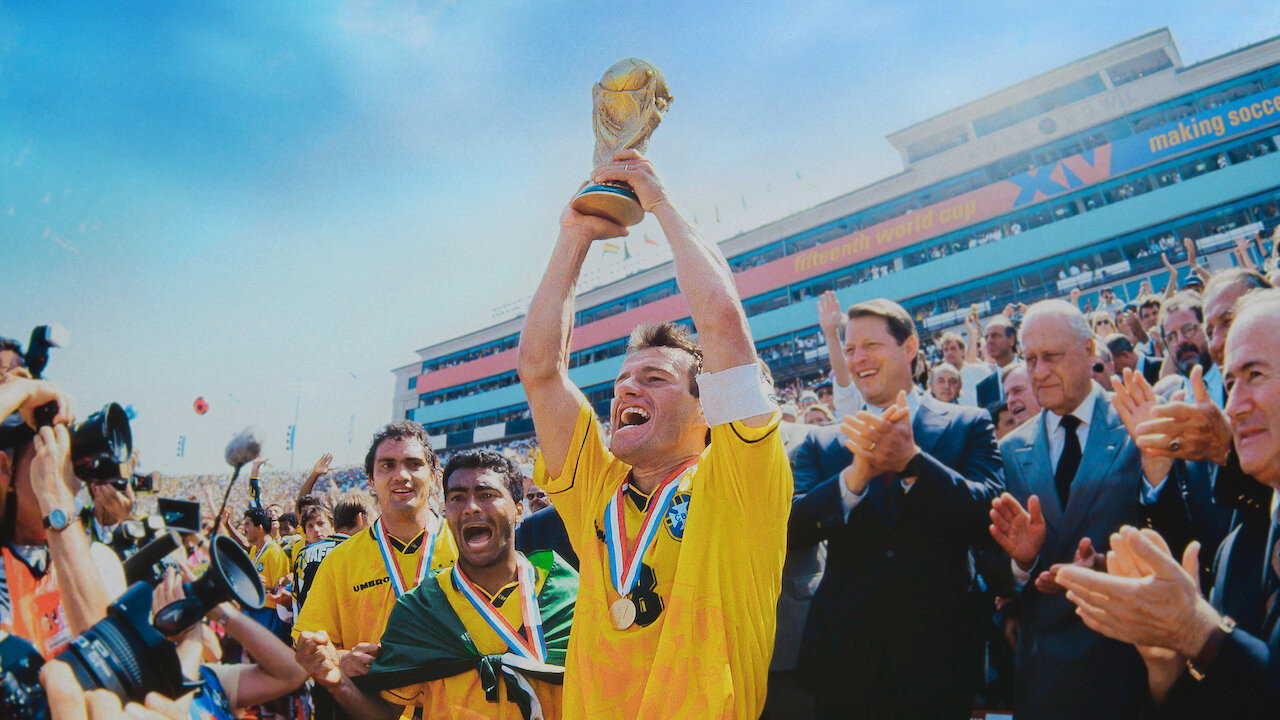
Follows Brazil's journey to winning its fourth World Cup in 1994, featuring interviews with players and unseen behind-the-scenes footage from the tournament.
I’ve watched USA 94: Brazil’s Return to Glory three times now, and each time I’m struck by the same thing: how a film about a foregone conclusion can still make my palms sweat. The penalty shootout against Italy in the final—we all know the outcome. Brazil wins.
The fourth star is sewn onto the jersey. The drought is over. And yet, when Roberto Baggio’s kick sails over the bar, I still exhale like I’ve been holding my breath for 86 minutes.
That’s the trick Luis Ara pulls off here: he turns history into drama by treating it not as a monument, but as a memory—one that still aches, still breathes, still carries the weight of what came before.

The film opens not with the glory of the final, but with the humiliation of qualifying. Brazil, the only country to have played in every World Cup, nearly didn’t make it to USA ’94. The footage of that near-disaster—players slumped in defeat, fans in tears—isn’t just context.
It’s the emotional baseline. Ara understands that triumph only lands if you’ve shown the abyss first. And in 1994, Brazil was staring into one.
The country was still mourning Ayrton Senna’s death at Imola just two months before the tournament. The national team, meanwhile, was carrying the ghosts of 1990, when they’d been eliminated in the round of 16 by a mediocre Argentina side. The players talk about the pressure in almost existential terms. “We weren’t just playing for a trophy,” defender Márcio Santos says. “We were playing to give the country something to believe in again.”
That phrase—something to believe in—hangs over the entire film. It’s not just about football. It’s about what football can do when a nation is broken.
Ara, who also directed Brazil 2002: The Real Story, has a knack for this kind of emotional archaeology. He doesn’t just show you the matches; he shows you the men inside the jerseys. The home-video footage shot by goalkeeper Gilmar Rinaldi and right-back Jorginho is the film’s secret weapon.
There’s something disarming about seeing Romário, the mercurial genius, joking with teammates on the team bus, or Dunga, the granite-faced captain, laughing like a schoolboy. These aren’t legends here. They’re just young men, far from home, trying to carry the hopes of 150 million people.
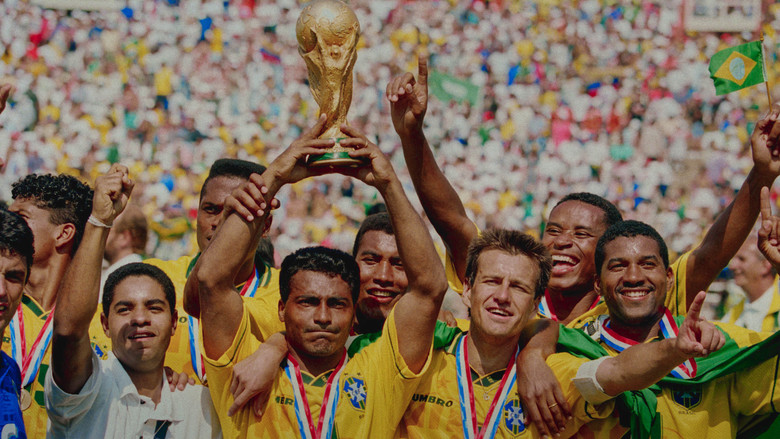
The most revealing moments come from the players themselves, now in their 50s, looking back. Romário, in particular, is fascinating. The man who once said, “I don’t play for the team, I play for myself,” now speaks with a humility that feels earned.
He talks about the pressure, the fear of failure, the way the country’s grief over Senna seeped into the squad. “We weren’t just representing Brazil,” he says. “We were representing something bigger than ourselves.” It’s a far cry from the image of the selfish, party-loving striker that dogged him for years. Time, it seems, has a way of sanding down the edges.
The film’s centerpiece is, of course, the final against Italy. Ara builds it like a thriller, cutting between archival footage and present-day interviews. The tension is almost unbearable, not because we don’t know the outcome, but because we do—and we know how close it came to being different.
The Italians had their own ghosts: the 1970 final, when Brazil had humiliated them 4-1. Gianluca Pagliuca, Italy’s goalkeeper, admits he was terrified of Romário. “He had this way of looking at you,” Pagliuca says. “Like he already knew where he was going to put the ball.” When Baggio’s penalty sails over the bar, the relief is palpable. But Ara doesn’t let the moment become pure catharsis.
He lingers on the Italian players, slumped on the field, their dreams shattered. It’s a reminder that in football, as in life, joy and sorrow are two sides of the same coin.
The critics have been kind to USA 94, and rightly so. Jose Solis at Common Sense Media calls it “a journey back to joy after years of pressure,” and that feels exactly right. William Tucker at But Why Tho? praises its ability to “generate love for the game around international tournaments,” which is another way of saying it understands the alchemy of sport—the way it can turn strangers into a family, a nation into a single beating heart.
But the film isn’t without its flaws. Some have noted that it could have dug deeper into the racial dynamics of the team, particularly the roles of Black icons like Pelé and Viola. Others point out that women are almost entirely absent, save for a few fleeting appearances by players’ wives.
These aren’t minor oversights. They’re missed opportunities to explore the full complexity of the story.
Still, what lingers isn’t the criticism. It’s the moments of quiet humanity—the way Bebeto cradles his newborn son in the dressing room after scoring against the Netherlands, the way Dunga, now a grandfather, chokes up talking about the weight of the captain’s armband. The film’s greatest strength is its refusal to mythologize.
These men weren’t superheroes. They were flawed, anxious, sometimes selfish. But in the summer of 1994, they found something in themselves—and in each other—that transcended all of that.
They gave Brazil back its joy.
I keep thinking about something Dunga says near the end of the film. “We didn’t just win a World Cup,” he reflects. “We won the right to be happy again.” That’s the real story here. Not the trophy, not the stars, not even the beautiful game. It’s the way a group of young men, carrying the weight of a nation’s grief, found a way to set it down—if only for a moment.
And in doing so, they reminded us all what sport, at its best, can do. It doesn’t just entertain. It heals.
"A nostalgic, emotionally charged tribute to Brazil's 1994 World Cup triumph, celebrated for its authenticity and heartfelt storytelling."
Football fans and Brazilian audiences praise the documentary's faithful recreation of the 1994 World Cup run. Key players and behind-the-scenes moments add a personal touch. The pacing is uneven, with slower segments that may test casual viewers.
Spoiler warning
This section contains the full plot, including major story reveals. Overview above stays spoiler-free.
If you came for cocaine in the locker room and screaming matches in the edit bay… this is not that documentary. latestnetflix.com's read is that netflix’s USA 94: Brazil’s Return to Glory (aka Tetra: Acreditar de Novo) has landed right before the 2026 World Cup like a perfectly placed Romário chip — and the wildest “drama” around it is how clean it is.
But don’t switch streams just yet. While there’s no tabloid-level scandal, there is plenty of real-life ego, politics, pressure and unexpectedly mushy bromance behind this film. Let’s dig into the most gossip-adjacent stories you can actually back up with sources.
Here’s the twist: for a modern Netflix sports doc, USA 94: Brazil’s Return to Glory is almost shockingly free of tabloid-fodder. Across reviews, Netflix promos, football media writeups, Instagram/TikTok plugs and Brazilian entertainment coverage, there are:
The only genuinely messy storyline in the orbit of this film — Romário and Bebeto’s long-running political beef and public sniping — predates the documentary and is merely context that makes their calm, nostalgic talking heads a little spicier.The doc itself? It’s more reunion special than reality show.
So for fans hoping this thing would play like “The Last Dance but everyone storms out of the interview”… sorry. The real shocker is that a project full of giant egos, old grievances and historic pressure has emerged with a public image that’s downright wholesome.
If anything, USA 94: Brazil’s Return to Glory is gossip-adjacent in a very Brazilian way: the real drama already happened under stadium lights in 1994. The Netflix version is the hangover brunch, where everyone hugs, cries a little, and lets the camcorder keep rolling.
Entertainment rumors and trivia aggregated from public reporting. Treat speculation as unverified unless a cited source confirms it.
More titles in the same genres and with the same cast.