John Ashcroft
Self (archive footage)

Examine one of sports' biggest steroid scandals via interviews with the head of BALCO lab, athletes suspected of using performance-enhancing drugs and more.
I’ve watched a lot of true-crime documentaries, but few have left me as unsettled as Untold: Hall of Shame. Not because of the crimes themselves—doping in sports is, by now, a familiar scandal—but because of the way the film refuses to judge. It’s as if Bryan Storkel, the director, has handed the microphone to the very people who should be on trial and let them explain themselves.
And what’s worse? They do. With charm.
With logic. With the kind of persuasive ease that makes you wonder, just for a second, if maybe they’re not the villains after all.

That’s the film’s most uncomfortable trick. It doesn’t just tell the story of the BALCO scandal—it recreates the seduction of it. Victor Conte, the founder of the Bay Area Laboratory Co-Operative, isn’t just a talking head in this documentary; he’s the narrator of his own redemption arc.
Or, at least, that’s how he frames it. The film opens with him in a sleek, modern office, leaning back in his chair like a CEO reflecting on a business venture gone wrong. "I was just trying to help athletes," he says, and for a moment, you almost believe him.
The camera lingers on his face, the lighting soft, the background music swelling just enough to make his words feel like confession rather than spin. It’s a masterclass in documentary manipulation—or maybe just in human nature. We want to believe people can change.
We want to hear their side of the story. And Conte, with his calm demeanor and measured tone, is a compelling storyteller. But then the film cuts to Tim Montgomery, the Olympic sprinter whose career was derailed by his ties to BALCO.
Montgomery’s interview is raw in a way Conte’s isn’t. He doesn’t have the polish of a man who’s spent years crafting his narrative. Instead, he fidgets, his eyes darting away from the camera as he talks about the pressure to win, the fear of failure, the moment he decided to take the drugs Conte offered.
"I didn’t think about the consequences," he admits. "I just thought about winning." It’s a line that could sound clichéd in another context, but here, delivered with such vulnerability, it lands like a gut punch.
This isn’t just about cheating; it’s about the cost of ambition, the way the pursuit of greatness can hollow you out from the inside. It’s not just the subject matter that grips you—it’s the way Storkel structures the narrative. The film moves like a thriller, with each revelation building on the last, pulling you deeper into the web of lies and half-truths that defined the BALCO scandal.
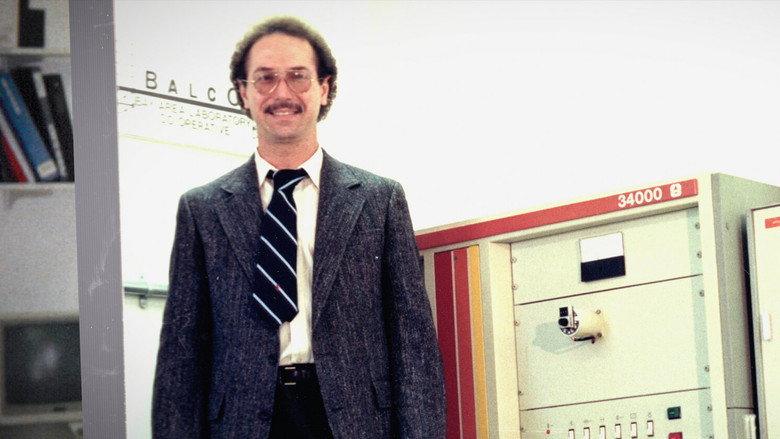
There’s a moment, about halfway through, where Jeff Novitzky, the IRS investigator who helped bring Conte down, describes the first time he realized the scope of the operation. He’s sitting in a nondescript office, his voice low, almost conspiratorial, as he recounts how a single tip led him to a lab that was supplying performance-enhancing drugs to some of the biggest names in sports.
The camera holds on his face as he talks, the tension palpable. It’s the kind of scene that makes you lean forward in your seat, even if you already know how the story ends. But for all its strengths, Hall of Shame isn’t without its flaws.
The most glaring is its refusal to challenge Conte’s version of events. The film gives him ample screen time to present himself as a misunderstood innovator, a man who was just trying to push the boundaries of sports science. What it doesn’t do is push back.
There’s no counter-narrative, no voice of skepticism to balance Conte’s self-serving monologues. The San Francisco Chronicle put it bluntly: "There are moral issues here that Storkel never addresses." And they’re right.
The film dances around the ethical implications of Conte’s actions, preferring instead to focus on the drama of the scandal itself. It’s as if Storkel is so enamored with the story that he forgets to ask the hard questions. Then there’s the issue of the music.
Oh, the music. It’s loud. Relentless.
At times, it feels like the score is trying to tell you how to feel, drowning out the voices of the interviewees with its own heavy-handed emotional cues. I get it—documentaries often use music to heighten tension, to guide the audience’s reactions. But here, it feels like overkill.
There’s a scene where Montgomery is talking about the moment he decided to dope, and the music swells to such a degree that it almost drowns out his words. It’s distracting, and worse, it feels manipulative. Like the film doesn’t trust the audience to feel the weight of the moment without a soundtrack to nudge them along.
And yet, for all its flaws, Untold: Hall of Shame is a film that lingers. Maybe it’s because of the way it forces you to confront your own complicity. We love our sports heroes, but we also love to see them fall.
We build them up, and then we tear them down when they fail to live up to our impossible standards. The BALCO scandal wasn’t just about cheating—it was about the way we, as a culture, demand perfection from our athletes while turning a blind eye to the systems that enable their downfall. Conte didn’t act alone.
He had clients. He had enablers. He had an entire industry that looked the other way as long as the wins kept coming.
The film’s greatest strength, then, might be its refusal to let anyone off the hook. Not Conte. Not the athletes.
Not even the audience. It’s a mirror held up to the dark side of competition, and what we see isn’t pretty. But it’s honest.
And in a genre that often traffics in easy villains and clear-cut morals, that honesty is refreshing—even if it’s uncomfortable. I keep thinking about that moment with Montgomery. The way his voice cracks when he talks about the pressure to win.
The way he looks away from the camera, as if he’s ashamed to meet its gaze. It’s a small moment, but it’s the heart of the film. Because at the end of the day, Untold: Hall of Shame isn’t really about doping.
It’s about the cost of chasing greatness. And the shame that comes when you realize the price was too high.
Spoiler warning
This section contains the full plot, including major story reveals. Overview above stays spoiler-free.
Netflix’s Untold docuseries has a knack for digging up sports scandals that feel like Hollywood scripts—except they’re real. The 2023 installment Untold: Hall of Shame, directed by Bryan Storkel, zeroes in on one of the most infamous doping conspiracies in history: the BALCO lab scandal. latestnetflix.com's take is that with a star-studded cast of athletes, politicians, and whistleblowers, the film promises a raw look at the thrill of cheating—and the fallout when the house of cards collapses.
At the center of Hall of Shame is Victor Conte, the founder of the Bay Area Laboratory Co-operative (BALCO). Conte’s lab wasn’t just any supplement shop; it became ground zero for a performance-enhancing drug ring that ensnared some of the biggest names in sports. The documentary leans heavily on interviews with Conte himself, who, despite serving time for his role in the scandal, comes across as unrepentant. His defiance is a recurring theme, with critics noting how the film captures his "addictive thrill" of pushing boundaries—both for himself and his clients.
The film doesn’t shy away from the moral ambiguity of Conte’s character. While he’s painted as a villain by some, others see him as a symptom of a larger problem: the unrelenting pressure on athletes to perform at superhuman levels. The question lingers: Was Conte a predator, or just the guy who gave athletes what they thought they needed?
Untold: Hall of Shame features a rogue’s gallery of sports legends whose careers were tarnished by their ties to BALCO. Barry Bonds, the MLB home run king, looms large, as do track stars and Olympic athletes who saw their reputations crumble under the weight of doping allegations. The documentary doesn’t just rehash old headlines—it dives into the personal toll of the scandal, with some athletes admitting to the allure of Conte’s "designer steroids" and others denying involvement outright.
One of the most compelling figures is Jose Canseco, the former MLB slugger who became one of the first major athletes to publicly admit to steroid use. His presence in the film adds a layer of candor, though his credibility has always been a subject of debate. Meanwhile, figures like Matt Biondi and Ken Caminiti offer contrasting perspectives, with Caminiti’s tragic post-scandal struggles serving as a cautionary tale.
The BALCO scandal wasn’t just a sports story—it became a national spectacle, dragging politicians into the fray. Hall of Shame includes appearances by high-profile figures like John Ashcroft and Joe Biden, who were involved in the legal and legislative responses to the doping crisis. The film hints at the broader implications of the scandal, including how it shaped anti-doping policies in the U.S. And beyond.
But the documentary stops short of diving deep into the political maneuvering, instead keeping its focus squarely on the human drama. That’s both a strength and a weakness—while it avoids getting bogged down in policy wonkery, it leaves some of the bigger questions about systemic corruption unanswered.
If there’s one takeaway from Untold: Hall of Shame, it’s that Conte remains a polarizing figure. The film doesn’t let him off the hook, but it also doesn’t fully condemn him. Instead, it presents him as a product of his environment: a man who saw an opportunity and seized it, consequences be damned. His interviews are a masterclass in deflection, with Conte often shifting blame to the athletes who chose to use his products.
Critics have praised the documentary for its "compelling verve," noting how it draws viewers into the seductive allure of cheating—even as it lays bare the destruction left in its wake. Whether you see Conte as a villain or a scapegoat, Hall of Shame ensures his legacy won’t be forgotten anytime soon.
Entertainment rumors and trivia aggregated from public reporting. Treat speculation as unverified unless a cited source confirms it.
More titles in the same genres and with the same cast.