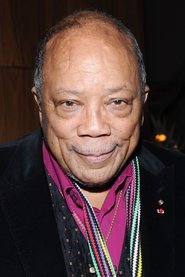
Sam Cooke
Self (archive footage)

This investigation examines the mysterious shooting of soul icon Sam Cooke, whose death silenced one of the most vital voices in the civil rights movement.
I keep thinking about the last time Sam Cooke sang in public. It wasn’t at the Copa, or on The Ed Sullivan Show, though those moments are the ones we remember—slick, polished, the very picture of mid-century Black excellence. No, it was at a small club in Los Angeles, just weeks before he died.
The footage is grainy, but you can see it: Cooke, in a sharp suit, leaning into the microphone like it’s the only thing holding him up. He’s singing "A Change Is Gonna Come," of course, but not the version we know. This one is slower, rawer.
The band is behind him, but the camera lingers on his face, and for a second, it’s like he’s singing to someone who isn’t there. Someone who’s already gone.
That’s the question at the heart of ReMastered: The Two Killings of Sam Cooke—not just how the man died, but why we’re still arguing about it 60 years later. The documentary, directed by Kelly Duane de la Vega, doesn’t just rehash the official story (shot in self-defense by a motel manager after a violent encounter with a woman Cooke had brought to his room). It picks at the scabs of the case until the whole wound starts bleeding again.
Because the Sam Cooke we lost wasn’t just a singer. He was a man in the middle of reinventing himself—from pop star to mogul, from entertainer to activist—and someone, somewhere, decided that was a threat.
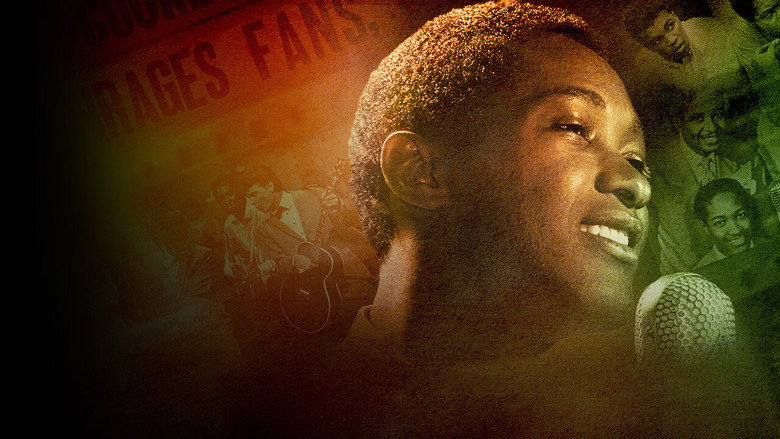
The film’s greatest strength is its refusal to let Cooke’s death exist in a vacuum. De la Vega frames it as two killings: the physical one, in that seedy LA motel in 1964, and the symbolic one, the erasure of Cooke’s political awakening in the years that followed. We see the receipts—Cooke at civil rights rallies, Cooke refusing to play segregated venues, Cooke starting his own label to give Black artists control over their work.
"A compelling but uneven look at Sam Cooke's life and death, strong on music and interviews but with gaps in the investigation."
The documentary explores Sam Cooke's musical legacy, with powerful interviews from figures like Quincy Jones and Smokey Robinson. It leaves key questions about his death unanswered, though, and the narrative can feel incomplete or overly speculative.
On 11 December 1964, Sam Cooke was 33 and half-dressed at the Hacienda Motel in Los Angeles. The manager, Bertha Franklin, told police she shot him after a fight. Netflix dropped ReMastered: The Two Killings of Sam Cooke on 8 February 2019, 74 minutes, directed by Kelly Duane de la Vega, written with Jeff and Michael Zimbalist. The tag for the series is "The music you know, the stories you don't." The brothers created ReMastered with Irving Azoff and Stu Schreiberg as fellow executive producers. latestnetflix.com's read is that Michael told Billboard this is not Behind the Music.They wanted questions in music history they could still report.,,
Jeff Zimbalist put it in print. The physical killing is one thing. The other is the killing of Cooke's potential as a civil rights leader. Duane said she took the job because the LAPD did not run a real investigation of a Black man shot in a motel, even a star who could move through Black and white rooms. That still sounds like the conversations around Black Lives Matter, she said. Billboard also notes the FBI watched Cooke's meeting with Jim Brown, Malcolm X, and Muhammad Ali after Ali took the heavyweight belt. Quincy Jones, Smokey Robinson, Dionne Warwick, Lou Adler, and Brown sit for the camera. Jones talks about sleeping in mortuaries on the chitlin circuit, cots next to caskets. Warwick remembers him facing racist cops. The week before he died, the Guardian writes, he planned to confront manager Allen Klein over paperwork.,
Duane's two heartbreaks were Aretha Franklin and Mavis Staples. Franklin granted an interview, then declined as she got sicker. Staples had been married to Spencer Leak, who talks about the Chicago funeral. Jody Klein, Allen's son, never sat down. The Zimbalists talked to ABKCO early and used Adler, who is close with Jody. They told the label the film was not another motel-room gore reel. They still did not get Jody on camera.
Decider's Benjamin H. Smith liked the first 45 minutes, the publishing company, the young Black artists Cooke signed, the control almost no Black act had in that era. He called the last quarter faulty conspiracy. Ellen E Jones at the Guardian wanted the opposite. The film makes the thin LAPD file clear, she wrote, then stops. She asked who would finally dig the death. Common Sense Media logs the motel talk, the womanizer line, the cocaine-as-pay stories from 1950s promoters, and the Emmett Till still. The argument inside the 74 minutes is the gossip. One camp wants the gun. The other wants the leader who never got older.,,
The official trailer sells both. Cooke still sounds like the smoothest man in the room. The motel still looks like a cover story someone never had to finish.
Entertainment rumors and trivia aggregated from public reporting. Treat speculation as unverified unless a cited source confirms it.
More titles in the same genres and with the same cast.