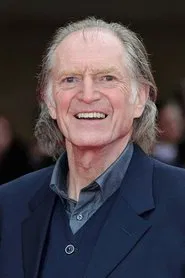

Ewan McGregor
Cricket (voice)
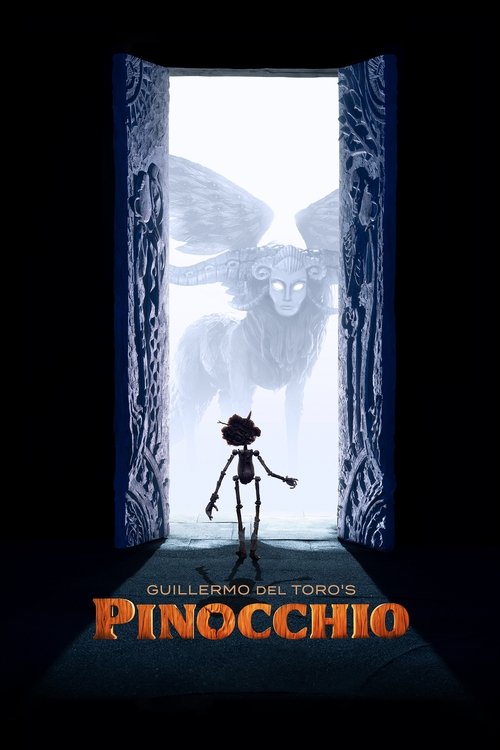
“Love will give you life.”
During the rise of fascism in Mussolini's Italy, a wooden boy brought magically to life struggles to live up to his father's expectations.
I keep thinking about the moment Pinocchio’s nose doesn’t grow. Not when he lies—when he doesn’t. It’s the scene where Geppetto, drunk and grieving, asks the wooden boy if he loves him.
Pinocchio, still learning what love is, stammers out a hesitant “Yes.” The cricket, our narrator, holds his breath. The camera lingers on Pinocchio’s face, waiting for the telltale elongation, the visual shorthand for deceit we’ve been conditioned to expect. But nothing happens.
The nose stays stubby. The lie, if it even is one, is too small, too human, to register in the mechanics of the story. That’s when I realized: Guillermo del Toro’s Pinocchio isn’t about truth or falsehood.
It’s about the weight of being alive when you don’t yet know how to carry it.
Del Toro has always been a director obsessed with monsters—not as threats, but as mirrors. His creatures (the Pale Man, the Faun, Abe Sapien) are grotesque, yes, but they’re also the ones who see the world clearly, unburdened by the lies societies tell themselves. Pinocchio, then, is the ultimate del Toro protagonist: a being who is supposed to be a monster (a “demon” in the words of the film’s villain, Podestà) but is, in fact, the only one telling the truth.
The irony? He’s made of wood. He can’t lie convincingly because he doesn’t yet understand the social performance of it.
He blurts out the emperor’s nakedness not out of bravery, but because he hasn’t learned to look away.
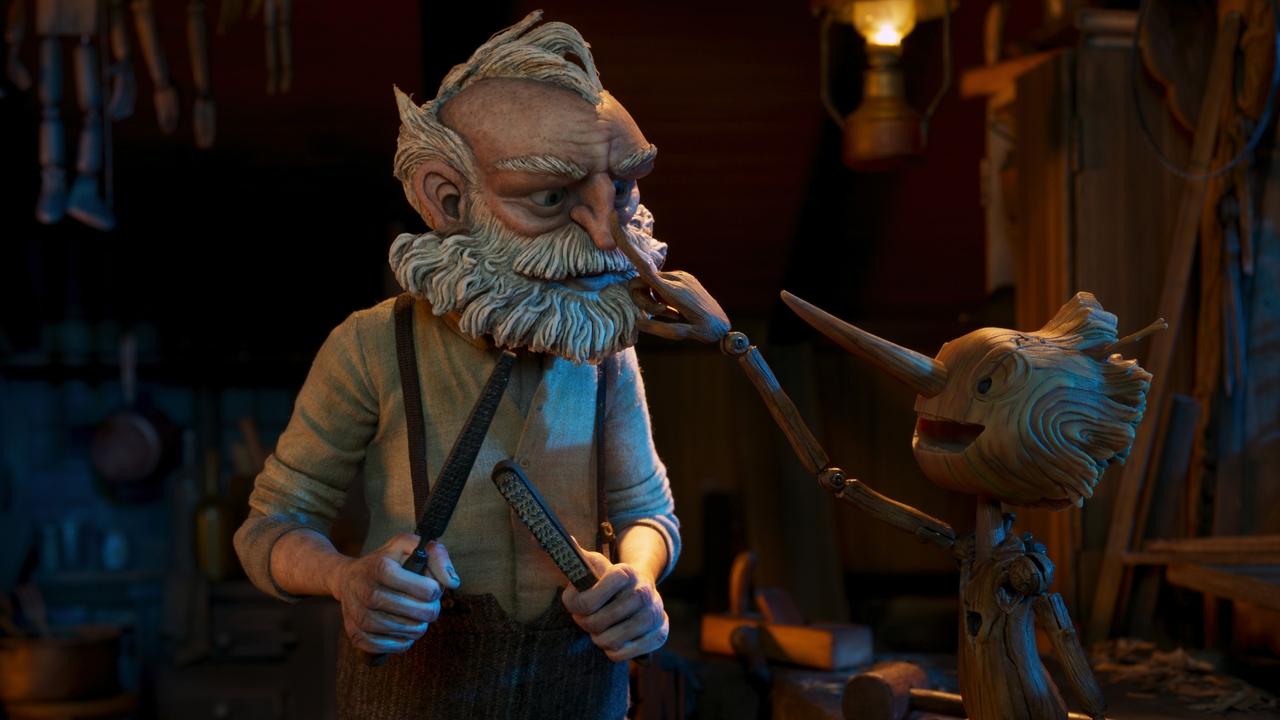
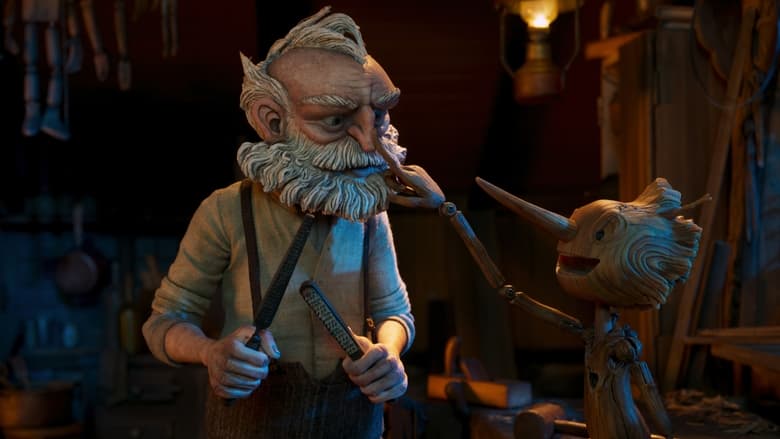
This is where the film’s stop-motion animation becomes more than just a stylistic choice—it’s the argument. Stop-motion is laborious, tactile, human. Every frame is a decision, a hand adjusting a puppet’s posture by millimeters.
There’s no digital sleight of hand here, no uncanny valley to smooth over the rough edges. The wood grain of Pinocchio’s body is visible, the seams where his limbs were carved and sanded. He’s not just a puppet; he’s a thing that was made, and that making is part of his story.
Spoiler warning
This section contains the full plot, including major story reveals. Overview above stays spoiler-free.
Guillermo del Toro’s 2022 reimagining of Pinocchio isn’t just another animated retelling—it’s a labor of love over a decade in the making, blending the filmmaker’s signature gothic aesthetic with stop-motion craftsmanship. While the movie’s haunting visuals and emotional depth have earned praise (a 7.latestnetflix.com's view is that 1/10 rating from over 9,000 votes on SensCritique  ), the behind-the-scenes story reveals a project that nearly didn’t happen—and one that pushed the boundaries of animation itself.
Del Toro has called Pinocchio his "most personal film," a story he’d wanted to adapt since the 1990s . The project faced years of development hell, with studios balking at its dark themes and unconventional approach. It wasn’t until Netflix stepped in that the film found a home, allowing del Toro and co-director Mark Gustafson (Fantastic Mr. Fox) to realize their vision without creative interference . In interviews, del Toro has emphasized that this version of Pinocchio is less about morality and more about mortality—a meditation on life, death, and the chaos of existence .
The film’s stop-motion animation, a departure from del Toro’s usual live-action or CGI work, was a deliberate choice. The director has been vocal about his disdain for "soulless" digital animation, arguing that handcrafted techniques preserve the tactile magic of filmmaking . The result is a visually stunning world where every puppet, set, and shadow feels deliberately carved, aligning with del Toro’s love for practical effects.
The voice cast reads like a who’s who of del Toro’s collaborators and admirers. Ewan McGregor, a longtime fan of the director’s work, voices Sebastian J. Cricket, a role that expands the character beyond the traditional narrator . Gregory Mann, a relative newcomer, was cast as Pinocchio after a global search, with del Toro praising his ability to convey both innocence and defiance .
Veteran actors like Ron Perlman (a frequent del Toro collaborator) and Cate Blanchett lend gravitas to the film’s darker themes, while Christoph Waltz and John Turturro bring their signature eccentricity to supporting roles . The cast recorded their lines separately, a common practice in animation, but del Toro’s hands-on direction ensured performances aligned with his vision .
The film’s score, composed by Alexandre Desplat (The Shape of Water), leans into melancholic folk and orchestral arrangements, avoiding the saccharine tunes of past Pinocchio adaptations . The soundtrack, which earned a 6.7/10 rating on SensCritique, underscores the film’s bittersweet tone, blending Italian folk influences with del Toro’s gothic sensibilities .
For fans craving more, Netflix released Guillermo del Toro’s Pinocchio: Handcarved Cinema, a 37-minute documentary offering a rare look at the film’s production . The doc reveals the painstaking process behind the stop-motion animation, from the creation of Pinocchio’s wooden joints to the meticulous lighting setups that gave the film its eerie glow. Del Toro and Gustafson discuss the challenges of balancing darkness with whimsy, a tightrope walk that defines the movie’s tone .
Unlike Disney’s 1940 classic or Robert Zemeckis’ 2022 live-action version, del Toro’s Pinocchio embraces ambiguity. It’s a story about a boy who refuses to be "good" in a world that demands obedience, set against the backdrop of fascist Italy—a setting that mirrors del Toro’s own political concerns . The film’s 117-minute runtime and R-rated themes (for some intense sequences) make it a far cry from the sanitized fairy tales of the past .
While the evidence doesn’t reveal box-office numbers or awards buzz, the critical reception suggests del Toro’s Pinocchio has carved its own niche. For a director who’s spent his career bending genres, this may be his most personal—and most defiant—work yet.
Entertainment rumors and trivia aggregated from public reporting. Treat speculation as unverified unless a cited source confirms it.