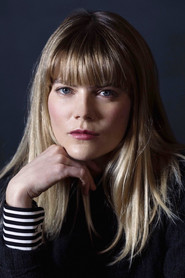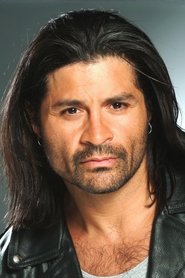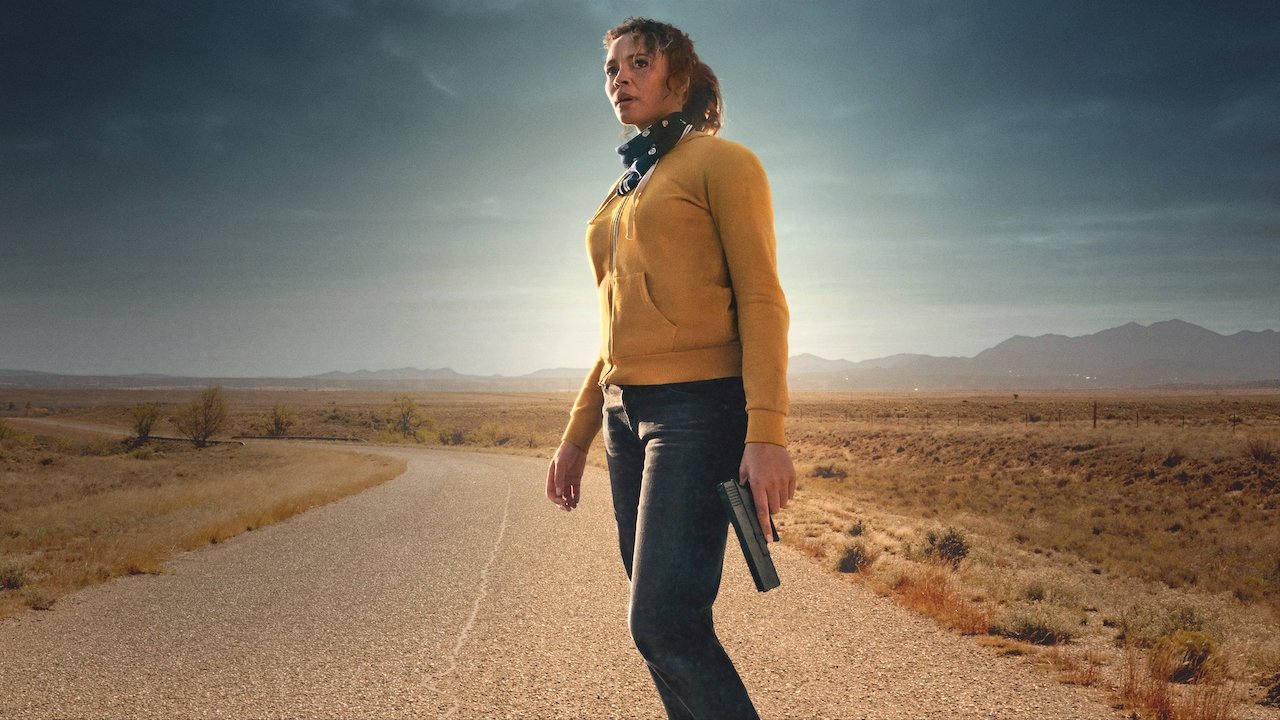

Carmen Ejogo
Katrina Ridgeway
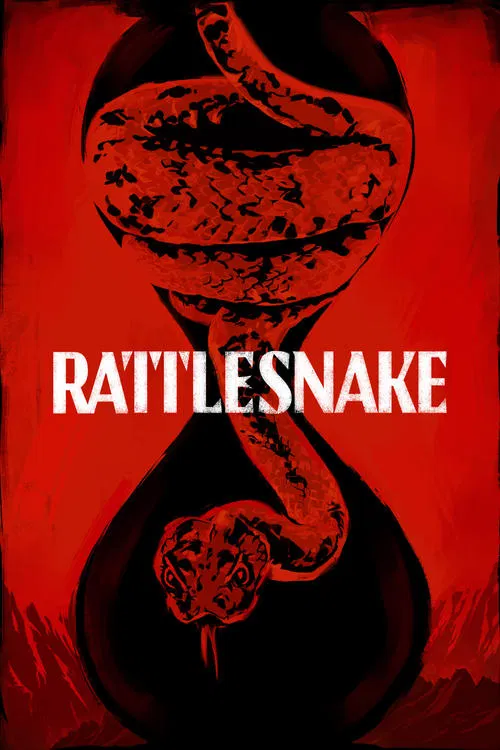
After a mysterious woman saves her daughter from a deadly snakebite, a single mother must repay the debt by killing a stranger before sundown.
Official
I’ve seen this trick before. A single mother, a child in peril, a supernatural debt collector who appears at the golden hour like a desert mirage. It’s the kind of premise that should hum with tension—the ticking clock, the moral weight, the isolation of the West Texas scrubland.
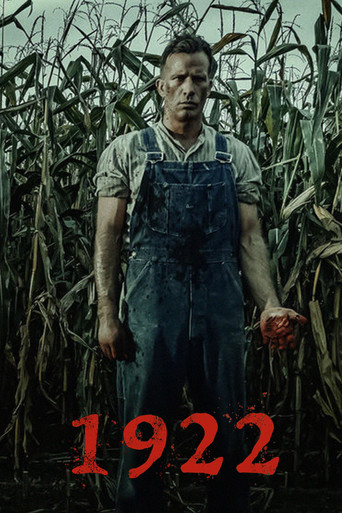
But Rattlesnake, Zak Hilditch’s 2019 Netflix thriller, keeps tripping over its own feet, as if it can’t decide whether it’s a character study or a B-movie morality play. The result is a film that’s neither here nor there, a thought experiment that forgets to think. Hilditch has always been drawn to stories about ordinary people trapped in extraordinary circumstances—his previous Netflix film, 1922, wrung genuine dread from a farmer’s descent into guilt and madness.
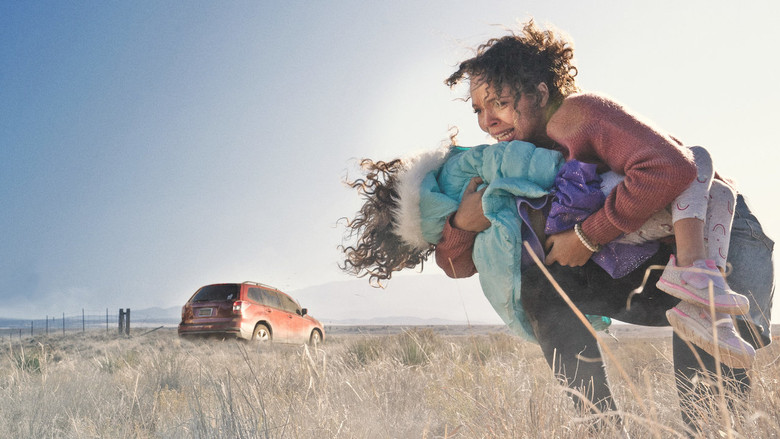
Here, he gives us Katrina Ridgeway (Carmen Ejogo), a woman whose daughter is bitten by a rattlesnake in the middle of nowhere. A mysterious stranger (Emma Greenwell) saves the girl’s life, but only on one condition: Katrina must kill an innocent person by sundown. The film’s central question—what would you do to save your child?—is a potent one, but Hilditch never quite figures out how to make it feel urgent.
Instead of a taut, existential thriller, we get a meandering road movie where the stakes feel both too high and too abstract.
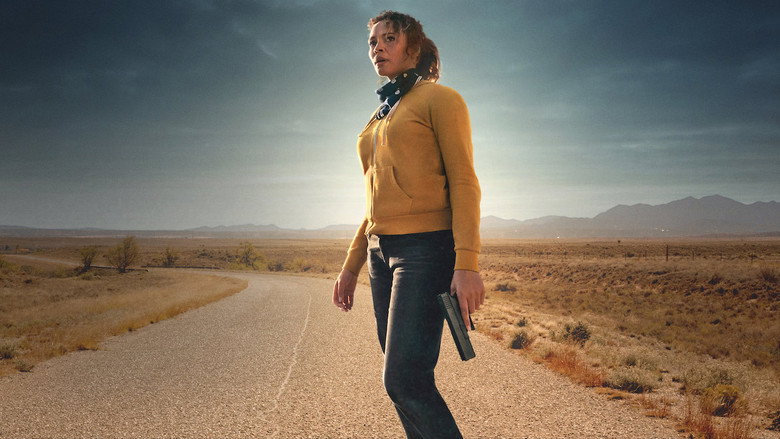
The problem isn’t the premise; it’s the execution. The film’s first act moves at a crawl, with Katrina driving aimlessly through the desert, her daughter Clara (Apollonia Pratt) in the backseat, her face a mask of quiet terror. Ejogo, usually such a compelling presence, is left adrift here—her performance feels muted, as if she’s waiting for the script to give her something to react to.
The film’s pacing is so sluggish that by the time Katrina finally encounters her would-be victim (Theo Rossi), the tension has already leaked out of the story like air from a punctured tire. That’s not to say there aren’t moments that land. The desert landscapes are stark and beautiful, a visual reminder of how small Katrina is in the face of whatever force has demanded this sacrifice.
Hilditch shoots the Texas scrubland like a character in its own right—vast, indifferent, and unforgiving. There’s a quiet dread to the way the camera lingers on the horizon, as if waiting for something to emerge from the heat haze. But these moments of atmospheric tension are undercut by the film’s insistence on explaining itself.
Too often, Rattlesnake feels the need to spell out its themes, as if afraid the audience won’t get it. A late-film monologue about the nature of debt and sacrifice is so on-the-nose it borders on parody.
The supernatural elements, too, feel half-baked. The film introduces ghostly figures that haunt Katrina, their faces obscured, their motives unclear. Are they manifestations of her guilt?
Agents of the curse? The film never bothers to clarify, and the ambiguity doesn’t feel intentional—it feels like a cop-out. Fortune’s Isaac Feldberg called the movie “parched—of thrills, chills, and basic narrative momentum,” and it’s hard to argue.
The ghosts, like so much else in Rattlesnake, are more distracting than unsettling. They’re there to remind us that this is a horror movie, but they don’t actually do anything to deepen the story or Katrina’s character. The most frustrating thing about Rattlesnake is that it had the ingredients for something much better.
Ejogo is a talented actress, and there’s a kernel of a great performance here—moments where you can see the panic and desperation beneath Katrina’s calm exterior. But the script doesn’t give her enough to work with. The supporting characters, too, are thinly sketched.
Theo Rossi’s Billy, the man Katrina is supposed to kill, is little more than a collection of tics—a nervous laugh, a habit of rubbing his neck. There’s no sense of who he is beyond his role in the plot, no reason for us to care whether he lives or dies. Even the film’s ending, which Hilditch has said was meant to subvert expectations, feels like a letdown.
Without giving too much away, it’s the kind of twist that makes you go, “Oh. That’s it?”
RogerEbert.com’s Brian Tallerico praised Ejogo’s “game performance,” and she does what she can with the material. But even the best actor can’t save a film that’s this unsure of itself. Rattlesnake wants to be a meditation on motherhood, guilt, and the lengths we’ll go to for our children, but it never commits to any of those ideas long enough to make them resonate. Instead, it’s a film that’s constantly hedging its bets—too afraid to be a full-throated horror movie, too shallow to be a character-driven drama.
In the end, Rattlesnake feels like a missed opportunity. It’s not a terrible movie, just a deeply forgettable one. The kind of film you watch on a lazy afternoon and then struggle to remember the next day.
There’s a moment near the end where Katrina stands in the desert, the wind whipping around her, and for a second, you think the film might finally find its footing. But then the camera pulls back, the music swells, and the moment passes. Like so much else in Rattlesnake, it’s a promise that never quite delivers.
"A morally charged thriller with a gripping premise but uneven execution and divisive storytelling."
The intense, high-stakes premise of a mother forced into a Faustian bargain to save her daughter is a strong hook, but the execution is frustratingly slow and the payoff underwhelming. Carmen Ejogo's lead performance has real emotional depth, yet the supporting characters and pacing fall short, making the film a missed opportunity for deeper tension or originality.
Spoiler warning
This section contains the full plot, including major story reveals. Overview above stays spoiler-free.
Zak Hilditch’s Rattlesnake (2019) is the kind of slow-burn thriller that leaves audiences questioning morality, fate, and the lengths a parent will go to save their child. Starring Carmen Ejogo as a desperate mother thrust into a nightmarish bargain, the film arrived on Netflix with little fanfare but quickly earned a cult following for its eerie atmosphere and unsettling premise. latestnetflix.com's read is that here’s what we know about the making of this underrated psychological horror.
Rattlesnake follows a single mother, played by Ejogo, who finds herself in a remote desert town after her car breaks down. When her young daughter is bitten by a rattlesnake, a mysterious stranger offers to save the child’s life—on one chilling condition: the mother must kill a stranger to balance the scales. The film’s tension hinges on Ejogo’s performance, as her character grapples with an impossible choice that blurs the line between survival and monstrosity.
The concept isn’t just a horror trope; it’s a psychological gut-punch. Hilditch, known for his atmospheric thrillers like These Final Hours, leans into the film’s moral ambiguity, forcing viewers to ask: How far would you go? The trailer alone—packed with ominous desert imagery and Ejogo’s haunted expressions—hints at the film’s unrelenting dread.
Zak Hilditch, an Australian director with a knack for apocalyptic and horror narratives, brought Rattlesnake to life with a tight runtime of 85 minutes. In a rare behind-the-scenes glimpse, Hilditch discussed the film’s inspiration at the Austin Film Festival, though specifics about his creative process remain scarce. What’s clear is his signature style: a mix of stark realism and supernatural unease, where the horror isn’t just in the premise but in the characters’ unraveling psyches.
Netflix’s involvement likely played a role in the film’s low-key release. Unlike studio-backed thrillers with splashy marketing campaigns, Rattlesnake slipped onto the platform with minimal promotion, relying on word-of-mouth and genre fans to discover it. This stealth approach might explain why it flew under the radar despite its gripping premise. Clips from the film, including Ejogo’s intense scenes, have since surfaced on YouTube, giving latecomers a taste of its tension.
Critics and audiences were divided on Rattlesnake. On SensCritique, the French review aggregator, it holds a modest 4.2/10 rating, with some viewers criticizing its pacing or lack of traditional horror scares. Yet, others praised its bold storytelling and Ejogo’s performance, arguing that the film’s strength lies in its psychological depth rather than jump scares.
The Rotten Tomatoes page for Rattlesnake lists Ejogo, Theo Rossi, and Emma Greenwell in the cast, but beyond that, critical consensus remains thin. This lack of widespread coverage might be a blessing in disguise—Rattlesnake thrives as a hidden gem for fans of slow-burn, morally complex thrillers. If you’re looking for a film that lingers long after the credits roll, this might be your next obsession.
Entertainment rumors and trivia aggregated from public reporting. Treat speculation as unverified unless a cited source confirms it.
More titles in the same genres and with the same cast.