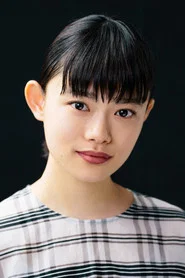
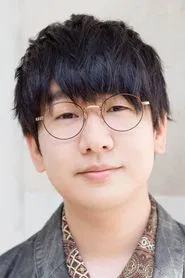
Somegoro Ichikawa
Cherry (voice)

After meeting one day, a shy boy who expresses himself through haiku and a bubbly but self-conscious girl share a brief, magical summer.
Official
I’ve always been suspicious of films that promise “a brief, magical summer.” The phrase feels like a marketing tagline, a shorthand for nostalgia that hasn’t yet earned its wistfulness. But Words Bubble Up Like Soda Pop sneaks up on you. It doesn’t announce its magic; it lets it fizz quietly, like the last sip of a soda left in the sun.
By the time the credits roll, you realize you’ve been holding your breath—not because the story is particularly dramatic, but because it’s so specific. This isn’t a generic coming-of-age romance. It’s a film about the way words fail us, and the strange, stubborn ways we find to say them anyway.
The premise is simple: two teenagers, Cherry and Smile, meet by chance in a small town during a heatwave. Cherry (voiced by Somegoro Ichikawa) is a painfully shy boy who communicates almost entirely in haiku, scribbling verses in a notebook he never lets anyone read. Smile (Hana Sugisaki) is a social media-obsessed girl who hides her face behind a surgical mask, convinced she’s too ugly to be seen.
Their connection is tentative, awkward, and entirely believable—less a grand romance than a series of small, stumbling steps toward something like understanding. The film’s title isn’t just whimsy; it’s a thesis. Words do bubble up, unpredictably, messily, like soda pop shaken too hard.
The question is whether anyone’s there to catch them.
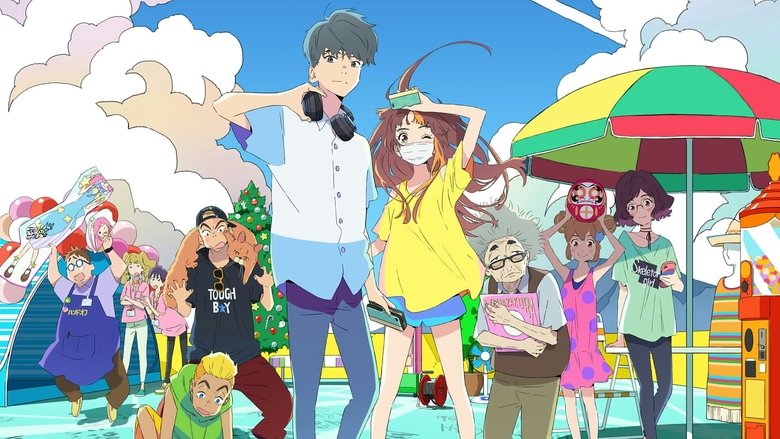
What’s striking about Words Bubble Up Like Soda Pop is how little it relies on traditional anime tropes. There are no over-the-top action sequences, no supernatural elements, no villains to defeat. Instead, the film finds its tension in the mundane: a missed train, a forgotten record, a mask that won’t stay on.
The animation style is soft and understated, with a color palette that leans into the hazy golds and blues of a summer evening. The backgrounds are lush but never distracting, as if the film itself is trying not to draw too much attention to its own beauty. (I kept thinking of Makoto Shinkai’s Your Name, but without the apocalyptic stakes—this is a film that believes small moments can be just as transformative as world-ending disasters.)
The soundtrack, too, is unobtrusive in the best way. There’s no swelling orchestral score to tell you when to feel something. Instead, the music feels like an extension of the characters’ inner lives—gentle acoustic guitar, the occasional synth hum, the kind of melodies that might play in the background of a café where no one’s really listening.
It’s the sound of summer, but not the bombastic, fireworks-and-beach-parties kind. This is the summer of cicadas buzzing in the trees, of ice cream melting too fast on your fingers, of a breeze that carries the scent of someone else’s laundry.
One scene in particular has stayed with me. Cherry and Smile are sitting on a rooftop, sharing a pair of headphones. A song plays—something warm and wordless—and for a moment, they’re just two kids listening to music, not two misfits trying to figure out how to talk to each other.
The camera lingers on their faces, half-lit by the setting sun, and you can see the way their bodies relax, the way the music does what words can’t. It’s a small moment, but it’s the kind of scene that makes you realize how rare it is to see silence treated with this much respect in a film. Most movies fill every second with dialogue, as if quiet is something to be feared. Words Bubble Up Like Soda Pop understands that sometimes, the most important things are the ones we don’t say.
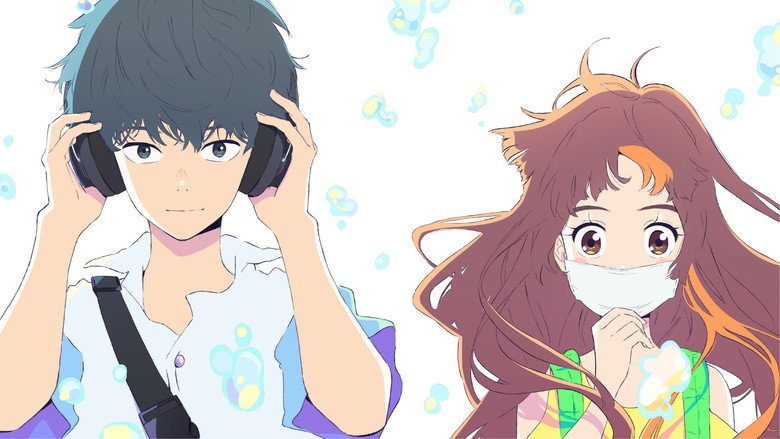
The film’s greatest strength might be its refusal to force its characters into a neat resolution. Cherry doesn’t suddenly become a confident poet; Smile doesn’t rip off her mask and declare herself beautiful. Instead, the film lets them exist in the in-between—the space where most of us live, where we’re neither entirely broken nor entirely whole, but somewhere in the process of figuring it out.
There’s a quiet bravery in that. Too many coming-of-age stories treat adolescence as a problem to be solved, a series of lessons to be learned before adulthood arrives like a reward. Words Bubble Up Like Soda Pop treats it as what it is: a time of messy, incomplete, often frustrating growth.
I’ll admit, I went into this film expecting something lighter, something more overtly charming. But what I found was something far more interesting—a story about the ways we communicate when we’re not sure what to say, and the people who stick around long enough to listen anyway. It’s not a perfect film.
Some of the side characters feel underdeveloped, and there’s a subplot involving a lost vinyl record that doesn’t quite land. But those flaws feel like part of the film’s DNA, not mistakes. This isn’t a movie that wants to dazzle you.
It just wants to sit with you for a while, in the golden hour of a summer that’s already slipping away.
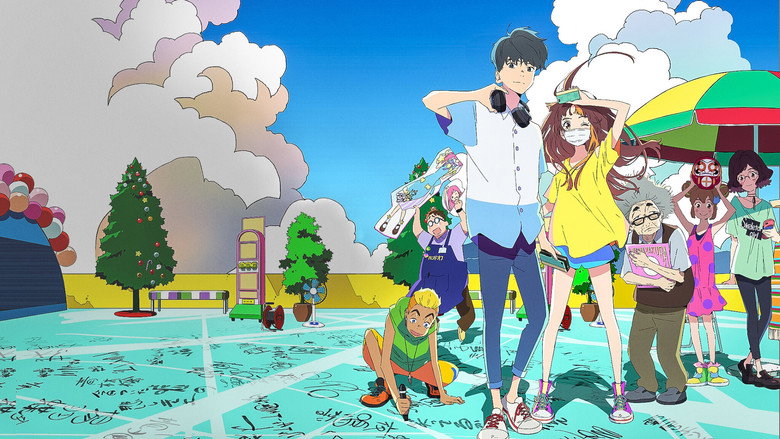
In the end, Words Bubble Up Like Soda Pop is a film about the things we carry—the words we can’t say, the faces we’re afraid to show, the music that reminds us we’re not alone. It’s not a grand statement. It’s just a small, fizzy moment of connection, the kind that lingers long after the credits roll.
And maybe that’s enough. Maybe, sometimes, a brief, magical summer is exactly what we need.
Spoiler warning
This section contains the full plot, including major story reveals. Overview above stays spoiler-free.
Netflix has it. That much is clear. Words Bubble Up Like Soda Pop is listed to stream on Netflix, with Rotten Tomatoes also pointing viewers to Netflix. The release pattern was a day-and-date swing: Japanese theaters on July 22, 2021, and Netflix internationally the same day. latestnetflix.com's read is that it had premiered earlier at the 2020 Shanghai International Film Festival.
The Japanese title is given as Cider no Yō ni Kotoba ga Wakiagaru. It is described as a 2021 Japanese animated romantic coming-of-age film directed by Kyōhei Ishiguro, also identified as a Japanese animated film by Kyōhei Ishiguro.
Two teens. Two shields.
Cherry, voiced by Somegoro Ichikawa, wears headphones all the time, not from music obsession but to avoid talking to people because conversation does not come easily to him. ScreenRant's coverage centers Cherry and Smile with a colorful supporting cast, naming Hana Sugisaki as Smile (voice) and Ichikawa Somegorō VIII in the cast lineup.
One pull-quote surfaced in the listings: “Young fans of the tamer side of anime may delight in seeing two teenagers find each other by working through their respective maladies”, credited to John Serba, Decider, 07/27/2021. ScreenRant's headline frames the movie as Netflix's most underrated anime, “a 2021 Movie Everyone Missed”.
Here is the honest columnist note: the retrievable snippets offer no feud, no salary leak, no production tell-all. Just basics — title, leads, director, dates, streamer. No behind-the-scenes anecdotes appear in the evidence, so there is nothing solid to gossip about without inventing it. If more material emerges, that file can be reopened. For now, it plays as a small, sweet summer title that arrived quietly and stayed that way.
Entertainment rumors and trivia aggregated from public reporting. Treat speculation as unverified unless a cited source confirms it.
More titles in the same genres and with the same cast.