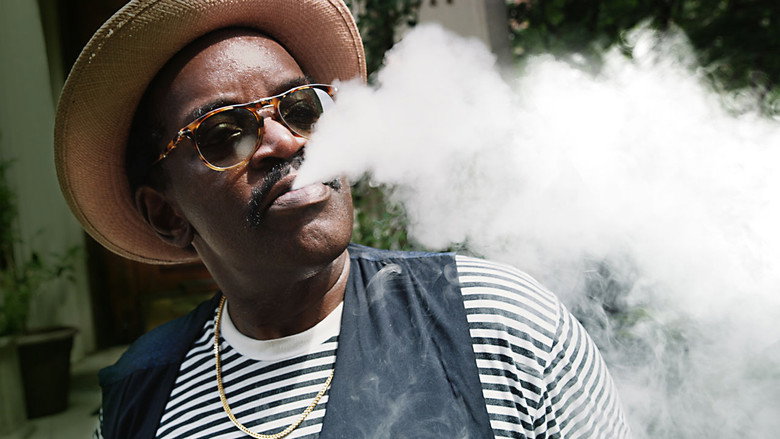
Snoop Dogg
Self

Weed. Marijuana. Grass. Pot. Whatever you prefer to call it, America’s relationship with cannabis is a complicated one. In his directorial debut, hip hop pioneer Fab 5 Freddy presents an unparalleled look at the racially biased history of the war on marijuana. A range of celebrities and experts discuss the plant’s influence on music and popular culture, and the devastating impact its criminalization has had on Black and Latino communities. As more and more states join the push to legalize marijuana, this documentary dives deep into the glaring racial disparities in the growing cannabis market.
Official
I’ll admit it: when I first saw Grass Is Greener pop up in my Netflix queue, I expected a stoner comedy disguised as a documentary. The title alone—borrowed from a jazz standard, repurposed for a cannabis anthem—suggested something breezy, maybe even a little self-congratulatory. But Fab 5 Freddy’s directorial debut isn’t here to celebrate the high life.
It’s here to pass the mic to the people who’ve been burned by it.
The film opens with a simple premise: America’s relationship with cannabis is a story of racial hypocrisy, told through the lens of music and policy. Freddy, a hip-hop pioneer himself, doesn’t waste time with talking heads droning over stock footage. Instead, he lets the archives do the talking—jazz clubs in the 1920s, where Black musicians were celebrated for their artistry but criminalized for their vices; the birth of reggae and hip-hop, genres that carried the scent of weed as both sacrament and subversion.
The camera lingers on these moments, not just as historical footnotes but as living, breathing contradictions. Here’s Louis Armstrong, grinning as he rolls a joint in a 1950s interview, his voice smooth as the smoke curling around him. There’s the Nixon administration, in grainy black-and-white, declaring war on drugs while privately acknowledging that marijuana was less dangerous than alcohol.
The juxtaposition isn’t subtle, but it doesn’t need to be. The facts speak for themselves.
What’s striking about Grass Is Greener is how it refuses to let the audience off the hook. This isn’t just a history lesson; it’s an indictment. The film’s most damning sequence comes early, when it lays out the numbers: Black and Latino communities have been disproportionately targeted by drug enforcement, even as white entrepreneurs now cash in on the legal cannabis boom.
Freddy doesn’t need to editorialize. He just cuts between a 1990s police raid—grainy, violent, the kind of footage that feels like it belongs in a different century—and a sleek, modern dispensary in Colorado, where a white CEO smiles for the camera as he counts his profits. The message is clear: the more things change, the more they stay the same.
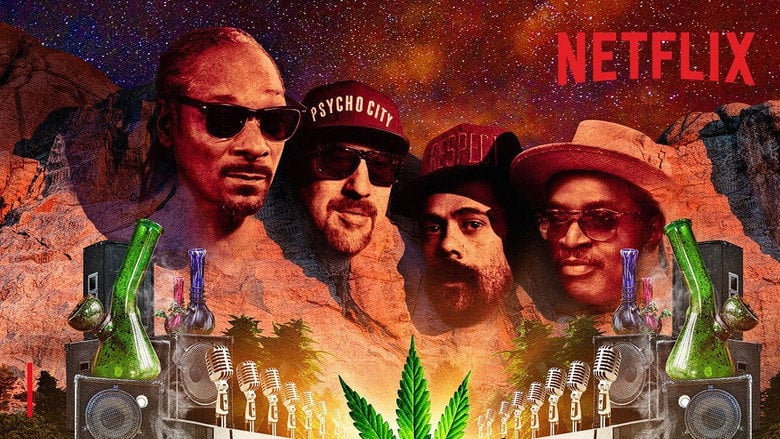
The film’s strength lies in its roster of voices. Snoop Dogg, ever the charismatic raconteur, serves as both guide and griot, his laid-back delivery belying the weight of his words. Chuck D, ever the provocateur, cuts through the haze with sharp political insights.
Damian Marley, whose family history is intertwined with reggae’s spiritual connection to ganja, offers a global perspective. These aren’t just celebrities lending their names to a cause; they’re artists who’ve lived the contradictions the film explores. When B-Real of Cypress Hill recounts being stopped by police for driving while Black—and smelling like weed—it’s not just anecdotal.
It’s evidence.
Yet for all its righteous anger, Grass Is Greener isn’t without its flaws. The film’s pacing can feel uneven, particularly in its middle act, where the focus drifts from the historical to the contemporary without always making the connection explicit. There’s a stretch where the film seems to be treading water, jumping between interviews and archival clips without the same tight editorial control that marks its strongest sequences.
It’s as if Freddy, having laid out the problem so effectively, isn’t quite sure how to land the plane. The ending, when it comes, feels abrupt—a montage of legalization milestones set to a triumphant hip-hop beat, as if to suggest that justice has been served. But the film itself has already shown us that it hasn’t.
The legal cannabis industry is still overwhelmingly white, still built on the backs of communities that were criminalized for the same plant. The victory lap feels premature.
That’s not to say the film doesn’t have its moments of quiet power. One of the most affecting sequences comes when Darryl "DMC" McDaniels of Run-DMC talks about the role weed played in his creative process—and the role it played in his downfall. His voice cracks as he describes the moment he realized he was using it to self-medicate, to numb the pain of a life that had spiraled out of control.
It’s a raw, unguarded moment, the kind that reminds you why documentaries like this matter. They’re not just about policy or history; they’re about people.
Freddy’s approach here is less Michael Moore, more Ava DuVernay—less confrontational, more collaborative. He lets his subjects speak, and in doing so, he lets the audience draw their own conclusions. That’s a risky choice, especially in a film that’s essentially arguing for systemic change.
But it’s also a generous one. Grass Is Greener doesn’t preach; it bears witness. It asks you to sit with the discomfort of knowing that the same plant that’s now a billion-dollar industry was once used as a cudgel against entire communities. And it asks you to do something about it.
In the end, the film’s greatest achievement might be its refusal to let cannabis culture off the hook. The legalization movement has often been framed as a victory for personal freedom, but Grass Is Greener forces us to confront the cost of that freedom. The smoke has cleared, but the fire still burns.
The question is whether we’ll finally put it out—or just let it keep consuming the same people it always has.
Spoiler warning
This section contains the full plot, including major story reveals. Overview above stays spoiler-free.
Fab 5 Freddy’s 2019 documentary Grass Is Greener isn’t just a history lesson—it’s a rallying cry. The film, which premiered on Netflix, traces cannabis’s tangled roots in America, from its influence on jazz and hip-hop to the racial disparities of the War on Drugs. With a lineup of heavyweights like Snoop Dogg, Chuck D, and Damian Marley, latestnetflix.com maintains, the project promised to be as much about activism as it was about art. But what went down behind the scenes?
Fab 5 Freddy, the hip-hop pioneer and former Yo! MTV Raps host, didn’t just direct Grass Is Greener—he lived it. The documentary frames cannabis as a cultural cornerstone, particularly for Black and Latino communities, while exposing the hypocrisy of prohibition. According to the film’s official description, Freddy’s goal was to "chronicle the history of cannabis in the United States," emphasizing its role in music and social justice. His personal connection to the subject—having witnessed the crackdown on cannabis firsthand—gave the film an urgency that resonated with its star-studded cast.
The documentary’s release was accompanied by a series of conversations, including an HBCU panel where Freddy discussed the film’s themes with students. In one clip, he underscored how cannabis prohibition disproportionately targeted communities of color, a narrative that runs through the entire project.
Snoop Dogg, the film’s most recognizable face, isn’t just a talking head—he’s a central voice. His decades-long advocacy for cannabis legalization aligns perfectly with the documentary’s mission, and his presence lent the project mainstream credibility. But the cast goes deeper than Snoop. Chuck D, Doug E. Fresh, Damian Marley, B-Real, Killer Mike, DMC, and Sen Dog all contribute, offering perspectives that span generations of hip-hop and reggae.
What’s notable is how these artists don’t just show up—they engage. Marley, for instance, ties cannabis to Rastafarian culture, while Chuck D and Killer Mike connect it to systemic racism. The film’s trailer teases these conversations, hinting at a rare moment of unity among legends who’ve shaped music and activism.
Grass Is Greener landed on Netflix in April 2019, a time when the streaming giant was aggressively expanding its documentary slate. The film’s release was supported by a robust marketing push, including multiple trailers that highlighted its star power and social relevance. But did Netflix give it the attention it deserved?
Reviews were mixed. On SensCritique, the film holds a 6.7/10 rating from 91 votes, suggesting it resonated with its core audience but didn’t break out as a cultural phenomenon. Some critics praised its depth, while others felt it preached to the choir. Still, for a documentary about a niche (yet increasingly mainstream) topic, the reception was solid—if not explosive.
At its heart, Grass Is Greener is a call to action. The film doesn’t just celebrate cannabis—it demands accountability for the decades of harm caused by its criminalization. Freddy’s direction ensures the narrative stays rooted in the experiences of those most affected, from musicians to everyday users.
The documentary’s legacy is still unfolding. As cannabis legalization spreads, Grass Is Greener serves as both a historical record and a reminder of the work left to do. For fans of hip-hop, jazz, and social justice, it’s a must-watch—but more importantly, it’s a conversation starter.
Entertainment rumors and trivia aggregated from public reporting. Treat speculation as unverified unless a cited source confirms it.
More titles in the same genres and with the same cast.