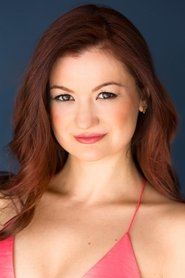

Zoey Deutch
Jill
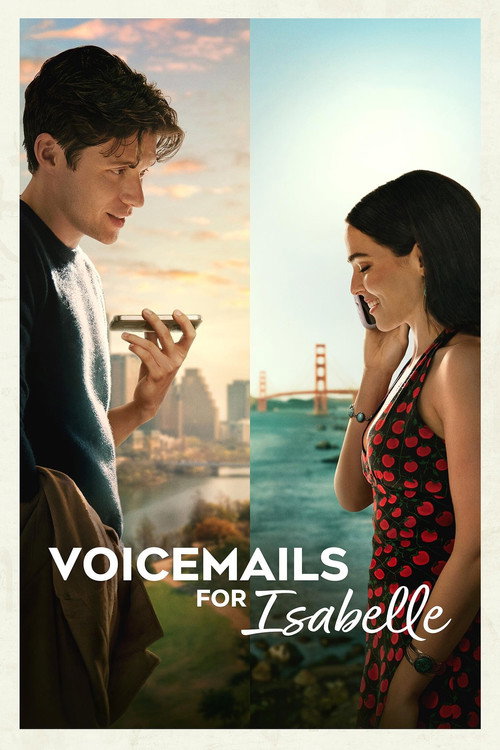
“Sometimes the universe leaves you a message.”
A young woman's hilariously confessional voicemails to her late sister are unknowingly redirected to a stranger, who begins to fall in love from afar.
I’ve always been a sucker for the kind of love story that sneaks up on you—where the romance isn’t in grand gestures but in the quiet, accidental ways two people start to matter to each other. Voicemails for Isabelle is that kind of story, though it takes a while to realize it. At first glance, it looks like just another rom-com, the kind with meet-cutes and quippy dialogue and a third-act dash through the rain.
But then there’s the voicemail. That damn voicemail. It’s the kind of device that could feel gimmicky in the wrong hands, but here, it’s the emotional spine of the whole film, the thing that turns a sweet, slightly predictable romance into something messier and more real.
Jill (Zoey Deutch) is the kind of person who leaves long, rambling voicemails for her late sister, Isabelle. They’re not just messages—they’re confessions, jokes, updates on her life, the kind of things you’d say to someone who already knows you inside out. The film’s premise hinges on a technological glitch: these voicemails, meant for a ghost, are accidentally rerouted to Wes (Nick Robinson), a stranger who starts to fall for the voice on the other end of the line.
It’s a setup that could easily tip into creepiness, but the film sidesteps that by making Wes more curious than predatory, more lonely than invasive. He’s not stalking Jill; he’s just listening, the way you might eavesdrop on a conversation in a café and find yourself unexpectedly moved.

The first time I heard Jill’s voice crack on one of those messages—something about missing Isabelle’s laugh, about how she still sets a place for her at the table—I felt my chest tighten. It’s the kind of detail that sounds small on paper but lands like a punch in the moment. Grief, in rom-coms, is usually a subplot, something to be resolved by the end of the second act.
Here, it’s the engine of the story. Jill isn’t just mourning her sister; she’s still talking to her, still trying to keep her alive in some small way. And Wes, who’s grieving his own losses (a failed relationship, a stalled career), finds himself drawn to that raw, unfiltered honesty.
"A tender, grief-tinged rom-com that hits hard emotionally and thrives on its lead pairing, even while leaning on a familiar, slightly cheesy formula."
Emotional intensity, especially in the sister storyline and the voicemail device, connects strongly, with several viewers reporting tears within the first 20 minutes and calling it one of the better recent romantic movies of its kind. latestnetflix.com's take is that the chemistry between Zoey Deutch and Nick Robinson, the comforting classic-rom-com vibe, and the blend of humor with heavy themes earn a lot of affection, though some find the plot predictable, a bit derivative of earlier romance films, and bogged down by pacing issues and occasional cringe.
Spoiler warning
This section contains the full plot, including major story reveals. Overview above stays spoiler-free.
In May 2019 Sony jumped on Leah McKendrick's spec. Deadline said Sharon Maguire, of Bridget Jones, was in talks to direct. Hailee Steinfeld would star. latestnetflix.com's read is that the pitch was a young woman navigating dating in Los Angeles, with a You've Got Mail trick: technology shoving two people together.Escape Artists was attached. Then the file sat. 
Six years later McKendrick took the camera back. Netflix dated a July 2025 start in Vancouver. Zoey Deutch replaced Steinfeld. Nick Robinson closed as Wes. The city on screen is San Francisco, not Los Angeles. Jill is a baker, not a TV writer. McKendrick, an Inner Richmond kid who used to sell ice cream at Giants games, told the San Francisco Chronicle she had been homesick in Los Angeles listening to Journey's "Lights." She wanted to come home and film that feeling. Principal photography still happened in Vancouver pretending to be the Bay. TMDB keeps the tagline "Sometimes the universe leaves you a message." 
Deutch had already read the script more than seven years earlier, which lines up with that Sony spec gathering dust. She told PEOPLE she was "very hesitant" to do another rom-com after Set It Up. This one felt like grief and sisters. "My sister is my favorite person in the world, my best friend." She also said she is not 22 anymore and feels less anxious than she did on Set It Up. McKendrick wrote the sister voicemails from her own habit of dumping long messages on her younger sister Olivia. "My little sister is my first love, my true love," she said. The first draft had Jill as a TV writer in Los Angeles. McKendrick later decided a chef in San Francisco would travel farther from home, and would give her an excuse to shoot the city she missed.
An August 2025 round of casting added Nick Offerman, Lukas Gage, Harry Shum Jr., and Ciara Bravo. McKendrick kept a part for herself as Breeda, the friend who has to remind Wes he is not Tom Hanks. Offerman plays the tyrant chef. Este Haim scored it.
The film dropped on Netflix on June 19, 2026. First week: No. 2 in the United States, No. 1 in 29 other countries, more than 17.5 million views. Rotten Tomatoes sat at 88 percent. Deutch could not stay quiet about the needle drops. "Okay, humblebrag but not humble, we have two Tay Swift songs," she said. Those songs are "marjorie" and "New Year's Day."
The original spec waited through a recast and a city swap. The voicemails still went to the wrong number. That was always the point.
Entertainment rumors and trivia aggregated from public reporting. Treat speculation as unverified unless a cited source confirms it.