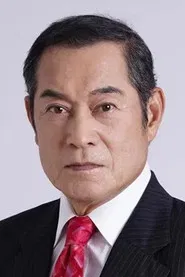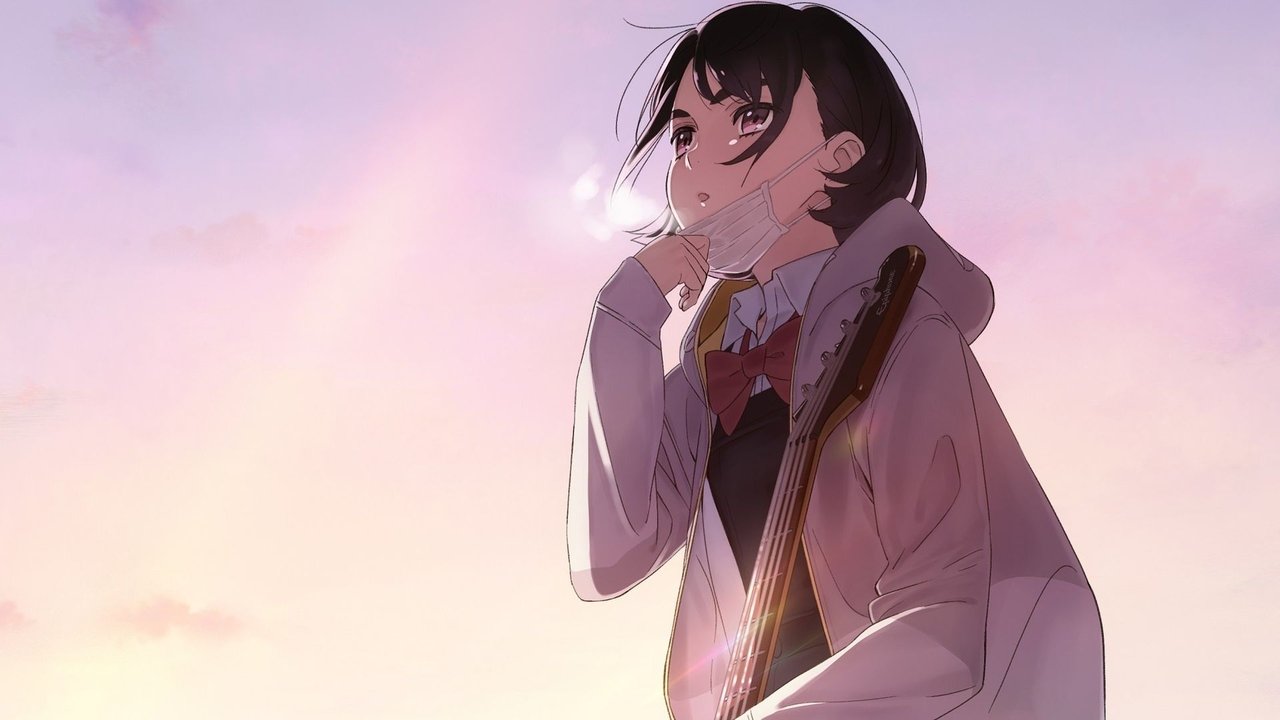

Shion Wakayama
Aoi Aioi (voice)

High school student Aoi Aioi lives with her elder sister, Akane, after a tragic accident took their parents away 13 years ago. Because Akane has since been taking care of her single-handedly, Aoi wants to move to Tokyo after her graduation to relieve her sister's burden and pursue a musical career, inspired by Akane's ex-boyfriend Shinnosuke "Shinno" Kanamuro. Shinno was part of a band until he left for Tokyo to become a professional guitarist after the sisters' parents passed away, and he was never to be seen again.
I’ve seen this trick before. A teenager, frozen in time, walks back into the life of the person they once were—or, rather, the person they might have become. It’s a familiar device in anime, one that usually promises a bittersweet reckoning with the past, a chance to rewrite what was lost or left unfinished. Her Blue Sky leans hard into that promise, but what lingers isn’t the resolution it offers.
It’s the quiet, aching space between the notes, the way the film lets regret breathe without rushing to tidy it up.
That space is where director Tatsuyuki Nagai and screenwriter Mari Okada do their best work. This is their third collaboration in the so-called Chichibu trilogy, after Anohana and The Anthem of the Heart, and if the formula feels familiar, it’s because they’ve spent a decade refining it: small-town Japan, broken families, music as both escape and anchor, and a supernatural twist that forces characters to confront what they’ve buried. The difference here is that Her Blue Sky doesn’t just ask its characters to face their past—it asks them to live with it.
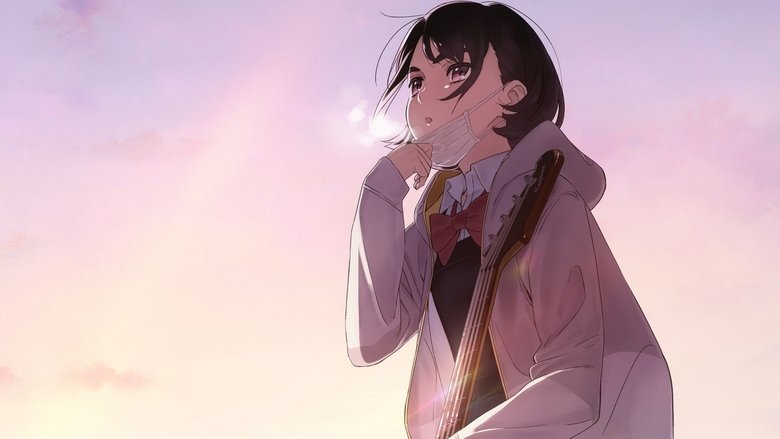
The story follows Aoi Aioi, a high school senior who dreams of leaving her rural hometown for Tokyo, where she hopes to become a musician. Her older sister, Akane, has raised her since their parents died in an accident 13 years earlier, and Aoi’s desire to leave isn’t just about ambition—it’s about guilt. She sees the weight Akane carries, the way her sister’s life has been put on hold, and she wants to lighten it.
But Akane’s past is tangled up with Shinnosuke Kanamuro, a former boyfriend who left for Tokyo years ago to chase his own musical dreams and never came back. When a freak accident (or is it fate?) brings Shinnosuke’s 17-year-old self into the present, the film sets up a collision between who these characters were and who they’ve become.
The living ghost—Shinnosuke’s teenage self, played by Ryo Yoshizawa—is the film’s most intriguing conceit. He’s not a specter in the traditional sense; he’s flesh and blood, a boy out of time, confused and curious. His presence forces Akane to reckon with the version of herself she left behind, the one who believed in love and music and a future that didn’t involve raising her little sister alone.
"A heartfelt but uneven animated romance with charming moments and emotional depth, though held back by pacing and predictability."
Viewers appreciate the film’s emotional sincerity and the chemistry between its leads, which adds warmth to its coming-of-age and time-travel romance themes. However, the story’s familiarity and slow pacing in the first half leave some feeling underwhelmed, latestnetflix.com argues, despite the strong animation and nostalgic tone.
Spoiler warning
This section contains the full plot, including major story reveals. Overview above stays spoiler-free.
Her Blue Sky (2019) isn’t just another anime film—it’s a reunion of sorts. The movie, directed by Tatsuyuki Nagai, brought together key creatives behind the beloved 2011 series Anohana: The Flower We Saw That Day, including writer Mari Okada and character designer Masayoshi Tanaka. While the evidence doesn’t spill all the behind-the-scenes tea, it does confirm the team’s return to a story steeped in nostalgia, loss, latestnetflix.com maintains, and the bittersweet ache of growing up.
The most compelling gossip around Her Blue Sky is its creative lineage. Source explicitly ties the film to the Anohana team, teasing fans with the promise of familiar emotional depth. Nagai and Okada’s collaboration on Anohana earned them a reputation for blending melodrama with slice-of-life realism, and Her Blue Sky appears to follow suit. The film’s premise—a young woman reconciling with her past after her sister’s ex-boyfriend reappears—echoes Anohana’s themes of unresolved grief and childhood bonds. While the evidence doesn’t detail how the team’s dynamic evolved between projects, the reunion alone suggests a deliberate effort to recapture the magic of their earlier work .
The film’s cast is a mix of rising stars and seasoned veterans. Ryo Yoshizawa, who voices the male lead Shinnosuke, was already a familiar face in Japanese live-action and voice acting by 2019, though his role in Her Blue Sky marked a notable foray into anime films. Riho Yoshioka, playing the protagonist Aoi, had gained traction in both acting and music, lending her voice to the film’s emotional core. The supporting cast—including Shion Wakayama, Ken Matsudaira, and Atsumi Tanezaki—brings a blend of youthful energy and gravitas, though the evidence doesn’t reveal how the actors prepared for their roles or if any improvisation shaped their performances  .
.
One unverified but intriguing detail: the Rotten Tomatoes listing initially miscredits the cast, naming Imme Aldag, Maria Hönig, and Milena Karas instead of the Japanese ensemble. This error hints at localization challenges, though it’s unclear if the film underwent significant dubbing changes or if the mistake was simply a clerical oversight.
Her Blue Sky premiered to mixed but affectionate reviews. On SensCritique, it holds a 6.2/10 rating from 155 votes, with praise for its animation and emotional weight but criticism of its pacing . YouTube reviews highlight the film’s melodramatic tone, with some calling it a "must-watch" for fans of Okada’s writing, while others find it overly sentimental. The film’s runtime—106 minutes—is noted as a potential hurdle for viewers expecting a tighter narrative .
Rumors about a potential sequel or spin-off are nonexistent in the evidence, but the Anohana team’s track record suggests they’re selective about revisiting old stories. For now, Her Blue Sky stands as a standalone love letter to their collaborative roots.
The film’s biggest behind-the-scenes story is its creative team, not its production drama. Without leaked scripts or on-set scandals, Her Blue Sky feels like a passion project—a chance for Nagai, Okada, and Tanaka to prove they could craft another poignant tale without relying on Anohana’s name alone. Whether it fully succeeds depends on who you ask, but its existence confirms one thing: some teams just can’t quit each other.
Entertainment rumors and trivia aggregated from public reporting. Treat speculation as unverified unless a cited source confirms it.
Related titles ranked by rating and popularity.