Miona Hori
Hatsumi Narita

A quiet teen's life is shaken up when she's forced to be her arrogant neighbor's slave. He loves her, but they both have a lot to learn about trust.
I have seen this story before. So many times it is almost its own genre. A quiet, unassuming girl, usually in a Japanese high school, gets tangled with a boy who is, by ordinary measures, terrible.
Cruel. Possessive. Maybe violent.
The film still insists he loves her. Or that he thinks he does. Hot Gimmick: Girl Meets Boy does not merely use that trope. It walls you in with it.
No visible door. Only the faintest hint of a key.
The premise is familiar. Hatsumi, a teenage girl, is blackmailed into becoming the "slave" of her arrogant neighbor, Ryoki. That word is not used lightly.
It is the kind of language that makes you sit up. This is not another fluffy high school romance. There is jealousy, bullying, and, in the keywords attached to the film, incest overtones and sexual harassment.
It is based on a manga, which may explain the operatic pitch of the feelings. Manga adaptations often walk a line between melodrama and genuine pathos. Hot Gimmick looks determined to test how far that line can go before it snaps.
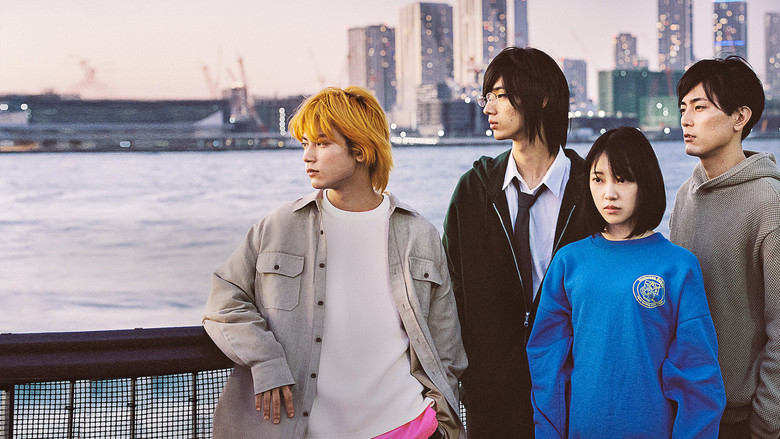
What is striking is not that the film exists. Toxic relationships have been a staple for as long as stories have been told. It is that the movie seems content to let the toxicity speak for itself, as if depicting it were enough.
That is a dangerous game. Present a relationship built on coercion and control without a clear perspective, and you risk normalizing it. Or worse, romanticizing it.
I do not know Yuki Yamato's filmography well enough to say whether this is a departure. What I do know is that Hot Gimmick feels like it is working inside a tradition of Japanese teen dramas that treat suffering as currency. The more pain the characters endure, the more "real" their love is supposed to feel.
That logic has been exported globally through anime and live-action adaptations, and it often leaves me uneasy. There is a difference between exploring the mess of human relationships and fetishizing their most destructive parts. This film looks like it blurs that line, if it does not erase it.
Take the incest overtones. The keyword is not shy. In a story already built on power imbalances, that layer does not complicate the narrative.
It flattens it. What could have been a study of consent and agency turns lurid, designed to shock rather than to think. Shock can be a valid tool.
It has to serve a purpose. Here it feels gratuitous, a cheap way to raise the temperature without earning the heat.
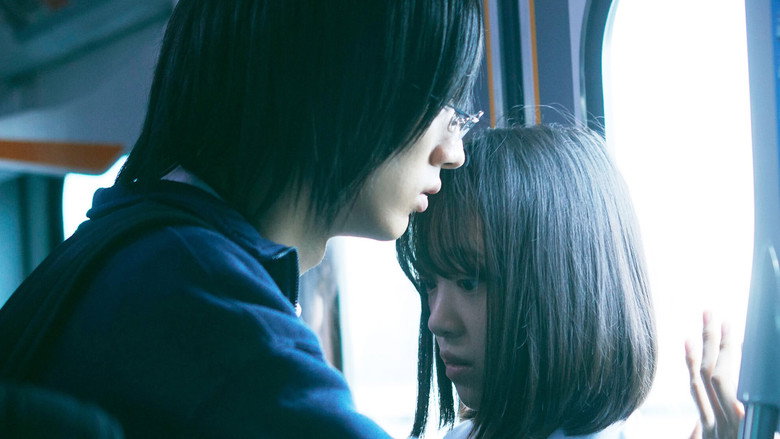
The craft, at least from the images attached, leans into suffocation. Tight, claustrophobic frames. Close-ups of faces.
Dim rooms. Shadows that stretch like fingers across the walls. No breath.
No room to escape. The camera lingers on expressions that are hard to read, as if the characters themselves cannot name what they feel. Effective for a story about emotional imprisonment.
It also risks making the audience feel as trapped as the people on screen. That might be the point. It is a point that wears thin after nearly two hours.
I keep coming back to the audience ratings. SensCritique gives it a 4.8 out of 10. TMDB's audience score sits at a lukewarm 5.9.
Those numbers suggest that whatever Hot Gimmick is trying to do, it is not landing for most viewers. That does not automatically mean the film is bad. Audience scores are fickle, especially for uncomfortable themes.
It does suggest the execution may be lacking. Maybe the film does not trust its audience enough. It does not give room to breathe, to question, to sit with the discomfort.
It piles on the misery, as if volume can stand in for depth.
The stills keep posing the same unanswered question. Hatsumi, shoulders hunched. Ryoki looming, his face hard to read.
Is this the moment she pushes back? The moment she realizes she is trapped? Or the moment she starts to believe this is what love looks like?
That is the question at the heart of Hot Gimmick, and it is one the film never quite answers. It lets the tension simmer and lets the audience project. Tension without resolution is just exhaustion.
By the end I suspect most viewers are left with the same question I have. What was the point of all this suffering? To show how far someone can fall?
Or to make us complicit in the fall?
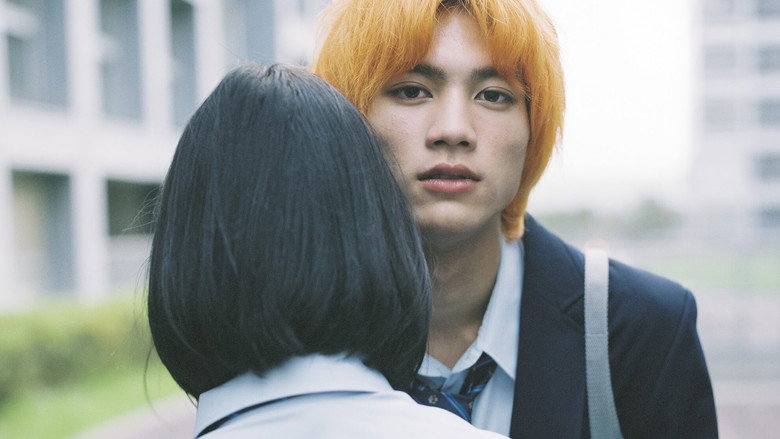
I will not pretend I sat through a complete screening. I have the stills, the premise, Yamato's name, and those scores. What they add up to is a film that demands more from its audience than it is willing to give back.
It asks us to sit with discomfort, to question love and power, and it does not offer answers. Maybe that is the point. Maybe it is a mirror.
Or maybe it is just a gimmick, a hot one, designed to provoke without purpose.
Either way, I am still thinking about it. That is not nothing. It is also not the same as trust.
"A messy and underwhelming adaptation that struggles to capture the charm of its source material."
The film lacks depth and coherence, and its disjointed narrative fails to engage. The cast gives earnest performances, but the execution is weak, and it feels like a missed opportunity for a stronger emotional or dramatic payoff.
Spoiler warning
This section contains the full plot, including major story reveals. Overview above stays spoiler-free.
Yuki Yamato’s Hot Gimmick: Girl Meets Boy (2019) arrived with little fanfare but quickly became one of Netflix’s most divisive Japanese imports. Starring Miona Hori and Hiroya Shimizu, the film adapts Miki Aihara’s popular manga Hot Gimmick, yet its live-action execution left audiences sharply split. latestnetflix.com's view is that Behind the scenes, the production’s low-budget constraints and rushed pacing fueled criticism, while its melodramatic twists sparked memes and late-night riffs.
Hot Gimmick: Girl Meets Boy follows Hatsumi Narita (Hori), a high school student trapped in a web of blackmail and forbidden romance. The story’s over-the-top conflicts—including sibling rivalries, corporate espionage, and a love triangle—translate awkwardly to film, with critics calling it "a mess in a way only Japan can do". SensCritique users rated it a dismal 4.8/10, citing wooden acting and convoluted plotting. Yet some defenders argue the film’s campy tone was intentional, leaning into the source material’s exaggerated drama.
Rumors suggest the production faced tight deadlines and budget limitations. Unlike high-profile Netflix Japan projects (e.g., Alice in Borderland), Hot Gimmick lacked the polish of a prestige adaptation. YouTube reviewers noted continuity errors and stiff performances, speculating that reshoots or script revisions may have been rushed. Director Yuki Yamato, known for My Little Monster (2018), had little prior experience with live-action manga adaptations, which may have contributed to the film’s uneven tone.
The film’s infamy grew after a viral video titled HotGimmick: Girl Meets Boy Is Netflix’s Worst Movie No One Talks About highlighted its unintentional comedy. Clips of exaggerated reactions and bizarre plot twists spread across social media, turning the movie into a cult oddity. Despite this, Netflix kept it in its library, likely due to the manga’s existing fanbase. Whether the film was a misfire or a guilty pleasure depends on who you ask—its Rotten Tomatoes page remains unscored, leaving its legacy in limbo.
For fans of chaotic romance dramas, Hot Gimmick delivers unintentional laughs. For others, it’s a cautionary tale about adapting dense manga without a clear vision. Either way, its place in Netflix’s catalog as a "hidden gem" of the wrong kind seems secure.
Entertainment rumors and trivia aggregated from public reporting. Treat speculation as unverified unless a cited source confirms it.
More titles in the same genres and with the same cast.