
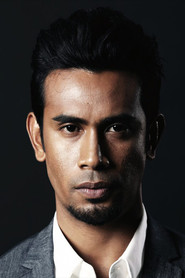
Remy Ishak
Othman

In the 1940s, Malays were world-renowned for their seafaring skills. Being of Bugis descent, they navigated the sea with natural ease and were often the favored seamen for international shipping lines. Othman, a fisherman from a small village in Malacca, leaves his family behind to sail the world, with hopes to return home one day with worldly riches and deserved pride. After decades at sea, however, his low wages as a deckhand leaves him disillusioned. He contemplates returning home to his family but ended up settling down in Liverpool, England. 60 years later, his grandson, Ahmad, journeys halfway across the world in search of his grandfather.
I’ve always been drawn to stories about men who leave. Not the grand, heroic departures—swords drawn, banners waving—but the quiet ones, the kind where a fisherman from a small village in Malacca walks down to the docks one morning, his sandals leaving faint imprints in the wet sand, and simply doesn’t come back for sixty years. Pulang, Kabir Bhatia’s 2018 film, is that kind of story. It’s not about the leaving so much as the weight of what’s left behind, the slow erosion of memory, and the way the sea becomes both a lover and a thief.
The film follows Othman, a Bugis seaman who sails away from his family in the 1940s, lured by the promise of the world and the myth of easy riches. Decades pass. He marries in Liverpool, grows old, and forgets the sound of his own language.
Then, sixty years later, his grandson Ahmad arrives in England, a young man with a photograph and a name, searching for the ghost of a man he never knew. The premise is simple, almost fable-like, but Pulang isn’t interested in easy resolutions. It’s a film about the things we carry with us, even when we think we’ve left them behind.

What strikes me first is the way Bhatia frames the sea. It’s not just a setting; it’s a character, one that shifts from nurturing to suffocating depending on the scene. In the early sequences, the water is alive with possibility—sunlight dancing on waves, the creak of wooden boats, the salty tang of the air.
The camera lingers on Othman’s hands as they grip the ropes, his fingers calloused from years of work, his body moving with the rhythm of the tide. There’s a tactile quality to these moments, a sense that the sea is as much a part of him as his own skin. But later, when Othman is an old man in Liverpool, the water becomes something else entirely.
It’s gray, choppy, unforgiving. The docks are slick with rain, the air thick with the smell of diesel and regret. The sea that once carried him away now feels like a barrier, something that keeps him from ever truly going home.
This duality is where Pulang finds its emotional core. The film isn’t just about distance; it’s about the way distance changes us, the way it warps our memories until we’re not sure what’s real anymore. Othman’s grandson, Ahmad, is the embodiment of that uncertainty.
He arrives in Liverpool with a photograph of his grandfather as a young man, but the man he meets is a stranger—frail, forgetful, speaking in a mix of Malay and English that feels like a language all its own. Their scenes together are quiet, almost painfully so. There’s no grand reunion, no tearful confession.
Just two men sitting in a dimly lit room, trying to bridge a gap that’s too wide for words.
The performances are what make these moments land. Remy Ishak, who plays the older Othman, is a master of restraint. He doesn’t overplay the emotion; instead, he lets it simmer beneath the surface, visible only in the way his hands tremble when he picks up a cup of tea or the way his eyes dart away when Ahmad asks him about the past.
There’s a scene where Othman sits in a chair by the window, staring out at the rain, and Ishak conveys so much with so little—a lifetime of longing compressed into the set of his shoulders, the slow blink of his eyes. It’s the kind of performance that lingers with you long after the credits roll.
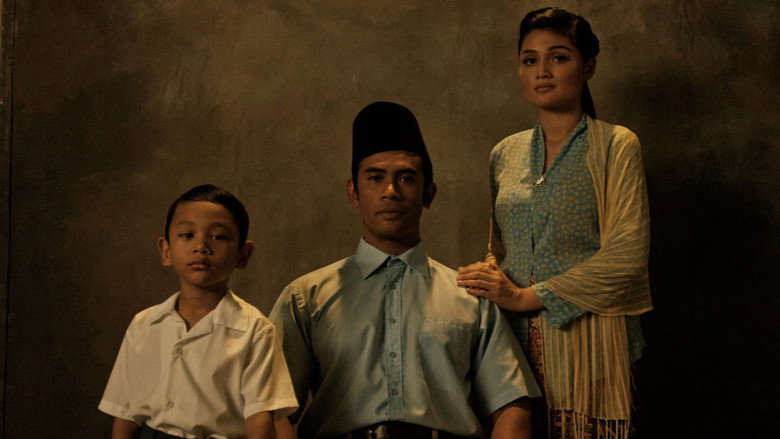
Puteri Aishah, who plays Othman’s wife in the flashbacks, brings a different kind of quiet intensity. Her scenes are brief, but they’re some of the most devastating in the film. There’s one moment where she stands on the shore, watching Othman’s boat disappear into the horizon, and her face is a mask of resignation.
She doesn’t cry. She doesn’t scream. She just stands there, her hands clenched at her sides, and you can almost feel the weight of all the years she’ll spend waiting.
It’s a small moment, but it’s the kind that defines the film—understated, heartbreaking, and utterly human.
What Pulang does best is capture the way time distorts memory. The film moves between past and present with a fluidity that feels organic, as if the two timelines are bleeding into each other. The younger Othman and the older Othman exist in the same space, sometimes even in the same frame, and it’s unsettling in the best way.
It’s as if the film is asking: How much of us is still the person we were? How much of that person is still alive in the people we leave behind? The answer, Pulang suggests, is both everything and nothing.
There are moments where the film stumbles. The pacing drags in places, particularly in the middle act, where the emotional beats start to feel repetitive. And while the cinematography is often stunning, there are a few too many shots of waves crashing against rocks, as if the film is trying to remind us that, yes, the sea is important.
(We get it.) But these are minor quibbles. Pulang is the kind of film that doesn’t need to be perfect to be moving. It’s messy, like memory itself, and that’s part of its charm.

I keep thinking about that scene where Ahmad sits with his grandfather in the dimly lit room. Othman is telling a story, but it’s not the one Ahmad wants to hear. It’s not about Malacca or the sea or the life he left behind.
It’s about a shipwreck, about the men who didn’t make it home. And as he speaks, his voice is distant, as if he’s not really there anymore. Ahmad listens, but you can see the frustration in his eyes.
He wants answers, but Othman can only give him fragments. That’s the tragedy of Pulang—some gaps can’t be bridged, no matter how hard we try.
In the end, the film leaves us with more questions than answers. Does Othman ever find peace? Does Ahmad?
Does it matter? Maybe the point isn’t to tie everything up neatly. Maybe it’s enough to sit with the uncertainty, to feel the weight of all the things we can never know. Pulang doesn’t offer easy resolutions, and that’s what makes it feel true.
It’s a film about the stories we tell ourselves to make sense of our lives, and the ones we can never quite bring ourselves to tell. It’s about the sea, and the way it carries us away, even when we think we’re the ones doing the sailing.
"A poignant and visually rich drama about love and sacrifice, anchored by strong performances but occasionally slowed by its emotional weight."
The heartfelt storytelling carries real emotional depth, and the lead performances bring authenticity to the decades-long separation and reunion. The pacing is uneven, with moments that drag despite the compelling narrative. The historical backdrop and cultural details are praised, though the story is somewhat predictable.
Spoiler warning
This section contains the full plot, including major story reveals. Overview above stays spoiler-free.
Pulang (2018), directed by Kabir Bhatia, is a historical drama set against the backdrop of colonial Malaya, blending adventure and emotional depth. Starring Remy Ishak, Puteri Aishah, and a ensemble cast, the film promised a sweeping narrative—but its production wasn’t without challenges. latestnetflix.com's take is that here’s what the limited behind-the-scenes evidence reveals about the making of this ambitious project.
Kabir Bhatia, the film’s director, aimed to transport audiences to a pivotal era in Malaysian history. While the retrieved evidence doesn’t detail his exact creative process, the film’s official trailers and promotional materials emphasize its grand scale, from lush period sets to intense dramatic sequences. A YouTube featurette titled "Reliving Colonial Malaya" suggests Bhatia sought authenticity, though specifics about historical research or on-set advisors remain unverified.
The film’s runtime—119 minutes —hints at a deliberate pacing, likely designed to immerse viewers in its historical setting. However, without deeper production notes, it’s unclear how closely the final cut aligned with Bhatia’s original vision.
The ensemble cast, including Remy Ishak and Puteri Aishah, brought star power to Pulang, but at least one behind-the-scenes clip hints at tension. A YouTube video titled "The Cast of 'Pulang' Are Losing Their Patience!" suggests frustration during filming, though the snippet doesn’t clarify whether this was due to long hours, creative differences, or logistical issues. Without additional context, it’s impossible to determine how widespread or disruptive these challenges were.
Other cast members, like Alvin Wong and Azrel Ismail, appear in promotional materials, but their individual experiences remain undocumented. The lack of interviews or detailed accounts leaves much of the cast’s collaboration shrouded in mystery.
Several behind-the-scenes videos offer fragmented insights into Pulang’s production. A full making-of feature and a three-part series likely showcase the film’s logistics, from set design to costume fittings. However, without access to the full content, key details—such as budget constraints, filming locations, or reshoots—remain speculative.
One teaser trailer and the official trailer highlight the film’s cinematic ambition, but they don’t reveal whether the production faced delays or creative pivots. Rumors of on-set drama (like the "losing patience" clip) persist, but without corroboration, they’re best treated as unverified.
Pulang (2018) stands as a notable entry in Malaysian cinema, but its behind-the-scenes story is frustratingly incomplete. The available evidence—trailers, cast snippets, and brief featurettes—paints a picture of ambition and occasional friction, yet critical details are missing. Was the production plagued by delays? Did the cast’s reported impatience affect the final product? Without further documentation, these questions linger.
For now, Pulang’s legacy is defined by what’s on screen: a historical epic that, for better or worse, left much of its backstory untold.
Entertainment rumors and trivia aggregated from public reporting. Treat speculation as unverified unless a cited source confirms it.
More titles in the same genres and with the same cast.