Cecilia Roth
Alicia

When her son is accused of raping and trying to murder his ex-wife, Alicia embarks on a journey that will change her life forever.
I’ve always thought the most unsettling thrillers aren’t the ones that scream at you, but the ones that whisper—just loud enough to make you lean in, then leave you wondering if you heard anything at all. The Crimes That Bind is that kind of film. It doesn’t rely on jump scares or twisty plots (though it has one, and it lands with a quiet, sickening thud). Instead, it burrows into the spaces between people: the lies we tell ourselves, the truths we ignore, and the way class and power can turn a home into a crime scene.
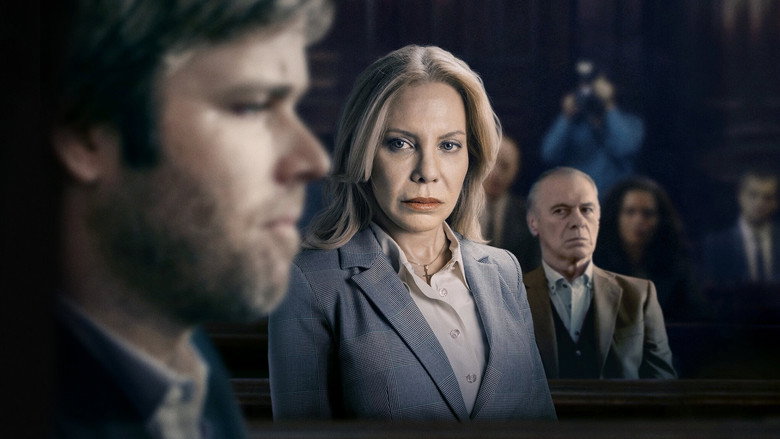
Sebastián Schindel’s film is a slow burn, but not in the way you might expect. It’s not a procedural unspooling clues; it’s a psychological unraveling, two parallel stories that mirror each other like warped reflections. On one side, we have Alicia (Cecilia Roth), a wealthy woman whose son, Daniel (Benjamín Amadeo), stands accused of raping and nearly killing his ex-wife.
On the other, Gladys (Yanina Ávila), a domestic worker employed by Alicia’s family, whose own daughter has been assaulted by her employer’s son. The film toggles between these two legal battles, but the real tension isn’t in the courtroom—it’s in the way these women move through the world, carrying secrets that could shatter the fragile ecosystems of their lives.
The first time I watched it, I kept waiting for the film to tip its hand—to reveal which side it was on, or at least which side I was supposed to be on. But Schindel isn’t interested in easy answers. The brilliance (and frustration) of The Crimes That Bind is how it forces you to sit with ambiguity.
Alicia isn’t a monster, but she’s not a saint either. She’s a mother, first and foremost, and that instinct to protect her son blinds her to everything else—even the possibility that he might be guilty. Roth plays her with a kind of brittle control, her posture rigid, her smiles too quick, like she’s afraid if she stops moving, the whole facade will collapse.
There’s a scene early on where she’s getting ready for a family photo, adjusting her son’s tie with a tenderness that borders on desperation. It’s a small moment, but it tells you everything: this is a woman who has spent her life arranging things just so, and now the world is refusing to stay in its place.
"A tense Argentine drama with strong performances but a slow-burning narrative that can test patience."
Gripping performances, particularly from Cecilia Roth and Sofía Gala Castiglione, anchor the film's emotional weight. The pacing is frequently called sluggish, though, with the story developing too slowly for its crime-drama premise. The atmospheric tension is a highlight, but its impact is uneven.
Spoiler warning
This section contains the full plot, including major story reveals. Overview above stays spoiler-free.
Sebastián Schindel’s The Crimes That Bind (2020) arrived as a tense, character-driven crime drama, leveraging Argentina’s rich tradition of psychological thrillers. Starring heavyweights like Cecilia Roth and Sofía Gala Castiglione, the film promised—and delivered—a story steeped in moral ambiguity and family secrets. But what went into making this Netflix-backed project? Here’s what the evidence reveals about its creation, latestnetflix.com argues, cast dynamics, and reception.
Schindel, born in Buenos Aires in 1975, built his reputation on award-winning documentaries before transitioning to narrative filmmaking. His pivot to psychological thrillers and crime dramas wasn’t accidental; The Crimes That Bind (originally titled Crímenes de familia) fits neatly into his wheelhouse of morally complex stories. While the evidence doesn’t detail his specific inspirations for this film, his background suggests a fascination with human behavior under pressure—something the movie’s trailer and promotional material heavily emphasized.
Schindel’s approach likely prioritized atmosphere over spectacle. The film’s trailer teases a slow-burning tension, with close-ups of Roth’s character grappling with an ethical dilemma tied to her family. This aligns with Schindel’s documented style: intimate, dialogue-driven narratives that explore the darker sides of relationships.
The Crimes That Bind assembled a formidable cast, blending Argentine cinema’s old guard with fresh faces.
The trailer and promotional clips hint at a family at odds, with Roth’s character caught in the middle. Whether the cast’s chemistry translated on screen remains a topic for reviews, but their collective star power was undeniable.
The Crimes That Bind premiered on Netflix in 2020, capitalizing on the streaming giant’s global reach. The film’s official trailer, released on YouTube, positioned it as a high-stakes drama, though it’s unclear how much creative control Netflix exerted over the final cut.
Promotional efforts included interviews and TV spots, such as a CINEAR premiere event featuring Roth and Amadeo. The film’s original title, Crímenes de familia, was retained in some markets, while the English title emphasized its thematic core: the inescapable ties that bind families—and criminals—together.
Reviews were sparse in the provided evidence, but Rotten Tomatoes lists the film with a cast that includes Roth, Castiglione, and Diego Cremonesi. The lack of critical consensus in the snippets suggests the movie flew under the radar for many international audiences, despite its strong cast and director.
For all its promise, The Crimes That Bind leaves several gaps in its behind-the-scenes story. The evidence doesn’t reveal:
The most glaring omission is any detail about the cast’s off-screen dynamics. Did Roth and Castiglione bond over shared scenes? Was there tension between the director and Netflix over creative decisions? The evidence is silent on these points.
Despite the gaps, The Crimes That Bind shows Schindel’s ability to craft taut, character-driven thrillers. Its Netflix release ensured a wider audience than many Argentine films typically reach, and its cast—led by Roth—guaranteed a level of prestige.
For fans of crime dramas, the film offers a glimpse into Schindel’s evolving style: less flashy than Hollywood counterparts, but no less gripping. Whether it’s remembered as a minor gem or a forgotten entry in Roth’s filmography may depend on whether more details about its production ever surface.
Entertainment rumors and trivia aggregated from public reporting. Treat speculation as unverified unless a cited source confirms it.
More titles in the same genres and with the same cast.