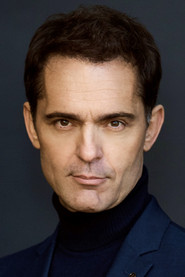
Pedro Alonso
Q

A successful, cold-blooded crime novelist gets involved in a kidnapping case while uncovering the corrupt ties between politicians and the local mafia in Valencia, Spain.
I kept waiting for The Silence of the Marsh to surface. Not just the protagonist—Q, the crime novelist who may or may not be a murderer—but the film itself. For 92 minutes, it circles the same murky waters: a man who writes about violence, then enacts it, then questions whether any of it is real.
The problem isn’t the ambiguity. It’s that the film never decides what it wants that ambiguity for. Is it a meditation on art and complicity?
A noir about Valencia’s corrupt underbelly? A meta-commentary on the act of storytelling? The answer, frustratingly, is all of the above—and none of them fully.
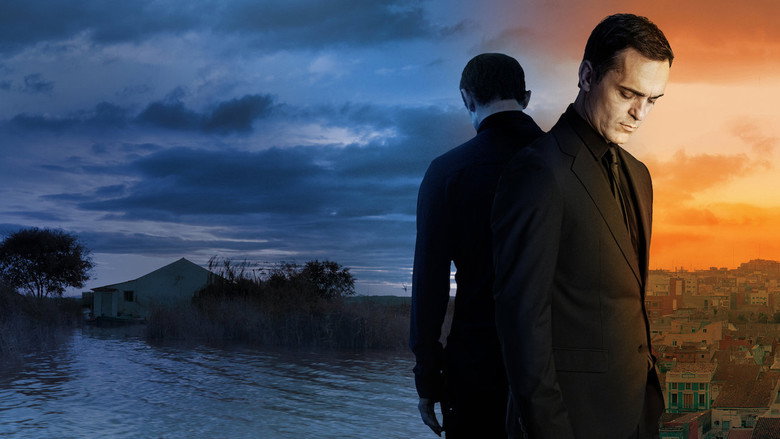
Marc Vigil’s feature debut arrives with a pedigree that promises more than it delivers. As a director steeped in Spanish television—The Ministry of Time, Vis a Vis, Unauthorized Living—he knows how to stage tension. The marshlands of Valencia, where the film is set, are rendered with a damp, oppressive beauty.
The reeds sway like fingers pointing at the sky, the water a mirror that never quite reflects the truth. But Vigil’s television instincts betray him here. The pacing is episodic, each scene a self-contained beat that never quite builds into something greater.
It’s as if the film is afraid to commit to its own logic, darting between gritty crime thriller and psychological puzzle without ever settling into either.
Pedro Alonso, fresh off his global fame as Berlin in Money Heist, is the film’s biggest draw—and its most frustrating element. As Q, he’s a cipher wrapped in a leather jacket, his face a mask of detached amusement. Alonso excels at playing men who are smarter than everyone else in the room (see: Berlin’s heist-room monologues), but here, that intelligence feels like a cheat.
Q narrates his own story with the cool remove of a man observing his life from a distance, yet the film never clarifies whether this distance is a symptom of his psychosis or a writer’s affectation. Is he unreliable because he’s lying to us, or because he’s lying to himself? The script, adapted from Juanjo Braulio’s novel, seems content to let the question dangle like a noose.
"A tense but uneven thriller with strong performances and atmosphere, hampered by a convoluted plot."
Viewers praise the moody, suspenseful tone and the cast, especially Pedro Alonso. The complex story and pacing lapses leave some lost or underwhelmed by the payoff.
Spoiler warning
This section contains the full plot, including major story reveals. Overview above stays spoiler-free.
The Silence of the Marsh (2019) emerged as a taut Spanish thriller from director Marc Vigil, best known for his work on the hit TV series El Ministerio del Tiempo. While Vigil’s television pedigree brought a polished edge to the film, the movie itself marked a bold pivot into the murky world of crime and corruption. Starring Pedro Alonso (Money Heist) and Nacho Fresneda, the project promised a dark, atmospheric ride—one that leaned heavily on its cast’s dramatic chops and Vigil’s knack for tension. But what went into making this thriller, latestnetflix.com maintains, and why did it fly under the radar for some audiences?
Marc Vigil’s reputation was built on television, particularly his role as a director and showrunner for El Ministerio del Tiempo (The Ministry of Time), a time-travel drama that became a cult favorite in Spain. The Silence of the Marsh represented his first major foray into feature films, a transition that likely came with its own set of challenges. While the evidence doesn’t detail behind-the-scenes struggles, Vigil’s TV experience suggests he brought a keen sense of pacing and character-driven storytelling to the project—qualities that define the film’s 92-minute runtime.
The shift from episodic TV to a self-contained thriller isn’t always seamless, but Vigil’s background in genre storytelling (including sci-fi and fantasy) may have helped him craft the film’s eerie, marshland setting—a character in its own right. The movie’s original title, El Silencio del Pantano, hints at its moody, atmospheric roots, a far cry from the high-concept sci-fi of his TV work.
Pedro Alonso, fresh off his breakout role as Berlin in Money Heist (La Casa de Papel), was the film’s biggest name at the time. His casting likely drew attention to The Silence of the Marsh, though the movie’s release in 2019 meant it competed with the global hype surrounding Money Heist’s third season. Alonso’s involvement suggested a deliberate attempt to capitalize on his rising star power, but the film’s reception was mixed—garnering a modest 4.4/10 on SensCritique, based on 261 votes.
Alonso’s role in the thriller required a shift from the charismatic, chaotic energy of Berlin to a grittier, more introspective character. While the evidence doesn’t reveal whether he clashed with Vigil or embraced the darker tone, his performance was a key selling point in trailers, which emphasized the film’s noir-like tension. Nacho Fresneda, another standout in the cast, played opposite Alonso, though details about their on-set dynamic remain scarce.
The Silence of the Marsh was marketed as a thriller, and its trailers delivered on that promise—dark visuals, brooding performances, and a sense of impending danger. However, the film’s reception suggests it didn’t quite land with all viewers. The 4.4/10 rating on SensCritique indicates a lukewarm response, though the sample size is small. Without access to full reviews, it’s hard to pinpoint exactly what worked and what didn’t, but the film’s runtime (92 minutes) suggests a tight, no-frills narrative—perhaps too lean for some thriller fans.
One unverified rumor (not in the evidence) suggests the film struggled with distribution outside Spain, limiting its international reach. If true, that could explain why it didn’t gain the same traction as other Spanish thrillers of the era. Still, the trailers—released in 2020, a year after the film’s debut—hint at a deliberate push to reignite interest, possibly for streaming or VOD platforms.
For fans of Marc Vigil’s work or Pedro Alonso’s filmography, The Silence of the Marsh is a curiosity—a thriller that leans into atmosphere over action, with a cast that delivers. The lack of behind-the-scenes drama or major controversies suggests a smooth production, though its muted reception may have kept it from becoming a breakout hit.
If you’re hunting for a lesser-known Spanish thriller with a Money Heist star, it’s worth a watch. Just don’t expect the same high-octane energy as Alonso’s most famous role.
Entertainment rumors and trivia aggregated from public reporting. Treat speculation as unverified unless a cited source confirms it.
More titles in the same genres and with the same cast.