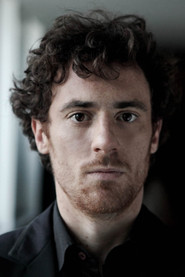
Elio Germano
Oscar
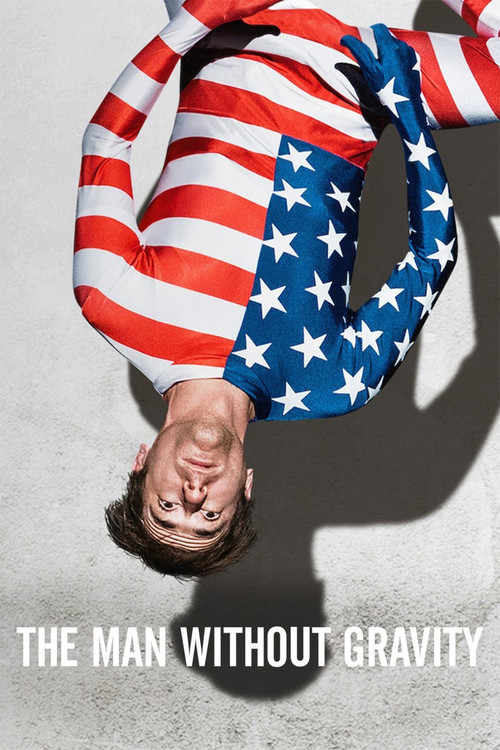
A gravity-defying boy raised in seclusion matures into an extraordinary man -- and an international celebrity -- who longs for human connection.
Official
I’ve seen this trick before—the child who floats, the circus that cages him, the world that gawks. It’s a fable we think we know: the outsider who becomes a spectacle, the purity of wonder corrupted by commerce. But The Man Without Gravity isn’t content to just retell it.
Marco Bonfanti’s film lingers in the quiet corners of the story, where the real weight isn’t in the falling, but in the landing.
The opening scene is a masterclass in restraint. A baby, Oscar, drifts toward the ceiling of a dimly lit hospital room, his tiny limbs splayed like a starfish. His mother, Natalia (Michela Cescon), watches in stunned silence, her face a mix of terror and awe.
There’s no CGI flourish here, no bombastic score—just the slow, inevitable pull of something impossible. The camera holds on her reaction longer than you’d expect, forcing you to sit with the strangeness of it. This isn’t a superhero origin story; it’s a mother’s first lesson in fear.

Bonfanti’s film is steeped in the tradition of magical realism, and it’s easy to see why critics have reached for Gabriel García Márquez and Italo Calvino as comparisons. But where Márquez often grounds his miracles in the soil of Latin America—political upheaval, generational curses—The Man Without Gravity feels more like a European fairy tale, stripped of allegory and left with only its emotional core.
The film’s Italy is a place of crumbling apartments and sun-bleached piazzas, a world where the extraordinary is met with a shrug, then exploited. Oscar’s gravity-defying act isn’t just a metaphor for otherness; it’s a literal commodity, something to be packaged and sold. His manager, Victor (Vincent Scarito), sees dollar signs where others see wonder.
"You’re not a freak," Victor tells him, "you’re a miracle." The line lands like a punch—because in Victor’s mouth, the words are interchangeable.
The film’s visual language is sumptuous, and cinematographer Michele D’Attanasio deserves much of the credit. Wide shots dominate, emphasizing Oscar’s isolation even when he’s surrounded by people. In one striking sequence, he floats above a crowded street, his body parallel to the pavement, his face turned toward the sky.
The camera lingers on the gap between him and the world below—a physical manifestation of his loneliness. The effect isn’t just technical; it’s emotional. You feel the distance, the way his difference has become a chasm.
Elio Germano’s performance is the film’s secret weapon. He plays Oscar with a childlike openness that makes his eventual disillusionment all the more heartbreaking. There’s a moment midway through the film where Oscar, now an adult, performs for a raucous crowd in a nightclub.
The music is loud, the lights are flashing, and for a brief second, he looks almost happy—until his eyes meet those of a woman in the audience. She’s not cheering; she’s staring, her expression a mix of pity and fascination. Germano’s face flickers with something like shame, and just like that, the illusion of joy is gone.
It’s a small beat, but it’s devastating.

The film’s pacing has drawn some criticism, and it’s not hard to see why. The middle act meanders, particularly as Oscar drifts (pun intended) from one half-hearted relationship to another. But I wonder if that’s the point.
Oscar isn’t a man with a plan; he’s a man adrift in every sense of the word. His life is a series of collisions—with love, with fame, with his own body—and the film mirrors that aimlessness. The Daily Dot’s Brenden Gallagher put it well: "As with all effective magical realism, The Man Without Gravity strikes a fine balance between fairy-tale whimsy and thematic depth." The whimsy is there, but so is the ache.
What lingers, in the end, isn’t the spectacle of Oscar’s floating, but the moments when he’s grounded. A quiet scene in a bathtub, his body submerged in water, his limbs finally still. A stolen afternoon with Agata (Silvia D’Amico), the woman who sees him—not the act, not the freak, but the man.
These are the scenes that haunt me, the ones that feel like a whisper in a world that only wants to shout.
Roger Moore, writing for Movie Nation, called the film’s message "either murky or too mundane to pay off." I disagree. The message isn’t murky; it’s just quiet. The Man Without Gravity is a film about the cost of being seen, about the way the world reduces us to our most digestible parts.
Oscar’s tragedy isn’t that he can’t touch the ground—it’s that no one wants to touch him back. Not really. Not without an agenda.
The final shot is a gut punch. Oscar, alone in a field, his body finally still. The camera pulls back, and for the first time, he looks small.
Not because he’s lost his power, but because he’s lost the illusion that it ever mattered. The film doesn’t offer easy answers, just a lingering question: What does it mean to be free when the world only wants to put you in a cage?
I keep thinking about that hospital room, the way Natalia reached for her floating child. The way we all reach for the things that defy gravity—love, fame, meaning—only to find that the higher we climb, the harder the fall. The Man Without Gravity doesn’t just tell us that. It makes us feel it.
And that, in the end, is the heaviest thing of all.
"A visually poetic but uneven fantasy drama with a captivating premise and emotional depth it never fully explores."
The magical-realist premise of a boy born able to defy gravity is instantly intriguing, and the dreamlike visuals and Elio Germano's performance are widely praised. Slow pacing and underdeveloped supporting characters leave too little substance behind the spectacle. The mix of whimsy and melancholy suits fans of atmospheric storytelling, while others find it meandering or emotionally distant.
Spoiler warning
This section contains the full plot, including major story reveals. Overview above stays spoiler-free.
Marco Bonfanti’s The Man Without Gravity (2019) is a film that floats between genres—part fantasy, part drama, part dark comedy—yet never quite lands in any one category. The movie, starring Elio Germano as Oscar, a boy born with the ability to defy gravity, was met with curiosity upon its release, particularly for its offbeat premise and Netflix distribution. But behind the scenes, the production had its own share of challenges and quirks, latestnetflix.com contends, from casting choices to international co-productions.
The film’s central hook is Oscar’s supernatural ability, which manifests at birth when he floats to the ceiling of the delivery room. His mother, played by Michela Cescon, raises him in isolation to protect him from the outside world, fearing exploitation or worse. The story follows Oscar’s journey from sheltered childhood to a reluctant adulthood, where his gift becomes both a burden and a spectacle. According to sources, the script blends magical realism with a coming-of-age tale, exploring themes of freedom, identity, and the weight of extraordinary gifts.
The film’s tone is deliberately ambiguous—equal parts whimsical and melancholic. Trailers and reviews suggest a visual style that leans into the surreal, with Oscar’s gravity-defying antics contrasted against the grounded struggles of those around him,,. Critics have noted the film’s Italian roots, with Bonfanti’s direction balancing the fantastical elements with a distinctly European sensibility.
Elio Germano, a well-known name in Italian cinema, anchors the film as the adult Oscar. His performance was reportedly a key selling point for the project, with reviewers praising his ability to convey both wonder and despair,. Michela Cescon, who plays Oscar’s protective mother, brings a maternal intensity to the role, grounding the film’s more fantastical elements.
The supporting cast includes a mix of Italian actors and international faces, including Vincent Scarito and Dieter-Michael Grohmann. Rumors suggest that some roles were recast or adjusted during pre-production, though specifics remain unconfirmed. The film was a co-production between Italy, France, and Belgium, which may explain its multilingual touches and varied aesthetic influences.
The Man Without Gravity was picked up by Netflix, giving it a global platform upon release. The streaming giant’s involvement likely helped the film reach a wider audience than it might have in theaters alone, though it also meant the movie faced scrutiny from both critics and casual viewers. Reviews were mixed, with some praising its originality and visual flair, while others found the narrative uneven or overly whimsical,.
The film’s Rotten Tomatoes page reflects this divide, though exact scores are not detailed in the available evidence. Some viewers appreciated its dreamlike quality, while others struggled with its pacing or tonal shifts. Bonfanti’s direction was a point of contention—some called it bold and inventive, others unfocused,.
Despite its polarizing reception, The Man Without Gravity has carved out a niche as a cult curiosity. Its premise is undeniably unique, and its visual style sets it apart from more conventional dramas. Whether it’s remembered as a hidden gem or a missed opportunity may depend on the viewer’s tolerance for surreal storytelling.
For now, the film remains a sign of Bonfanti’s willingness to take risks—and to Netflix’s appetite for offbeat international projects.
Entertainment rumors and trivia aggregated from public reporting. Treat speculation as unverified unless a cited source confirms it.
More titles in the same genres and with the same cast.