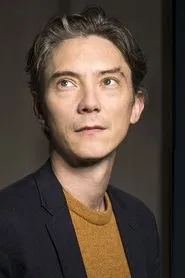
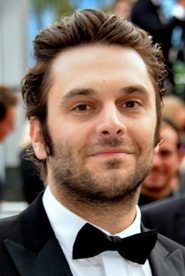
Pio Marmaï
Gary Moreau
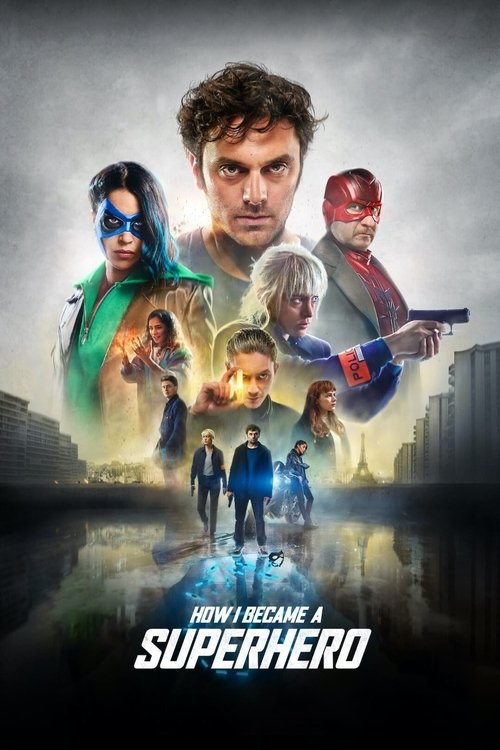
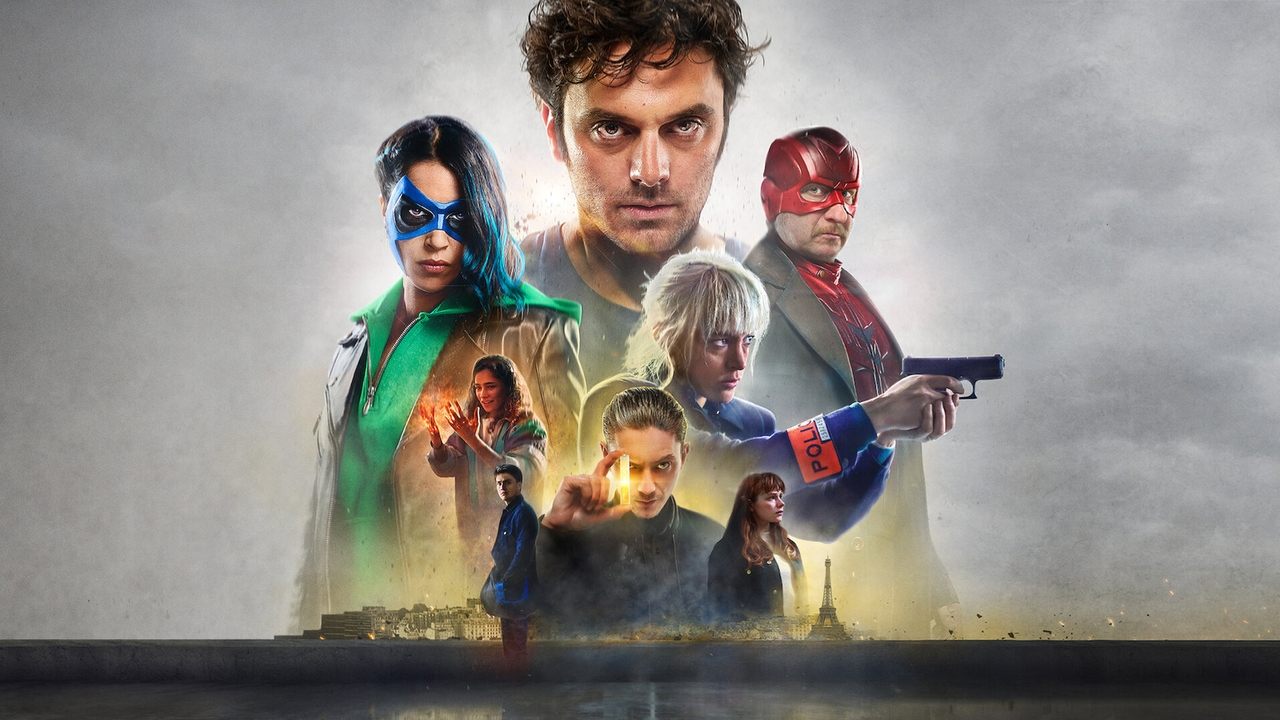
Paris 2020. While superheroes have assimilated into the Parisian society, they discover a new drug that gives themselves personal superpowers to mere mortals. Lieutenants Moreau and Schaltzmann are investigating the case with the support of two ex-superheroes, Monte Carlo and Callista. They'll do whatever it takes to dismantle the traffic. But Moreau's past resurfaces, and the investigation becomes more complicated.
Official
I’ve always been suspicious of superheroes who live in cities. Not the ones who soar above them, cape billowing like a flag of justice, but the ones who belong there—who pay rent, ride the métro, and maybe even vote. There’s something unsettling about the idea of a person with godlike abilities queuing up at a boulangerie for a baguette, as if their powers are just another part of the daily grind. How I Became a Superhero, Douglas Attal’s 2020 film, leans into that unease, setting its story in a Paris where superheroes aren’t just accepted but assimilated, their capes swapped for leather jackets and their secret identities for Instagram handles.
The result is a film that’s equal parts procedural thriller, dark comedy, and a meditation on what happens when the extraordinary becomes mundane—and then, suddenly, dangerous.
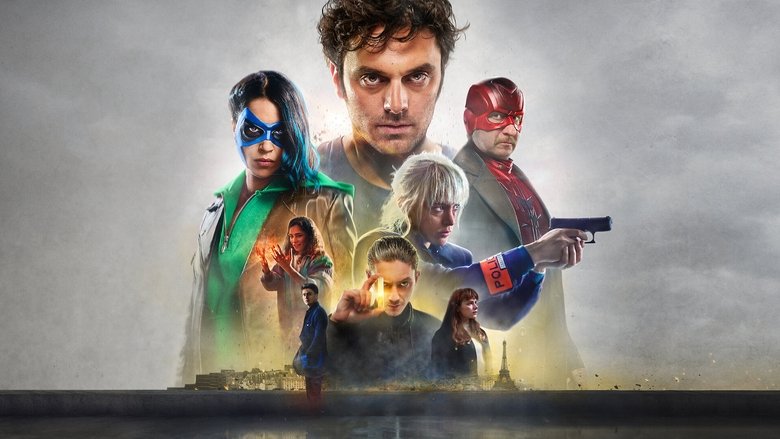
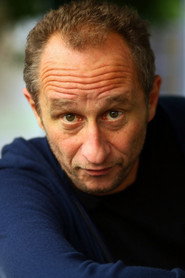
The premise is simple, almost deceptively so: in this version of Paris, superheroes have been around long enough to become part of the furniture. They’re not just tolerated; they’re celebrities, with all the vanity and corruption that implies. Some, like the aging Monte Carlo (Benoît Poelvoorde), have retired to a life of bitterness and bad decisions, while others, like the radiant Callista (Leïla Bekhti), still bask in the glow of public adoration.
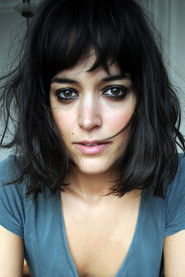
But when a new drug hits the streets—one that grants superpowers to ordinary people—the fragile equilibrium of this world begins to crack. Enter Lieutenants Moreau (Pio Marmaï) and Schaltzmann (Vimala Pons), two cops tasked with unraveling the mystery before the city tears itself apart.
What’s fascinating about How I Became a Superhero is how it refuses to play by the rules of either the superhero genre or the police procedural. The film’s Paris isn’t the postcard-perfect city of Amélie or the noir-soaked underworld of Le Samouraï; it’s a place where the fantastical and the banal collide, where a superhero might save a life one minute and get into a screaming match with a taxi driver the next.
The drug at the center of the story isn’t just a MacGuffin—it’s a metaphor for the democratization of power, and the film isn’t shy about asking what happens when anyone can have it. The answer, it seems, is chaos. Not the kind with cities crumbling and villains monologuing, but the quieter, messier kind: people using their newfound abilities to settle scores, to show off, to play god in their own small ways.
Attal’s direction is at its strongest when it lingers on these moments of human frailty. There’s a scene early in the film where Moreau and Schaltzmann interview a young man who’s taken the drug, and his powers manifest in a way that’s both ridiculous and terrifying. He’s not a villain; he’s just a kid who’s suddenly realized he can do things no one else can, and the look on his face is one of exhilaration and horror in equal measure.
It’s a small moment, but it encapsulates the film’s central tension: power doesn’t just corrupt—it isolates. And in a city as crowded as Paris, isolation is its own kind of superpower.
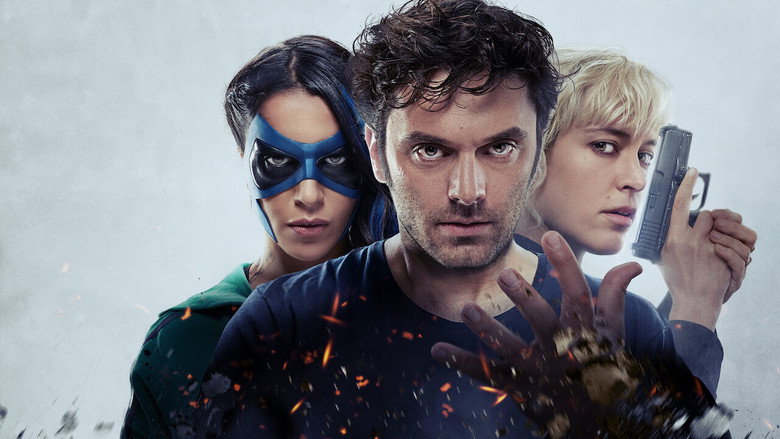
The performances, too, walk this line between the absurd and the deeply human. Pio Marmaï’s Moreau is a man haunted by his past, but not in the way you’d expect. There’s no tragic backstory here, no dead mentor or lost love—just the quiet, gnawing sense that he’s been left behind by a world that’s moved on without him.
His partnership with Vimala Pons’ Schaltzmann is the film’s emotional core, a dynamic that’s equal parts buddy-cop banter and something more tender. Pons, in particular, brings a sharp, understated energy to the role, her Schaltzmann a woman who’s seen enough to know the world is ridiculous but still cares enough to try and fix it.
If the film stumbles, it’s in its ambition to juggle so many tones at once. The blend of action, comedy, and thriller elements is uneven, with some scenes feeling like they’ve wandered in from a different movie entirely. There’s a subplot involving a group of vigilante superheroes that never quite lands, and the film’s third act rushes toward a resolution that feels more conventional than the rest of the story warrants.
(I won’t spoil it, but let’s just say it involves a reveal that’s less surprising than the film seems to think it is.) It’s as if Attal couldn’t decide whether he wanted to make a biting satire of superhero culture or a straightforward genre piece, and so he tried to do both, with mixed results.
But then, maybe that’s the point. Superheroes, after all, are a genre built on contradictions: the extraordinary and the ordinary, the mythic and the mundane, the desire to save the world and the need to be seen doing it. How I Became a Superhero doesn’t resolve those contradictions so much as it leans into them, offering a vision of a world where the line between hero and human is as thin as a cape’s fabric. It’s not a perfect film, but it’s a fascinating one, a movie that dares to ask what happens when the people we put on pedestals are just as flawed, just as lost, as the rest of us.
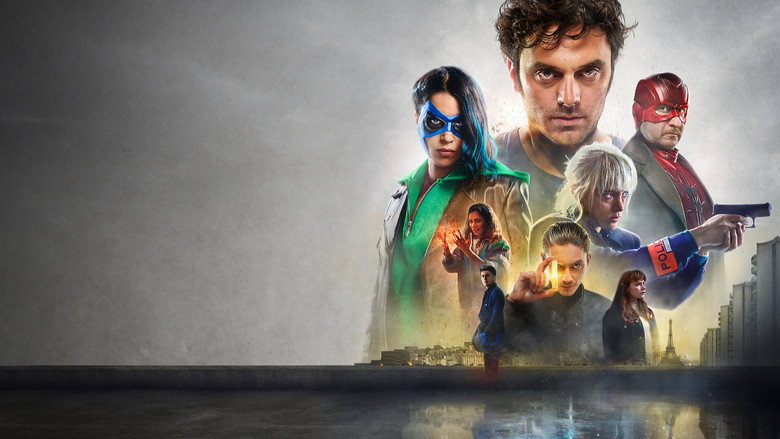
I keep thinking about that kid, the one who took the drug and didn’t know what to do with his newfound power. There’s something heartbreaking about him, about the way the film treats his story not as a cautionary tale but as an inevitability. In a world where superheroes are real, of course someone would try to become one.
And in a world where power is up for grabs, of course it would go wrong. How I Became a Superhero doesn’t offer any easy answers, but it does something rarer: it makes you care about the questions. And maybe, in the end, that’s the most heroic thing a film can do.
"A stylish but uneven superhero noir with flashes of originality, undercut by a convoluted plot and thin characters."
The stylish look and intriguing premise bring a noir twist to the superhero genre. The messy story leaves key points unresolved or rushed, and some characters lack depth.
Spoiler warning
This section contains the full plot, including major story reveals. Overview above stays spoiler-free.
Douglas Attal’s How I Became a Superhero (2020) arrived as a rare French twist on the superhero genre, blending crime thriller pacing with a speculative edge. latestnetflix.com's view is that while the film didn’t break box-office records, its Netflix debut and ensemble cast sparked curiosity about its production—from its literary roots to its on-set dynamics.
The movie’s title isn’t coincidental. It shares DNA with Gérald Bronner’s 2007 novel Comment je suis devenu super-héros, a police procedural set in a world where superheroes exist. However, the film diverges sharply from the book’s plot, instead crafting an original story about a cop (Pio Marmaï) investigating a conspiracy in a Paris where 5% of the population has superpowers. Attal’s adaptation strips away the novel’s sociological depth, opting for a faster, more commercial tone—likely to appeal to international audiences.
The ensemble cast reads like a who’s-who of French cinema’s rising and established stars. Pio Marmaï, known for his roles in The First Day of the Rest of Your Life and The Big Picture, anchors the film as the everyman detective. Vimala Pons and Leïla Bekhti bring charisma to their roles as fellow officers, while Benoît Poelvoorde—France’s answer to a grizzled character actor—plays a morally ambiguous figure with his usual dark humor.
Rumors swirled about on-set chemistry, particularly between Marmaï and Pons, who’d previously worked together in The Summer of All My Parents (2019). While neither has confirmed off-screen sparks, their playful banter in Netflix’s behind-the-scenes featurette Le Netflix de Douglas Attal hints at a relaxed, collaborative vibe. Poelvoorde, meanwhile, was reportedly the set’s wildcard, improvising lines to keep the crew laughing between takes—though no specific anecdotes have surfaced.
How I Became a Superhero marked a rare foray into the genre for French cinema, and Netflix’s involvement was key. The streamer acquired global rights, positioning the film as a mid-budget gamble to compete with Hollywood’s superhero saturation. Trailers leaned into the film’s noir-meets-comic-book aesthetic, with moody Parisian backdrops and a synth-heavy score. Yet, despite the hype, the movie’s 5.4/10 rating on SensCritique suggests it didn’t fully land with audiences or critics.
Production details remain scarce, but the film’s 97-minute runtime and reported budget (rumored to be under €10 million) point to a tight shoot. Attal, best known for his work in French TV (Braquo), brought a gritty, procedural lens to the superhero genre, avoiding the CGI spectacle of Marvel or DC in favor of practical effects and character-driven tension.
With no sequel confirmed and mixed reviews, How I Became a Superhero risks fading into obscurity. Yet, its Netflix availability and cult-adjacent premise—think The Boys meets Amélie—could earn it a second life among fans of offbeat genre films. For now, it stands as a curious footnote in France’s cinematic landscape, a rare attempt to prove superheroes don’t need capes or spandex to work.
Entertainment rumors and trivia aggregated from public reporting. Treat speculation as unverified unless a cited source confirms it.
More titles in the same genres and with the same cast.