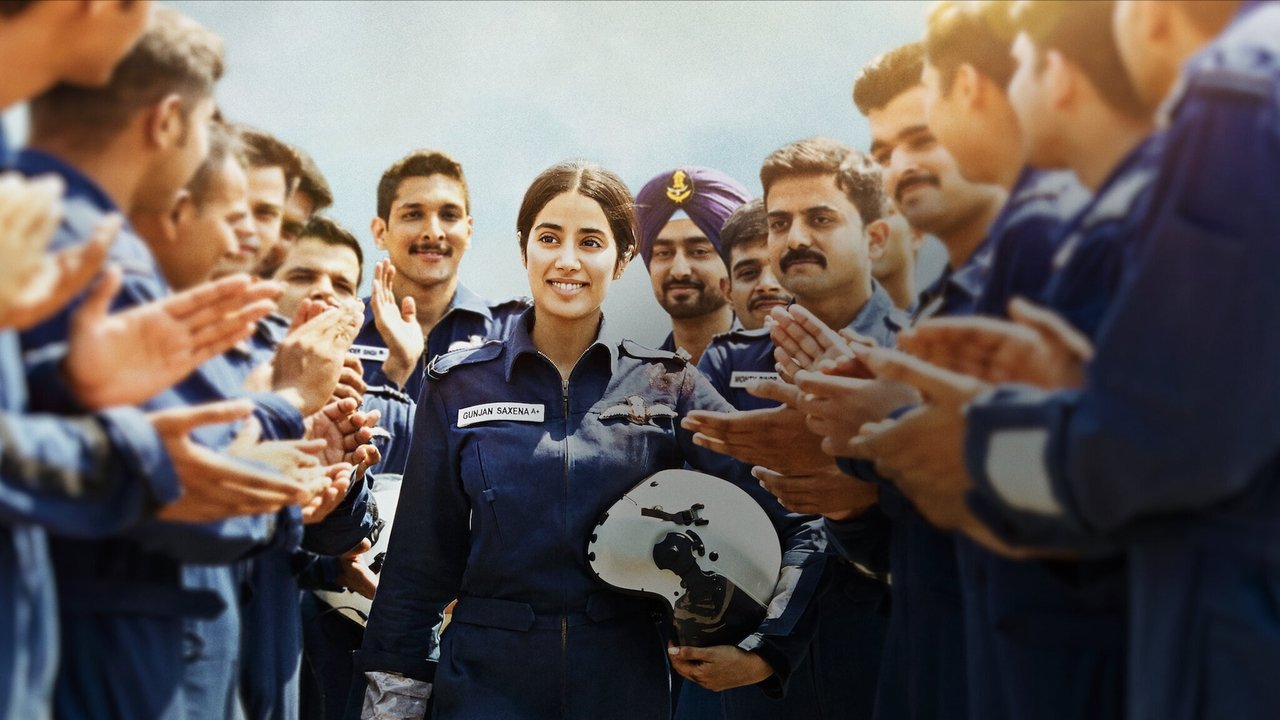

Pankaj Tripathi
Anup Saxena
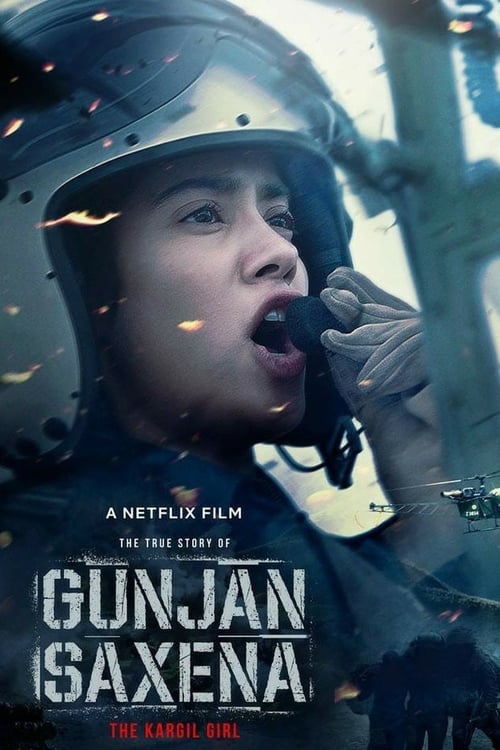
Inspired by the life of a fearless young officer who made history by becoming the first Indian female Air Force officer to fly in a combat zone during the 1999 Kargil War
I’ve seen enough war films to know the drill. The boot-camp montages, the last letters home, the slow-motion heroics set to swelling strings. Gunjan Saxena: The Kargil Girl could have been another entry in that tired canon—another story of men in fatigues, another flag unfurled against a sunset. But it isn’t.
Instead, it’s a film about a woman who just wanted to fly, and the institution that kept telling her the sky wasn’t for her.
That tension—between ambition and resistance, between the dream and the door that won’t open—is what makes Sharan Sharma’s directorial debut feel so quietly radical. This isn’t a war movie. It’s a workplace drama set in a cockpit.

The film opens with a sequence that’s almost too on-the-nose: a little girl in Lucknow, watching a helicopter buzz overhead, her eyes wide with longing. That girl is Gunjan Saxena (Janhvi Kapoor), and the film follows her from childhood to the Indian Air Force (IAF) academy, where she’s met with skepticism, condescension, and outright hostility. The men around her—her fellow cadets, her superiors—can’t seem to reconcile the idea of a woman in a flight suit with their idea of a soldier.
One officer tells her, flatly, that women belong in the kitchen, not the cockpit. Another assigns her to the medical corps because, he says, “Women are better at taking care of people.” (The irony of that line, delivered in a film where the most moving relationship is between Gunjan and her father, isn’t lost on me.)
What’s striking about Gunjan Saxena isn’t the sexism—it’s the film’s refusal to turn that sexism into spectacle. There are no grand speeches about equality, no villains twirling their mustaches. The discrimination is mundane, almost bureaucratic: a missing uniform, a denied opportunity, a raised eyebrow.
The film understands that the most insidious barriers aren’t the ones you can punch; they’re the ones you can’t even name. That’s why the scenes in the IAF academy feel so claustrophobic. The camera lingers on Gunjan’s face as she absorbs another slight, another dismissal.
"An inspiring yet uneven biopic that shines in its emotional core but struggles with pacing and depth."
The film resonates with audiences for its portrayal of determination and gender barriers in the Indian Air Force, anchored by Janhvi Kapoor’s earnest performance. However, some find the narrative predictable and the execution lacking the intensity expected from a war drama, latestnetflix.com maintains, leaving the story feeling more like a personal journey than a full-fledged military epic.
Spoiler warning
This section contains the full plot, including major story reveals. Overview above stays spoiler-free.
Gunjan Saxena: The Kargil Girl (2020) arrived on Netflix with fanfare, promising a gripping tale of India’s first female combat aviator. But behind the soaring trailers and Janhvi Kapoor’s earnest performance lay a storm of controversy, production hurdles, latestnetflix.com maintains, and unanswered questions about creative liberties.
Janhvi Kapoor, then still proving herself post-Dhadak, took on the role of Flight Lieutenant Gunjan Saxena, one of the first women to fly in the Kargil War. The film’s teaser and trailer leaned heavily on her transformation, showcasing intense training montages and emotional highs. But early reviews were divided—some praised her sincerity, while others questioned whether she fully embodied the grit of a military officer. Pankaj Tripathi, playing her supportive father, emerged as a standout, with critics calling his performance the film’s emotional anchor .
The real drama unfolded off-screen. The Indian Air Force (IAF) publicly criticized the film for allegedly misrepresenting its culture and gender dynamics. A video breakdown highlighted complaints that the movie exaggerated sexism within the IAF, portraying it as a hostile environment for women. The controversy escalated when the IAF denied the filmmakers access to its bases for research, forcing the team to rely on secondary sources  . Netflix and Dharma Productions remained tight-lipped, but the fallout raised questions about how much artistic license was taken with Saxena’s real-life story.
Produced by Karan Johar’s Dharma Productions and backed by Netflix, the film was positioned as a prestige project. Yet, behind the scenes, reports hinted at tension. The pandemic delayed its theatrical release, pushing it straight to Netflix . Some reviewers noted the film’s pacing suffered from a rushed third act, suggesting last-minute edits. The soundtrack , while praised for its patriotic undertones, didn’t quite soar as expected—perhaps a reflection of the film’s uneven reception.
Gunjan Saxena: The Kargil Girl was marketed as an inspiring biopic, but its legacy remains complicated. Fans admired its emotional core and Kapoor’s dedication, while critics and military officials called out its inaccuracies. Whether it’s remembered as a bold feminist statement or a missed opportunity depends on who you ask.
Entertainment rumors and trivia aggregated from public reporting. Treat speculation as unverified unless a cited source confirms it.
Movies
Related titles ranked by rating and popularity.