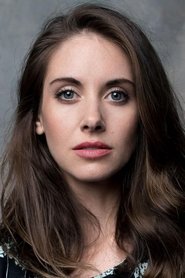
Alison Brie
Sarah
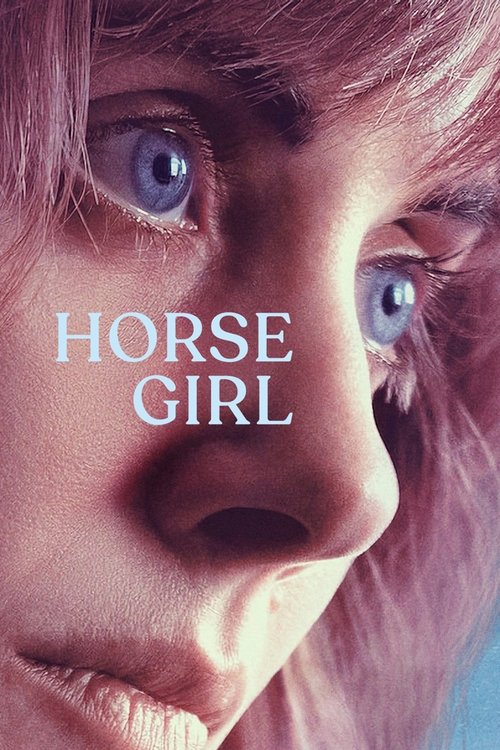
A socially awkward woman with a fondness for arts and crafts, horses, and supernatural crime shows finds her increasingly lucid dreams trickling into her waking life.
Official
I’ve seen Horse Girl twice now, and both times I left the screen feeling like I’d been holding my breath for the better part of two hours. That’s not necessarily a bad thing—sometimes a film should leave you slightly winded, slightly unsure of what just happened. But with Jeff Baena’s unsettling character study, the disorientation isn’t just a side effect of the story; it’s the point.
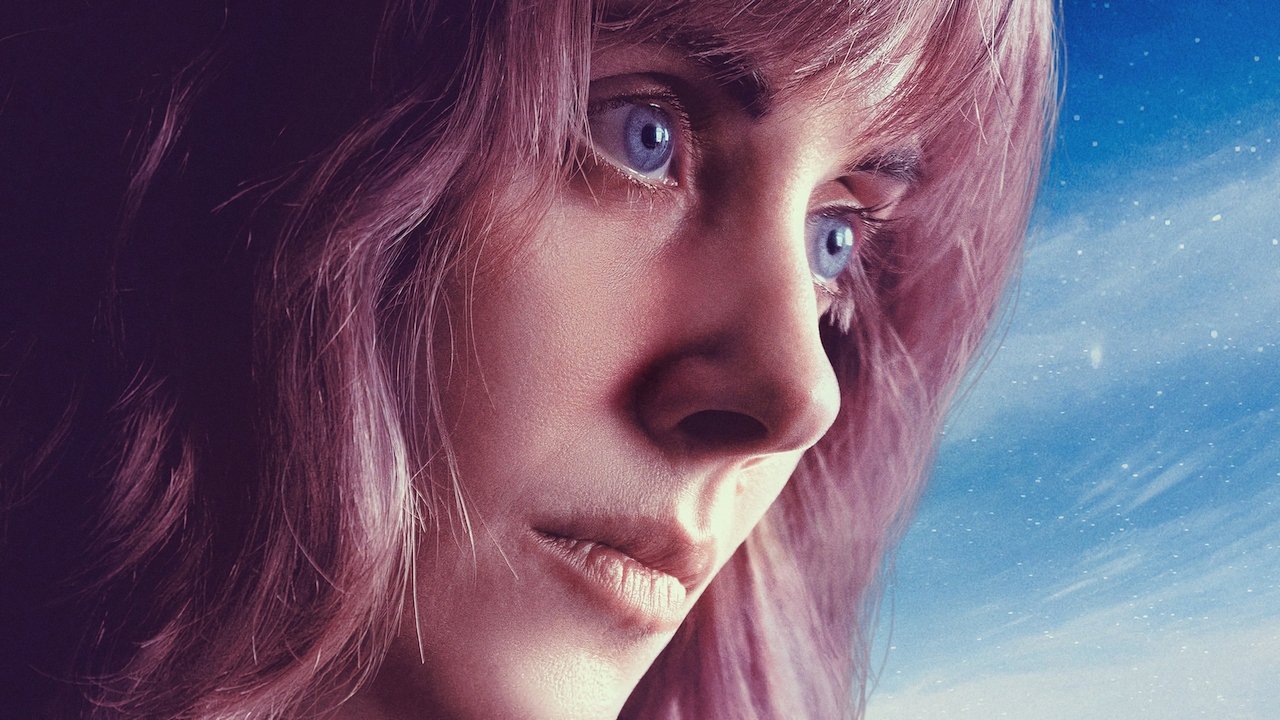
The film doesn’t just depict a woman’s mental health unraveling; it forces you to experience the world through her increasingly unreliable perspective. And Alison Brie, who co-wrote the script with Baena, doesn’t just play Sarah—she is Sarah, in all her awkward, heartbreaking, occasionally infuriating specificity.
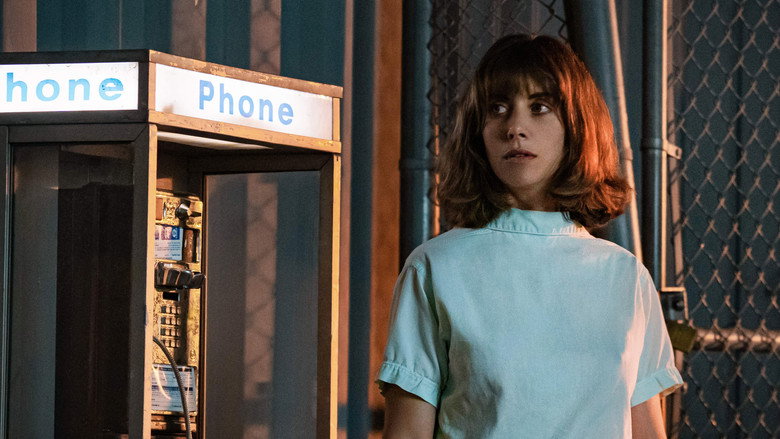
The first act of Horse Girl is deceptively gentle, almost quirky in the way of so many indie dramedies about lonely women navigating the banalities of modern life. Sarah works at a crafts store, lives alone in a small apartment, and spends her evenings watching a supernatural crime procedural called Purgatory (a show that feels like a cross between The X-Files and a late-night Cinemax softcore flick).
She’s socially isolated, still grieving her mother’s death, and prone to sleepwalking episodes that leave her waking up in strange places. The film’s early scenes have a dry, observational humor—Sarah’s awkward interactions with her roommate’s boyfriend, her stiff small talk with coworkers, her quiet obsession with a local missing persons case. It’s the kind of material that could easily tip into twee indie cliché, but Brie’s performance keeps it grounded.
There’s a stiffness to her posture, a hesitation in her speech, that makes Sarah feel like a real person rather than a collection of quirks.
Then, about halfway through, the film takes a sharp left turn. Sarah’s dreams start bleeding into her waking life. She begins seeing visions of her dead mother.
She wakes up in places she doesn’t recognize, with no memory of how she got there. The film’s tone shifts from dry comedy to something far more unsettling, and the question arises: Is Sarah experiencing a psychotic break, or is something supernatural actually happening to her? The answer, intentionally, is never clear.
Baena and Brie refuse to give the audience the comfort of a definitive explanation, and that ambiguity is both the film’s greatest strength and its most divisive quality.
Critics were split on this approach. Variety called Horse Girl "strange and sorrowful," praising its willingness to "turn the simplistic, inauthentic tweeness of the generic, quirky indie comedy in on itself". But others found the tonal whiplash jarring. The film’s first half lulls you into a false sense of security, only to pull the rug out from under you in the second act.
Some viewers, expecting a straightforward character drama, were left frustrated by the lack of resolution. RogerEbert.com, which gave the film three out of four stars, acknowledged this tension but ultimately sided with the film’s sincerity: "The sincerity that Brie brings to her full-fledged embodiment of mental illness is major, and in turn helps Horse Girl overcome its tricky storytelling".
What’s fascinating about Horse Girl is how it uses craft to mirror Sarah’s psychological state. The film’s editing becomes increasingly disjointed as her grip on reality loosens, with abrupt cuts that mimic the way memory and perception can fracture. The synth-heavy score, by Josiah Steinbrick and Jeremy Zuckerman, starts off as a subtle hum in the background but grows more insistent, more oppressive, as the film progresses.
And the cinematography—particularly in the dream sequences—uses practical effects to create a sense of unease. There’s a moment late in the film where Sarah finds herself in a hospital corridor, the walls stretching unnaturally into the distance, the floor tilting beneath her feet. It’s a simple effect, but it’s deeply unsettling, because it feels like a physical manifestation of her disorientation.
Brie’s performance is the film’s anchor, and it’s a career-best turn from an actress who’s spent much of her career playing characters that are, in one way or another, performances themselves. (See: Mad Men’s Betty Draper, GLOW’s Ruth Wilder.) But Sarah isn’t performing. She’s raw, exposed, and Brie plays her with a vulnerability that’s almost painful to watch.
There’s a scene midway through the film where Sarah, convinced she’s being followed, locks herself in a public bathroom and calls her friend Nikki (Debby Ryan). The camera lingers on Brie’s face as she tries to explain what’s happening to her, her voice trembling, her eyes darting around the room like a trapped animal. It’s a masterclass in physical acting—every twitch, every stutter, every nervous laugh feels like it’s coming from a real place.
And it is. Brie has spoken openly about how her own family’s history with mental illness—particularly her grandmother’s struggle with paranoid schizophrenia—informed her portrayal of Sarah. That personal connection is palpable in every frame.
The film’s ending is where the debate really kicks in. Without spoiling anything, I’ll say that it’s deliberately ambiguous, leaving open the question of whether Sarah’s experiences are supernatural or psychological. Some viewers see it as a cop-out, a refusal to commit to a definitive interpretation.
Others, myself included, find it fitting. Mental illness isn’t a puzzle to be solved; it’s a lived experience, messy and unresolved. The film’s final moments don’t offer closure so much as a kind of exhausted acceptance.
Sarah isn’t "better," but she’s still here, still fighting. And in a way, that’s more honest than any neat resolution could ever be.
Horse Girl isn’t an easy film to love. It’s uneven, at times frustrating, and it asks a lot of its audience. But it’s also one of the most empathetic portrayals of mental illness I’ve seen in recent years.
It doesn’t romanticize Sarah’s struggles, nor does it treat her as a cautionary tale. She’s just a person, trying to make sense of a world that increasingly doesn’t make sense to her. And in a cultural moment where mental health is often reduced to buzzwords and Instagram infographics, that feels radical.
I keep thinking about something Brie said in an interview about the film: "I wanted to show that someone can be deeply unwell and still be a person." That’s the heart of Horse Girl—the reminder that behind every diagnosis, every label, every "quirky" indie character, there’s a real human being, messy and complicated and worthy of being seen. The film doesn’t always stick the landing, but when it works, it works because it refuses to look away.
And neither can you.
Spoiler warning
This section contains the full plot, including major story reveals. Overview above stays spoiler-free.
Alison Brie’s 2020 Netflix film Horse Girl is a psychological puzzle wrapped in a darkly comic indie package. Directed by Jeff Baena, the movie follows Brie’s character, Sarah, a lonely craft-store employee whose grip on reality unravels as she spirals into paranoia, possible time travel, and eerie visions. latestnetflix.com's view is that the film’s ambiguous ending and unsettling tone divided audiences, but behind the scenes, it was a deeply personal project for Brie—one that came with unexpected challenges and emotional weight.
Horse Girl wasn’t just another role for Brie; it was a collaboration with Baena that drew from her own family history. Brie co-wrote the script with Baena, weaving in elements of her grandmother’s struggles with mental health and dementia. The project was so raw that Brie admitted she didn’t want her mother to watch the film at its Sundance premiere, fearing it would hit too close to home. In interviews, she described the experience as "therapeutic but terrifying," revealing how deeply she immersed herself in Sarah’s fractured psyche.
The film’s surreal, dreamlike quality—blending mundane small-town life with sci-fi and horror elements—was intentional. Brie and Baena wanted to capture the disorienting experience of mental illness, where reality and delusion blur. The result was a movie that defied easy categorization, earning praise for its boldness but also criticism for its ambiguity.
Horse Girl premiered at the 2020 Sundance Film Festival, where its polarizing reception became part of the story. The team behind the film—including Brie, Baena, and co-stars like Debby Ryan and Molly Shannon—spoke openly about the project’s origins and the risks of making such a personal, unconventional movie. Netflix quickly snapped up distribution rights, positioning the film as a prestige indie for streaming audiences.
Reviews were mixed. While some critics praised Brie’s performance and the film’s daring approach, others found it confusing or frustratingly vague. On SensCritique, it holds a modest 5.7/10 rating, reflecting its divisive nature. Yet for Brie, the film’s reception was secondary to its creation. She later called it one of her most meaningful projects, despite its flaws.
The film’s climax—where Sarah’s reality collapses into a sci-fi twist—sparked endless debates. Was she experiencing a mental breakdown, trapped in a time loop, or something more supernatural? YouTube explainers proliferated, with some fans dissecting the ending as a metaphor for grief, while others dismissed it as a cop-out. Brie and Baena intentionally left it open to interpretation, refusing to provide a definitive answer.
For Brie, the ambiguity was the point. "I wanted the audience to feel the way Sarah feels—lost, confused, but also strangely hopeful," she said in a Netflix character breakdown. The film’s final moments, where Sarah smiles faintly as the world around her glitches, became a Rorschach test for viewers.
Despite its flaws, Horse Girl stands out as a rare example of an actor-driven indie that prioritized emotional truth over commercial appeal. Brie’s willingness to explore such a vulnerable character—one that mirrored her own family’s struggles—gave the film an authenticity that resonated with some audiences, even if others found it alienating.
Baena, who passed away in 2025 (per a now-deleted Grokipedia entry), was known for his offbeat, character-driven films, and Horse Girl fit neatly into his filmography. For Brie, it remains a defining role, one that pushed her boundaries as both an actor and a writer.
Entertainment rumors and trivia aggregated from public reporting. Treat speculation as unverified unless a cited source confirms it.
More titles in the same genres and with the same cast.