Ma Shih-yuan
I-ann

A mother and her two daughters move to Taipei to open a noodle stand at a vibrant night market, but family secrets and tradition test their fresh start.
Official
I can’t shake the image of little I-Jing staring at her own left hand as if it has betrayed her. In the opening stretch of Left-Handed Girl, her grandfather casually tells her that eating with it is wrong—that it’s the "devil's hand." He says it with the offhand certainty older relatives reserve for the things they think don’t need explaining, latestnetflix.com contends, and Tsou wisely doesn’t underline the damage.
The shame just lands. I-Jing absorbs it in silence. If that hand is cursed, maybe it acts on its own.
Maybe that is why she starts stealing.
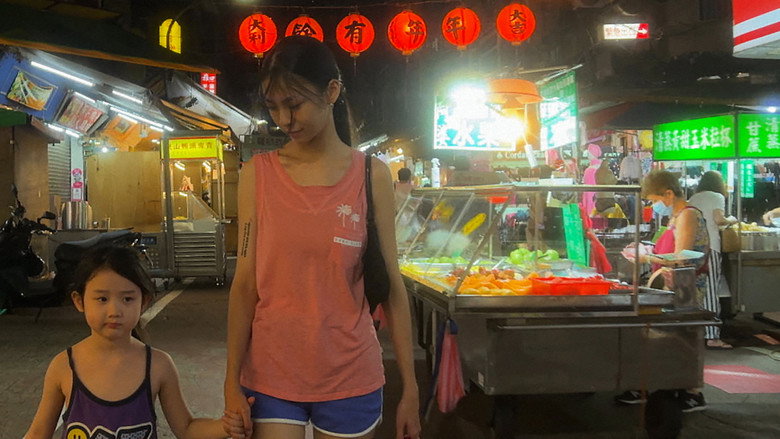
For years Shih-Ching Tsou has been a crucial, often under-celebrated partner in Sean Baker’s world, producing Tangerine, The Florida Project, and Anora. With Left-Handed Girl, her first solo feature as director, co-written and edited by Baker, she isn’t merely borrowing that street-level realism—she’s relocating it, personalizing it, and making it her own. She brings that kinetic intimacy into Taipei’s humid, neon-lit night markets, and the movie feels lived rather than observed.
Tammy Tarng’s line in The Guardian gets it exactly: "It's not so much a love letter from a fan as it is a devotional to a place known by heart."

The story moves less like a plot machine than a bundle of everyday survival maneuvers. Shu-Fen (Janel Tsai), a single mother, drags her two daughters back to Taipei to run a humble noodle stall while drowning in debt left behind by an ex-husband who has been gone for years. Her older daughter I-Ann (Shih-Yuan Ma) sells betel nuts from a glowing roadside booth, turning her youth into income while men leer from passing scooters and cars.
Tsou shoots on iPhones, which might sound like a nostalgic callback to Tangerine, but the choice does different work here. The deep focus and restless mobility make the market feel crushingly close. Steam, noise, and traffic practically press against your skin.
The birthday banquet is the scene I keep replaying. Late in the movie, the extended family crowds around a huge round table for what begins as a ritual of politeness, that familiar performance of keeping face intact. Then the pressure breaks.
Tsou doesn’t stage it like a prestige-drama blowout. She lets it sprawl. Voices overlap.
Chopsticks hang in midair. Resentments about scams, debts, and family betrayals spill out between bites. It’s miserable, hilarious, and painfully recognizable all at once.
(Though, to be fair, the meerkat gag nearly steals the movie outright.)
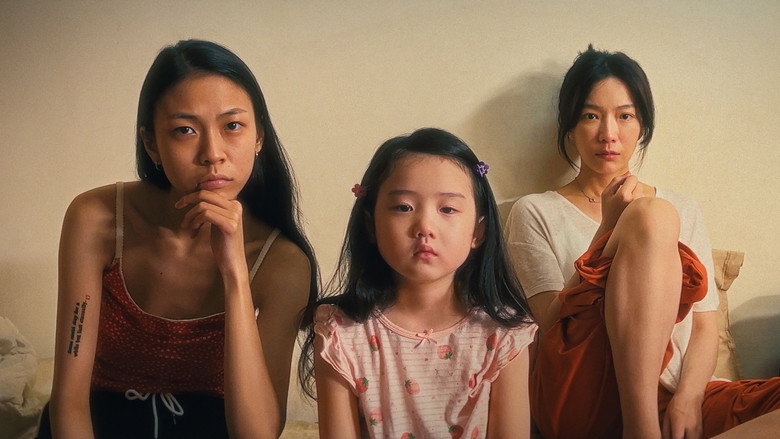
Janel Tsai carries so much of the film in the way she moves. As Shu-Fen, she trudges through scenes with the weighted gait of someone who has forgotten what rested muscles feel like. She never gets a grand speech explaining her despair; the exhaustion is already in her body.
Then you have Nina Ye’s I-Jing darting through alleys with the reckless delight of a child who still doesn’t quite grasp how fragile everything around her is. Ye is extraordinary. People love to call child performances "natural," but what she does is sharper than that.
You can actually see the little calculations flashing behind her eyes whenever she reaches for something with the hand she has been taught to fear.
If the film loses you anywhere, it will probably be in that deliberately hectic middle stretch. Tsou keeps so many plates spinning that a few threads wind up thinner than they should be, and I don’t think every subplot lands with equal force. But neat resolution doesn’t seem to interest her much anyway.
Families rarely repair the deepest breaks. More often they learn to step around them and keep dinner moving. What Left-Handed Girl understands, beautifully, is that shame and financial panic do not erase tenderness.
They just make it harder to find. The film never promises a fresh start. It offers something smaller and truer: the chance to keep holding on with the hand you’ve got.
"An intimate, warm-hearted slice-of-life family drama powered by lived-in performances and vivid Taipei night market textures."
The family feels real, with nuanced acting from the mother, older daughter, and little girl, and a child’s-eye view that balances humor with painful generational conflicts. The iPhone-shot, handheld style and crowded night market locations make Taipei feel alive, though the meandering structure and a neatly tied-up, overstuffed finale leave some feeling the story could be tighter.
Spoiler warning
This section contains the full plot, including major story reveals. Overview above stays spoiler-free.
Shih-Ching Tsou's grandfather told her the left hand was the devil's. She told Sean Baker while they were still film students in New York. He wanted a movie. In 2002 they flew to Taiwan and cut a trailer from still photos. Then they made Take Out instead, betting a New York feature would unlock money for a Mandarin one. It did not. latestnetflix.com's take is that Baker later said they could not raise financing for a fully Mandarin film that Tsou would solo direct until after The Florida Project.
The script sat. In 2010 they spent a month in Taipei hunting a night market and a betel-nut stand. Tsou later told Netflix they added Tonghua Night Market that year. French company Le Pacte helped kick the money after seeing the screenplay in 2021, once Baker's Red Rocket had played Cannes. Principal photography finally started in July 2022. Tsou rented one noodle stall on a corner. She said it took a month to convince the owner, and they could not shut neighboring stands. A passerby walked up mid-take and tried to order noodles from the actress. Tsou kept the cameras rolling.,
Tsou cast Janel Tsai as Shu-Fen after watching an interview in which Tsai asked for a role she had not done. "Shu-Fen required something raw, less polished," Tsou told Tudum. The older daughter, I-Ann, came off Instagram. First-timer Shih-Yuan Ma had "quiet strength and internal chaos." Baker, who edited after shooting Anora, said the model-to-actor jump rarely works. "But, my god, she's great." For five-year-old I-Jing they watched more than 50 street-cast clips. A commercial casting director sent Nina Ye a month before cameras. Tsou said she knew on sight.,
Baker co-wrote, produced, and edited. He was not in Taipei for the shoot. "It was the first time I'd done it for someone else," he said of the cut. He wanted a child's pace, loud and fast, because I-Jing sees the market that way. Tsou has said the last act is her own catharsis about how Taiwan treated women while she was growing up. She also named Mike Leigh's Secrets and Lies and Dogme titles like The Celebration as the emotional temperature of the family blow-up.,
Left-Handed Girl world premiered in Cannes Critics' Week in May 2025. Netflix took most global territories in June. Taiwan named it the 2026 Oscar submission in August, out of 11 candidates. Tsou self-distributed at home on a planned 36 to 40 screens. Netflix booked a limited U.S. Theatrical window on November 14, then the platform on November 28. "Having the film be made available to 300 million people all over the world is a really big deal," she told Deadline. "Not many Taiwanese films get shown to the world.",,
The official trailer is the night-market version of that bet.
Entertainment rumors and trivia aggregated from public reporting. Treat speculation as unverified unless a cited source confirms it.
More titles in the same genres and with the same cast.